
Last updated November 16, 2026
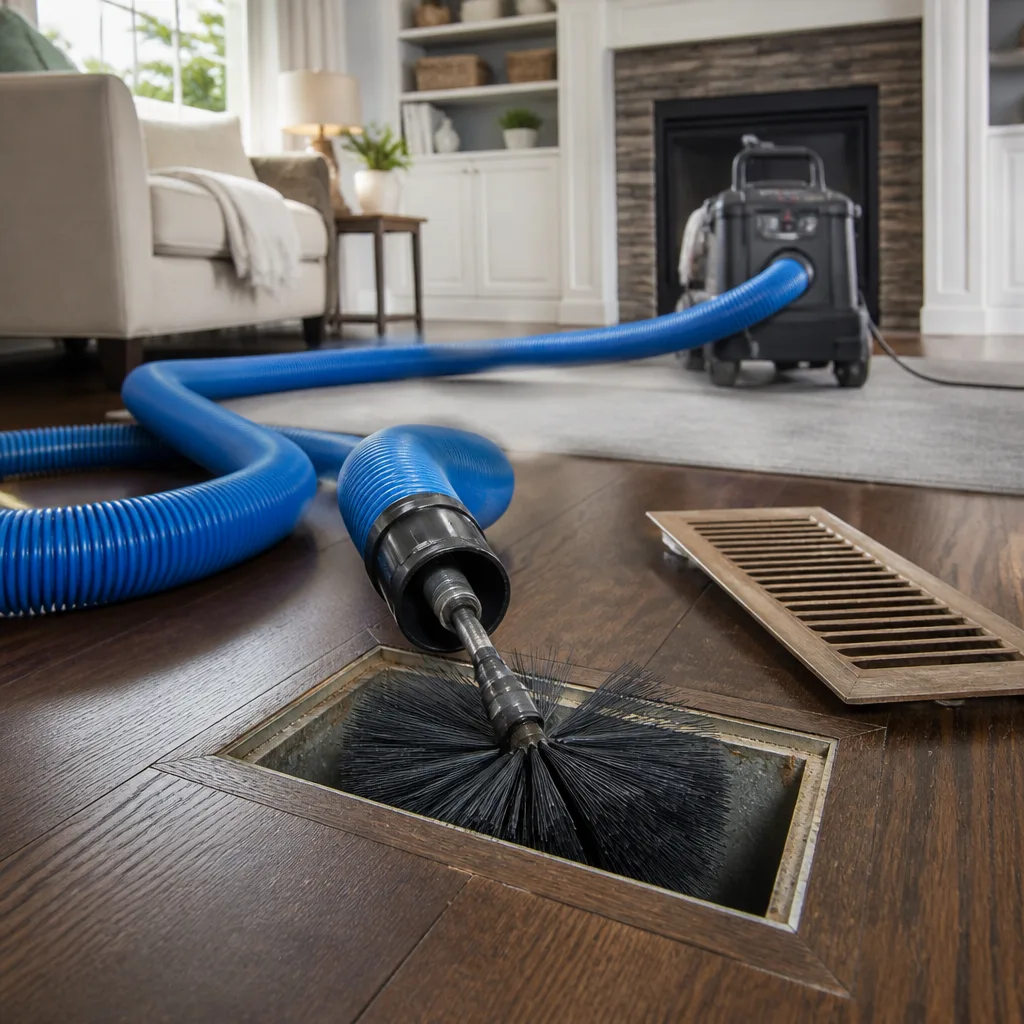 Whole-home duct cleaning
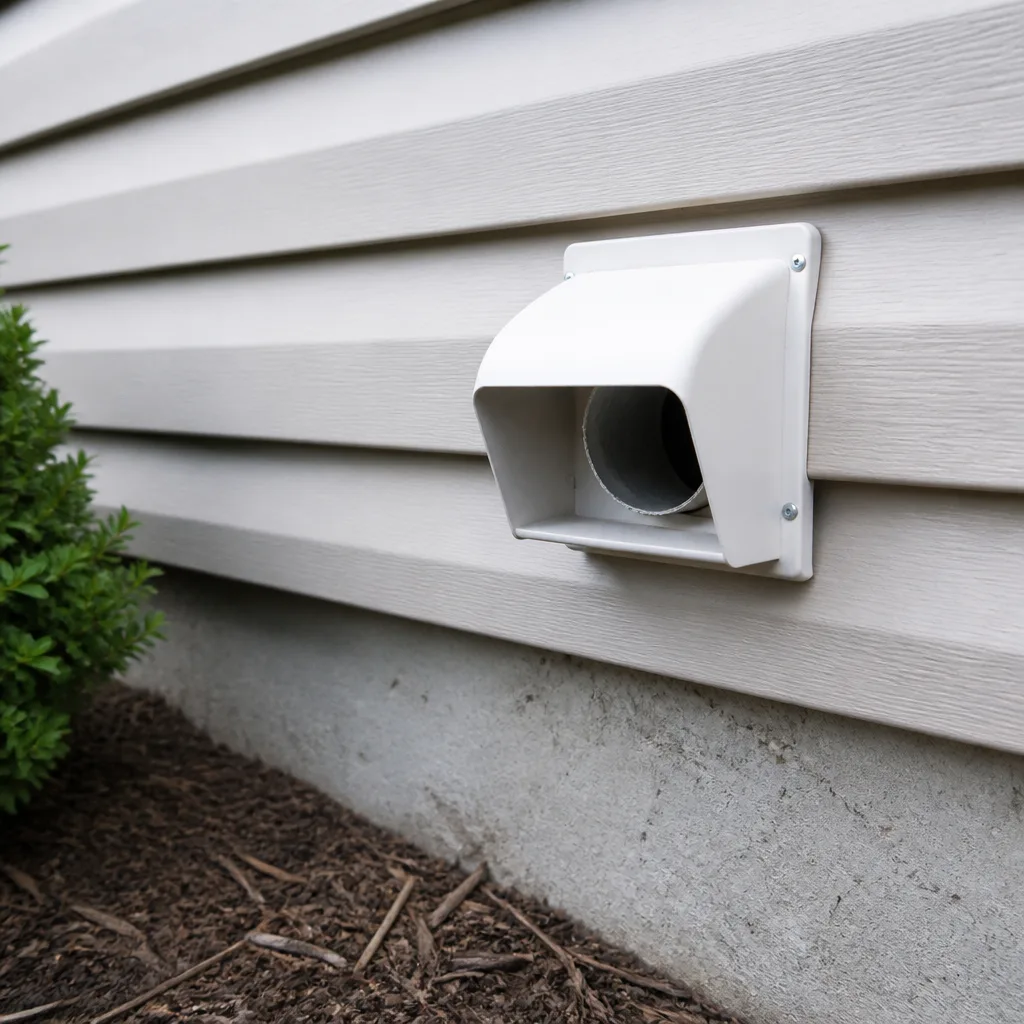 Dryer vent cleaning
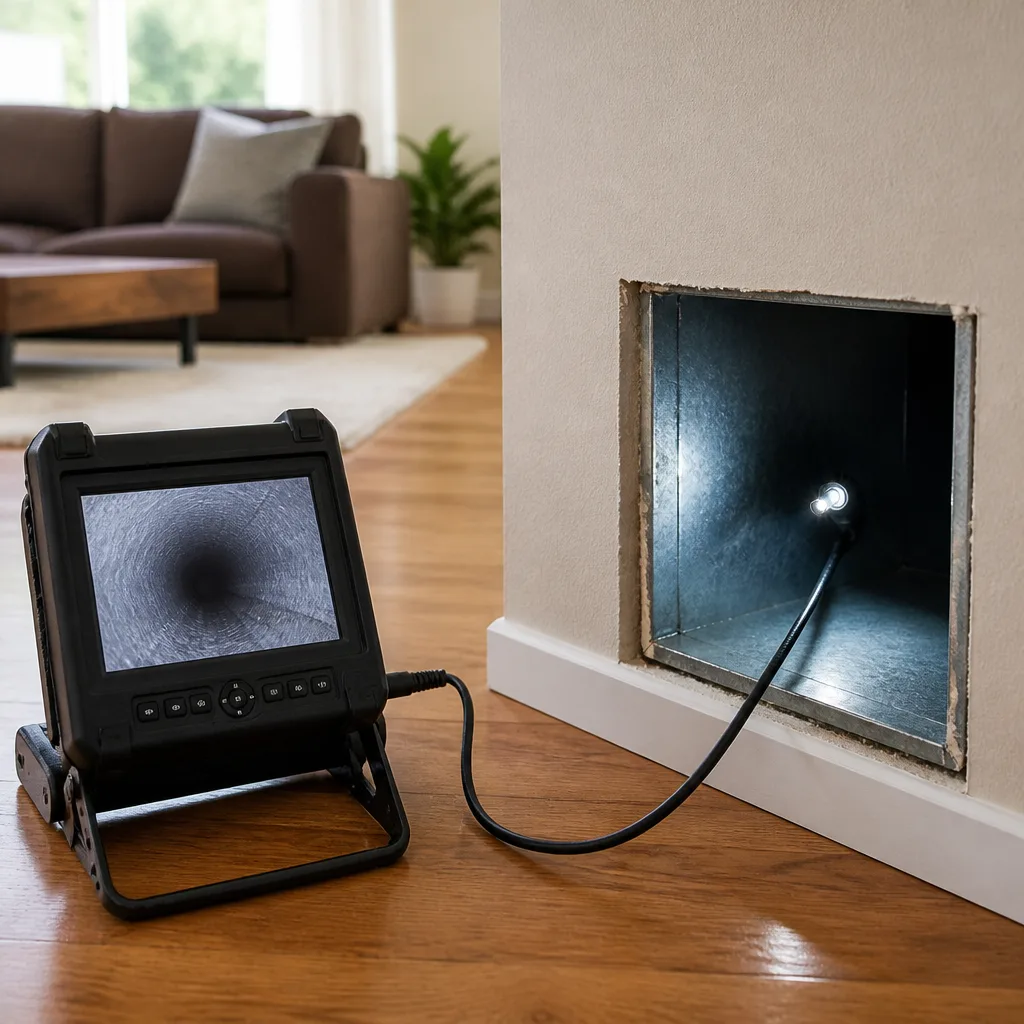 Camera inspection
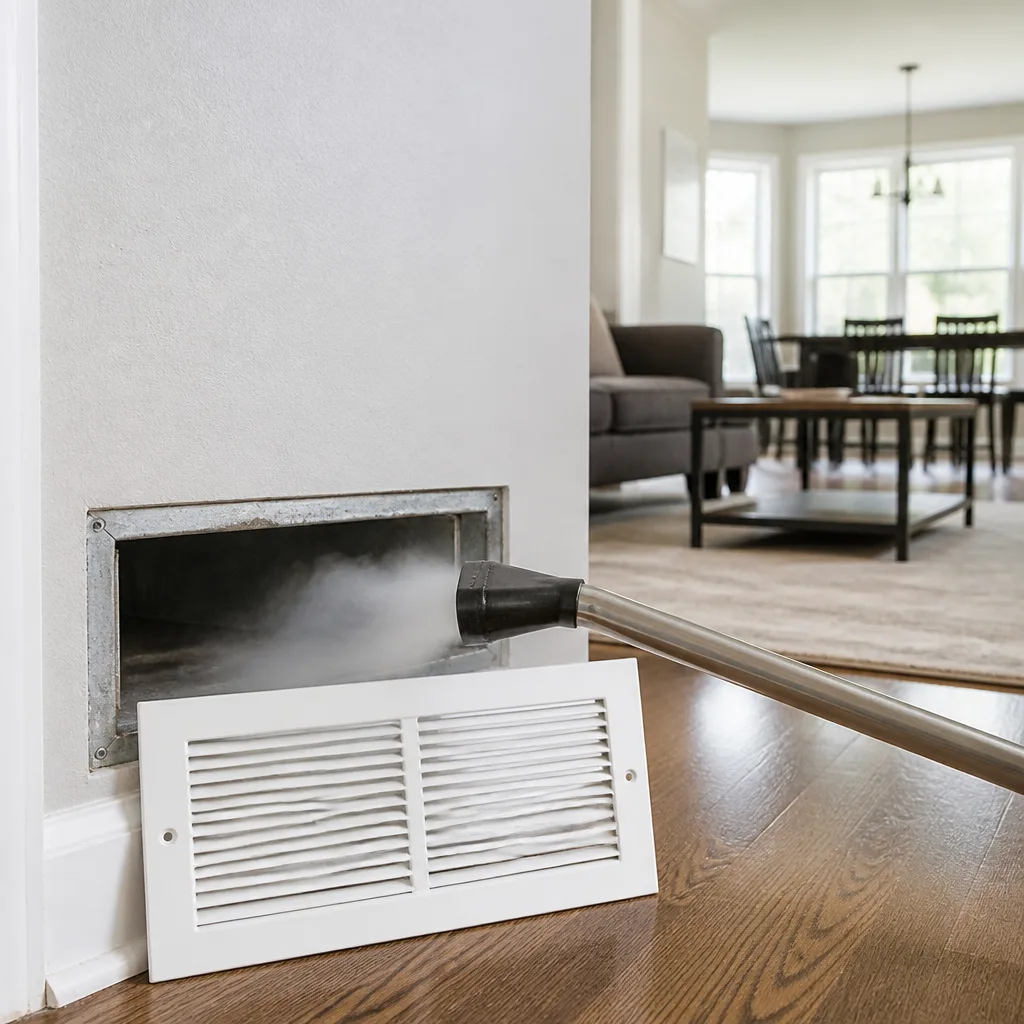 Sanitizing & deodorizing
Whole-system duct and dryer vent check with before-and-after photos - you see exactly what came out of your vents
That "$99 whole-house special" is a bait ad - the real number appears once they are in your hallway, or the "clean" is a shop-vac at the register. We photograph the inside of your ducts before and after instead.
Air Duct Cleaning Cost Breakdown: The San Angelo Homeowner’s Reference for 2026
The $99 duct cleaning ad isn’t a deal. It’s a loss leader designed to get a technician into your home so the real invoice, padded with upsells and treatments, can be written on the kitchen counter. Homeowners in San Angelo call us confused by quotes that differ by $800 for what sounds like the same job, and we don’t blame them. This guide decodes the actual cost structure of duct cleaning in San Angelo: what per-vent and whole-system quotes really mean, which add-ons are legitimate, how your home’s size and duct material move the number, and why the equipment on the truck matters more than the coupon in the mail.
Quick Answer
A whole-system air duct cleaning in San Angelo typically runs $350 to $900 for a standard home, with larger homes, complex sheet metal systems, or jobs bundled with duct repair landing between $900 and $1,200 or more. Per-vent pricing often starts lower on paper but rarely stays there. The written estimate sets the final price, and a legitimate quote is priced per system, not per vent.
Styles & brands we work with
- Whole-home duct cleaning
- Dryer vent cleaning
- Camera inspection
- Sanitizing & deodorizing
Table of Contents
- Why Duct Cleaning Quotes in San Angelo Vary So Widely
- Per-Vent vs. Whole-System Pricing: Decoding What You’re Actually Buying
- Legitimate Add-Ons vs. Inflated Upsells
- How Home Size, Duct Material, and Accessibility Move the Price
- What the Contractor’s Equipment Means for Your Price
- When Cleaning Should Come With a Repair Estimate
- Dryer Vent Cleaning: The Add-On That Isn’t Optional
- How to Read a Duct Cleaning Quote in Five Steps
Why Duct Cleaning Quotes in San Angelo Vary So Widely
The spread between the cheapest and most expensive duct cleaning quote in San Angelo isn’t random. It reflects a real difference in scope, equipment, and time on site. A $99 quote and a $900 quote are rarely describing the same work.
Here’s what separates them. A loss-leader price usually covers one pass with a shop vac and a brush, often limited to the main trunk line, with the technician on site for under an hour and a pitch for add-ons before the equipment is packed up. A legitimate whole-system job uses professional-grade rotary agitation (Rotobrush is the standard) combined with HEPA-rated extraction (Nikro) and runs several hours depending on the number of runs, the home’s square footage, and how accessible the ductwork is.
San Angelo homes add a few local variables. Many were built in the 1950s through 1980s, which means original sheet metal trunk lines mixed with later flex additions, older return-air chases, and attic runs that sit in a hot, dusty environment. That combination means more hidden debris and more accessibility complications than a newer subdivision build.
In our experience, the price signal to watch is the timeline. A quote that promises a full multi-run cleaning in 45 minutes isn’t doing the work. A quote that takes 20 minutes to explain scope, asks about your system, and mentions the number of returns before giving a price is closer to what an honest job looks like.
- Under $150: treat as an inspection or loss leader, not a cleaning
- $350-$650: typical whole-system range for a standard San Angelo home
- $650-$900: larger or more complex systems, multiple returns, sheet metal runs
- $900-$1,200+: bundled cleaning plus repair, or homes with significant ductwork
For a full picture of what the process looks like beyond pricing, see our air duct cleaning page.
Per-Vent vs. Whole-System Pricing: Decoding What You’re Actually Buying
Two contractors can quote the same San Angelo home and one says “$59 per vent” while the other says “$550 for the whole system.” Neither number is wrong on its face; they measure different things. Understanding the two models is the single most useful skill for comparing quotes.
What per-vent pricing actually covers
Per-vent pricing charges for each register and return grille touched. That sounds fair, but it usually means the technician spends a few minutes per vent with a brush and vacuum and moves on. It rarely includes the trunk lines, the plenum, or the supply runs between the coil and the register. The vent count is easy to game: some contractors count only supply registers, some count returns too, and some count every grille in the house whether it’s connected to the HVAC system or not. The price balloons when scope is added, and scope is almost always added after the technician is on site.
What whole-system pricing covers
Whole-system pricing is quoted per system, meaning the full duct network your furnace or air handler serves: supply and return, trunk lines, branches, and the air handler opening where the coil sits. The number of vents is a factor in the estimate, not a meter running during service. Your price is agreed before work starts, and it doesn’t change because the technician found 14 registers instead of 12.
How to compare quotes across the two models
- Ask each contractor exactly what’s included: supply only, or supply plus return plus trunk lines plus plenum.
- Ask whether the price is fixed for the system or moves with the vent count.
- Ask what the equipment is. Rotary agitation and HEPA extraction are the baseline for real cleaning.
- Ask what documentation you’ll get. Before-and-after photos of the ductwork interior are the standard.
- Ask whether the quote includes repair findings or whether repair is a separate estimate.
A whole-system quote that’s higher than a per-vent quote on paper is often cheaper per unit of actual work. The per-vent quote wins only when it’s fixed for the system, includes returns and trunk lines, and comes with documented photography. For San Angelo homeowners, whole-system quoted pricing is the model we recommend insisting on.
Legitimate Add-Ons vs. Inflated Upsells
The upsell is where the loss-leader model makes its money back. Not every add-on is a scam, but the ones pushed hardest in a sales pitch are usually the ones with the thinnest justification. Here’s how to sort them.
Add-ons that earn their price
- Dryer vent cleaning ($100-$200): a genuine safety service. A dryer that takes two cycles to dry a load, or a vent with visible lint buildup at the exterior hood, is a fire risk that duct cleaning alone doesn’t address.
- Air handler and blower cleaning: if the blower wheel is visibly fouled, cleaning it improves airflow and is worth including. Confirm it’s in the scope of the quote, not quoted after the fact.
- Duct repair: legitimate when the technician documents a disconnected joint, crushed flex run, or failed seal. Repair is a real service most duct cleaning companies don’t offer.
Add-ons that usually aren’t worth the price
- Misting or fogging “sanitizers”: if the ducts are clean, the mist isn’t necessary. Price it separately and be skeptical of a technician who insists on it before cleaning.
- UVC or ozone “air purifiers”: these aren’t duct cleaning and often get bundled to inflate the invoice. If you’re curious about whole-home filtration, the honest conversation is about Aprilaire or Honeywell media filters sized to your system, not a last-minute pitch.
- Coil cleaning: legitimate, but only when the coil is actually dirty and accessible. Ask to see it before agreeing to the charge.
The clean signal on any add-on: was it identified before the work started, photographed, and quoted in writing? If it appeared mid-job with a phone photo and a hard sell, slow down.
How Home Size, Duct Material, and Accessibility Move the Price
Two homes with the same square footage can cost 40% different to clean. The factors below explain why, and knowing them helps you sanity-check any quote.
Square footage benchmarks for San Angelo
- Under 1,500 sq ft: usually a single system, 8-12 registers, straight pricing at the low end of the range
- 1,500-2,500 sq ft: the typical San Angelo home, one system, 12-18 registers, mid-range pricing
- 2,500-3,500 sq ft: larger run counts, longer trunk lines, sometimes a second system in a bonus room or guest wing
- Over 3,500 sq ft or multiple systems: priced per system, sometimes above the standard upper range
Duct material type
Flex duct is faster to clean and easier to access, but it’s also softer and can tear if handled roughly, so the technician’s technique matters more than the timeline. Sheet metal trunk lines are more durable but hold more debris in corners and joints and often need more agitation time. Homes with both, which is most San Angelo houses built before the 1990s, cost more to clean than homes with one material throughout.
Accessibility
Attic runs in San Angelo can sit at temperatures that make the work physically harder, and low-slope rooflines mean some attic spaces have limited headroom. Ductwork buried under insulation, taped-over access points, or chases inside walls all add time. None of this is a reason to skip the cleaning, but it’s a reason a quote for your home may sit above a quote for a home where everything is accessible from a single crawlspace.
System age and build era
Older San Angelo homes often have return chases that were never designed for a modern air handler, and original ductwork that has accumulated debris over multiple owner turnovers. If your home was built before 1990, expect the quote to land in the middle or upper part of the range. That’s not gouging; it’s scope.
What the Contractor’s Equipment Means for Your Price
Equipment is the price question most homeowners never ask, and it’s the one that explains most of the gap between a $150 quote and a $600 quote. Real duct cleaning requires two things a shop vac can’t do: mechanical agitation strong enough to loosen debris from duct walls, and HEPA-filtration extraction strong enough to hold what’s released.
What professional-grade equipment looks like
- Rotobrush rotary brush systems agitate the inside of duct walls with a spinning brush head, which is what actually dislodges adhered dust and debris. A handheld brush on a pole pushes debris around; it doesn’t clean the wall.
- Nikro HEPA-rated vacuums provide containment-level negative pressure so what’s loosened gets captured, not redistributed into the living space.
- Abatement Technologies air scrubbers run during the job, scrubbing the air in the work area. This is the same approach used in remediation and restoration work, where controlling what goes airborne matters.
- Before-and-after photography isn’t equipment, but it’s the proof the equipment did its job. Ask for it.
Why the premium is justified
A shop vac running on an extension cord generates a fraction of the airflow a professional extraction system produces, and it has no real filtration for fine particulate. The result is visible debris pulled from the easy-to-reach areas while the fine dust gets stirred into your living space. The $150 quote and the $600 quote aren’t measuring the same deliverable. One moves some lint. The other removes adhered debris and holds the contaminants.
The right framing for the price difference: you’re not paying more for a nicer truck. You’re paying for the equipment that makes the cleaning real, and for the filtration that keeps the air in your home at least as clean at the end of the job as at the start.
When Cleaning Should Come With a Repair Estimate
Cleaning and repair are two different jobs. Cleaning removes debris from intact ductwork. Repair closes the leaks, disconnected joints, and crushed runs that are actively wasting your HVAC airflow and pulling attic dust into the system. About a third of the San Angelo homes we see with significant leakage go into cleaning with ductwork that also needs repair.
Signs your quote should include a repair line
- Rooms that never get comfortable regardless of thermostat setting
- Visibly higher dust accumulation near certain registers
- Disconnected or sagging flex runs in the attic
- R-value-flat flex duct that’s been crushed, kinked, or stepped on
- Recent renovation dust entering the system from an open return
Bundled vs. separate service calls
Combining cleaning and repair in one visit usually costs less than booking them separately, because the technician is already set up, the system is already open, and the diagnostic work overlaps. A bundled quote typically prices the cleaning at the standard range plus the repair as a documented line item based on what’s found. A separate cleaning-then-repair booking means a second mobilization and often a second trip to open the same system.
The trade-off is that bundled pricing only works if you trust the repair diagnosis. Ask for photos of any repair before it’s approved. Repair findings that appear with no photographic evidence and no written quote are the same red flag as any other upsell.
Dryer Vent Cleaning: The Add-On That Isn’t Optional
Dryer vent cleaning is a fire-safety service, not an indoor air quality upgrade, and the pricing reflects it. In San Angelo homes, dryers often vent through the attic or an exterior wall with long, angled runs, and lint accumulates on the inside of the duct where it’s invisible until it’s a problem.
- Typical price: $100-$200 as a standalone service, less when bundled with duct cleaning
- When to book it: a dryer that takes two cycles to dry a load, a lint screen that fills faster than usual, visible lint at the exterior hood, or more than a year since the last cleaning
- Why it matters: dryer lint is highly flammable, and a restricted vent also drives up dryer energy use
The same professional equipment used on duct systems applies here: rotary agitation to loosen caked lint, HEPA extraction to capture it, and photographic before-and-after to show the result. A dryer vent job that skips the photography is a job you can’t verify. Our dryer vent cleaning service treats the vent as the fire hazard it is, not as an optional add-on.
How to Read a Duct Cleaning Quote in Five Steps
- Confirm the pricing model. Ask directly: is this priced per vent or per system, and does the price change when the technician arrives? Whole-system pricing quoted before work starts is the standard you want.
- Ask what’s included. Supply, return, trunk lines, plenum, and air handler opening. If a line item is missing from the quote, it’s usually an add-on later.
- Ask about the equipment. A professional-grade rotary brush system and HEPA-rated extraction should be named without hesitation. The word “shop vac” is a red flag in a duct cleaning quote.
- Ask for documentation. Before-and-after photos of the interior ductwork are the proof of work done. A written summary of findings is the proof of scope.
- Ask about repair findings upfront. Whether the quote includes an inspection for disconnected or damaged ductwork tells you how complete the service is.
For a fuller picture of how the local market works, our Duct Cleaning San Angelo overview covers the services, the equipment, and how to tell a thorough job from a thin one.
Common Mistakes to Avoid
- Booking on the coupon price alone. The $99 quote is a door-opener, not a cleaning. The invoice that lands on your counter will not resemble the coupon, and you’ll have no written scope to argue from.
- Comparing per-vent to whole-system quotes as if they’re the same number. A $360 per-vent quote for 6 registers and a $600 whole-system quote for the same home are not comparable until you count returns, trunk lines, and plenum. Get both quotes itemized before you compare totals.
- Approving add-ons that appear mid-job without photos. Any treatment, sanitizer, or repair pitched after the technician is on site should come with photographic evidence and a written addition to the estimate. If neither appears, decline.
- Skipping the return side. Return-air ducts hold more debris than supply runs because they’re the intake side of the system. A quote that only covers supply registers is half a job.
- Forgetting the dryer vent. Duct cleaning visits leave without touching the dryer vent in too many San Angelo homes. It’s a fire risk, and bundling it with a duct cleaning visit is cheaper than booking it separately.
- Assuming the cheapest truck that arrives is the same service. The equipment check in the quote matters. A shop vac and a brush in a San Angelo attic does not equal a rotary brush system with HEPA extraction and air scrubbing.
- Ignoring repair findings to stay on budget. A duct cleaning that leaves a disconnected flex run unsealed is cleaning a system that will recontaminate itself quickly. Budget for repair if the inspection finds leakage.
See the difference
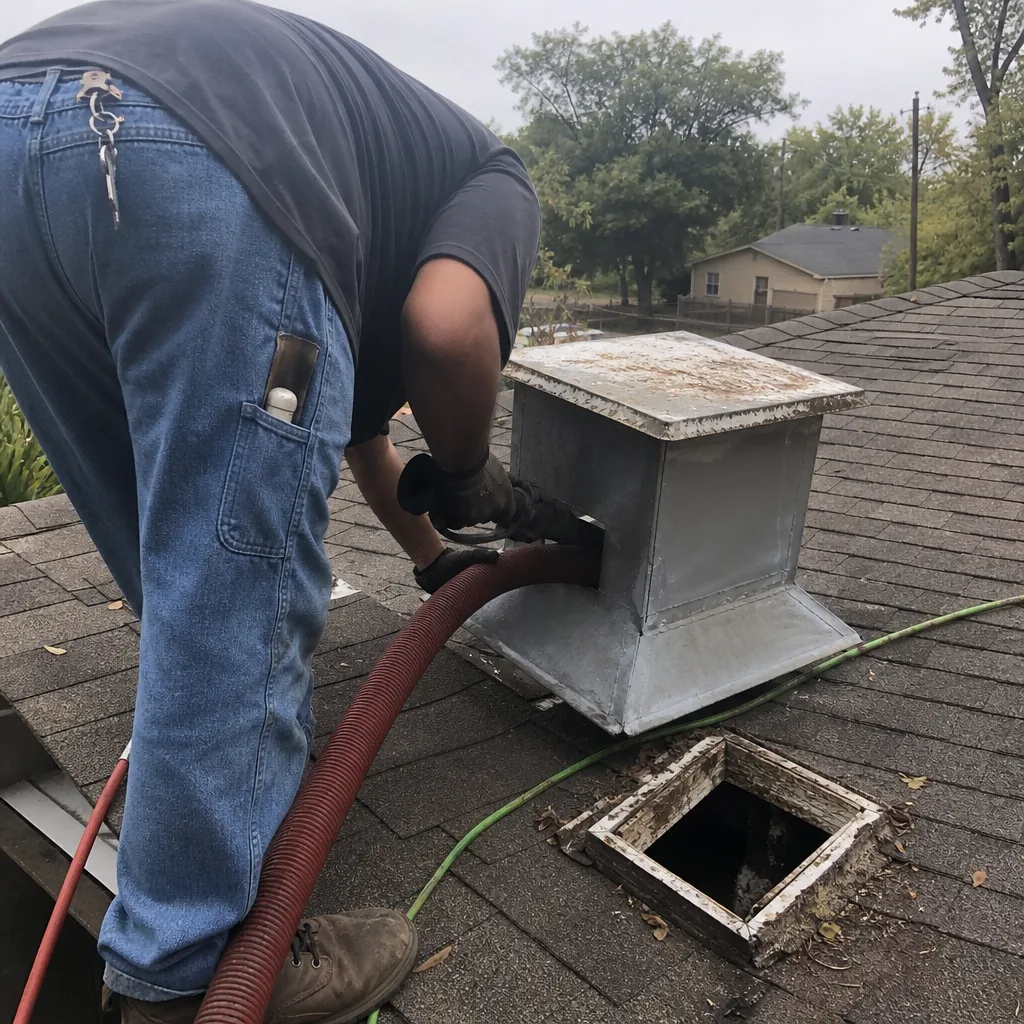 Before
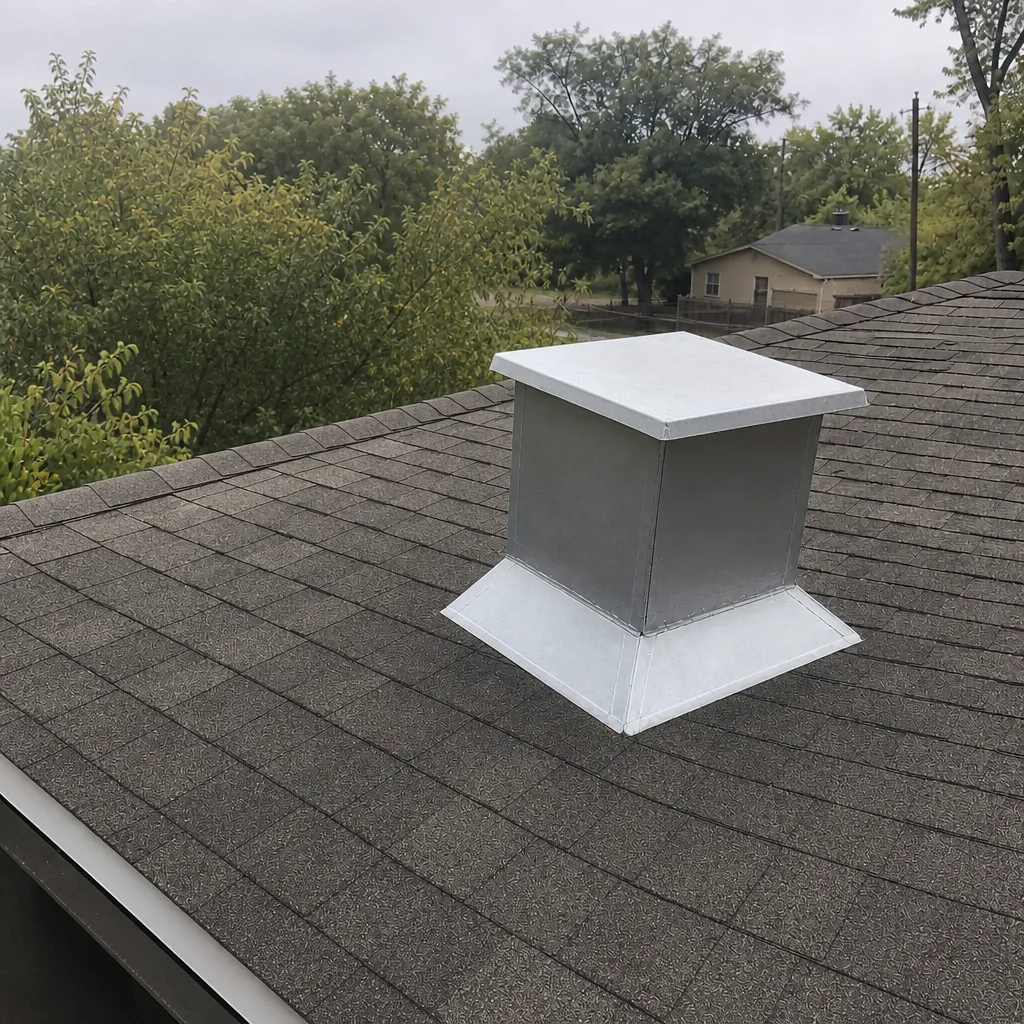 After
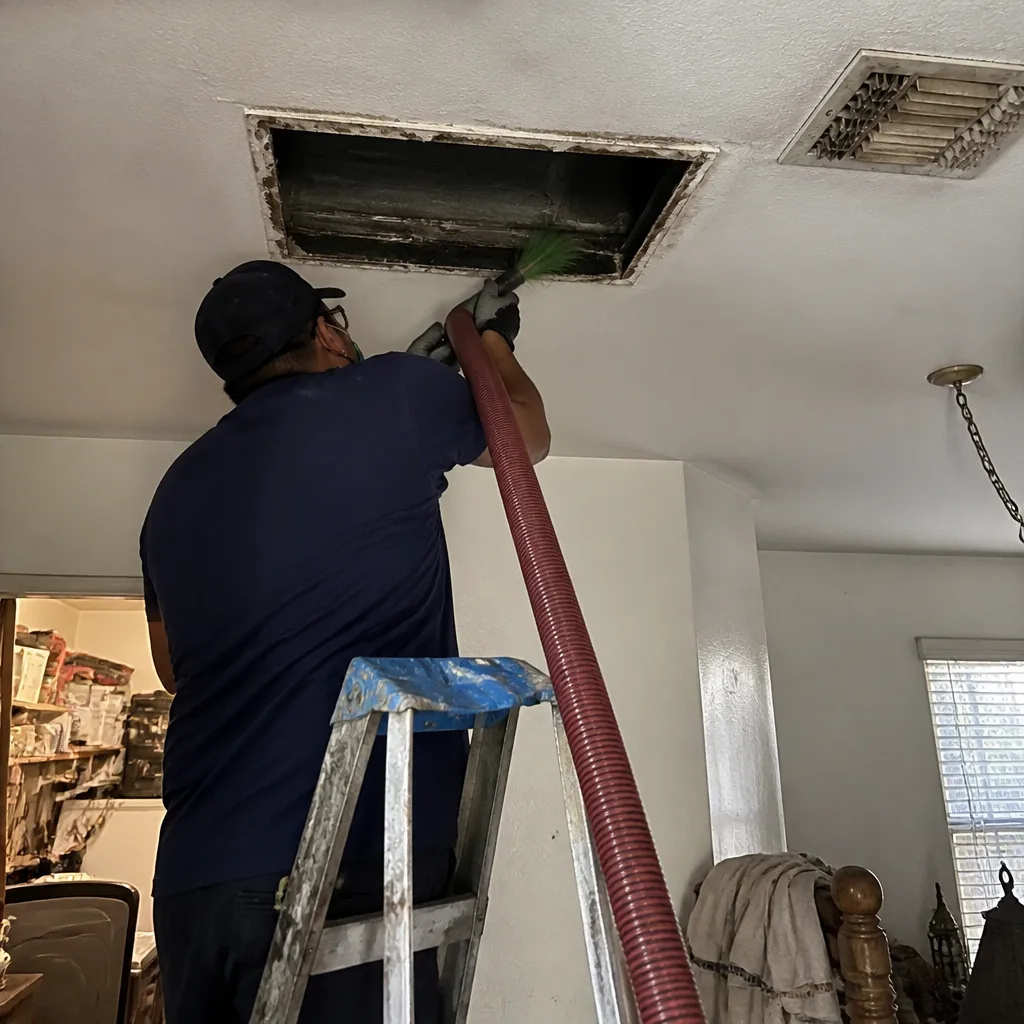 Before
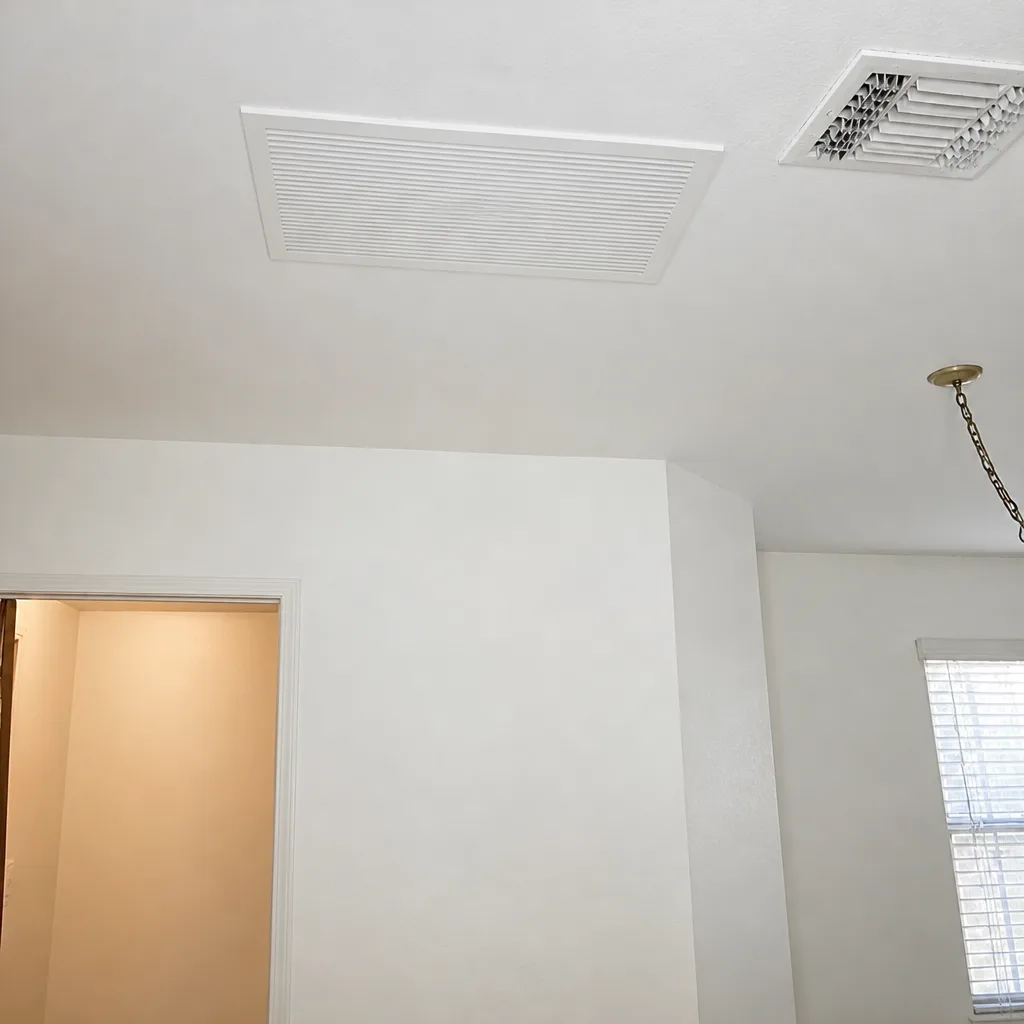 After
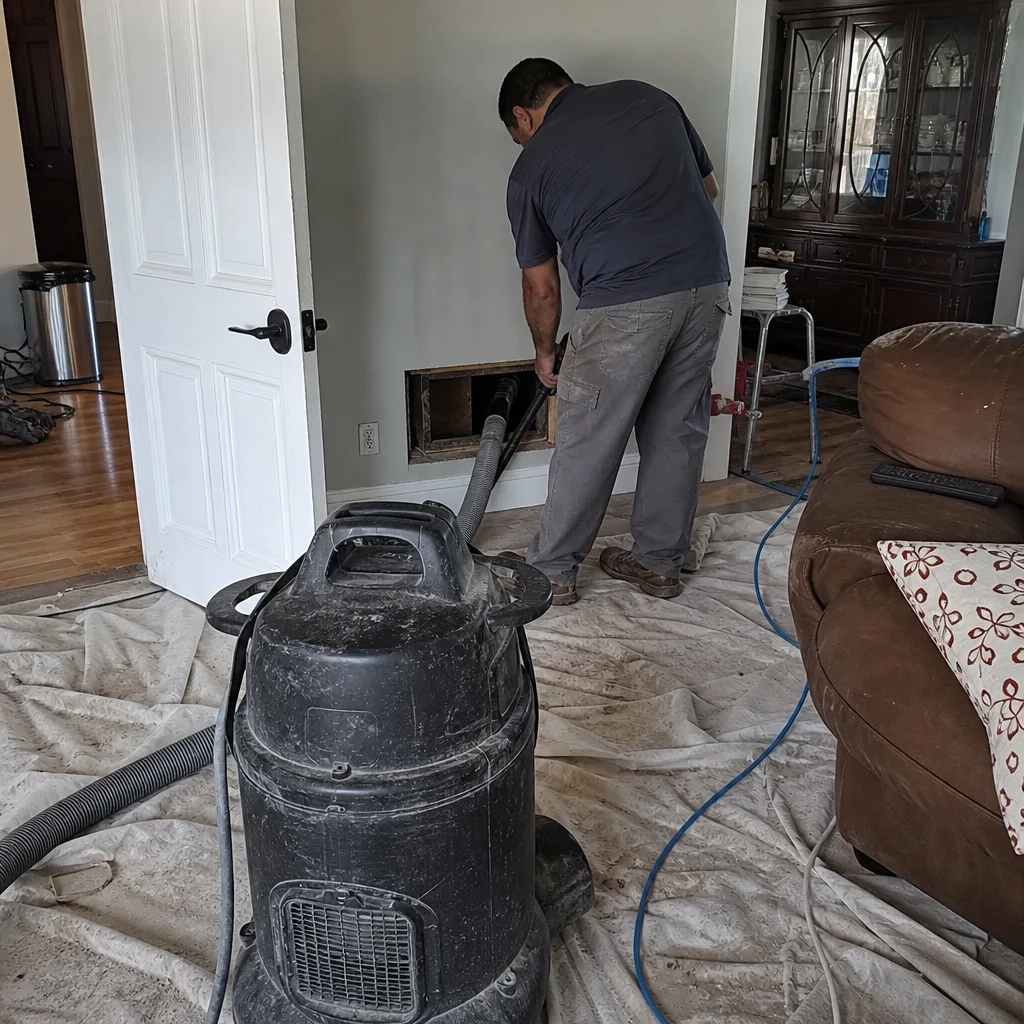 Before
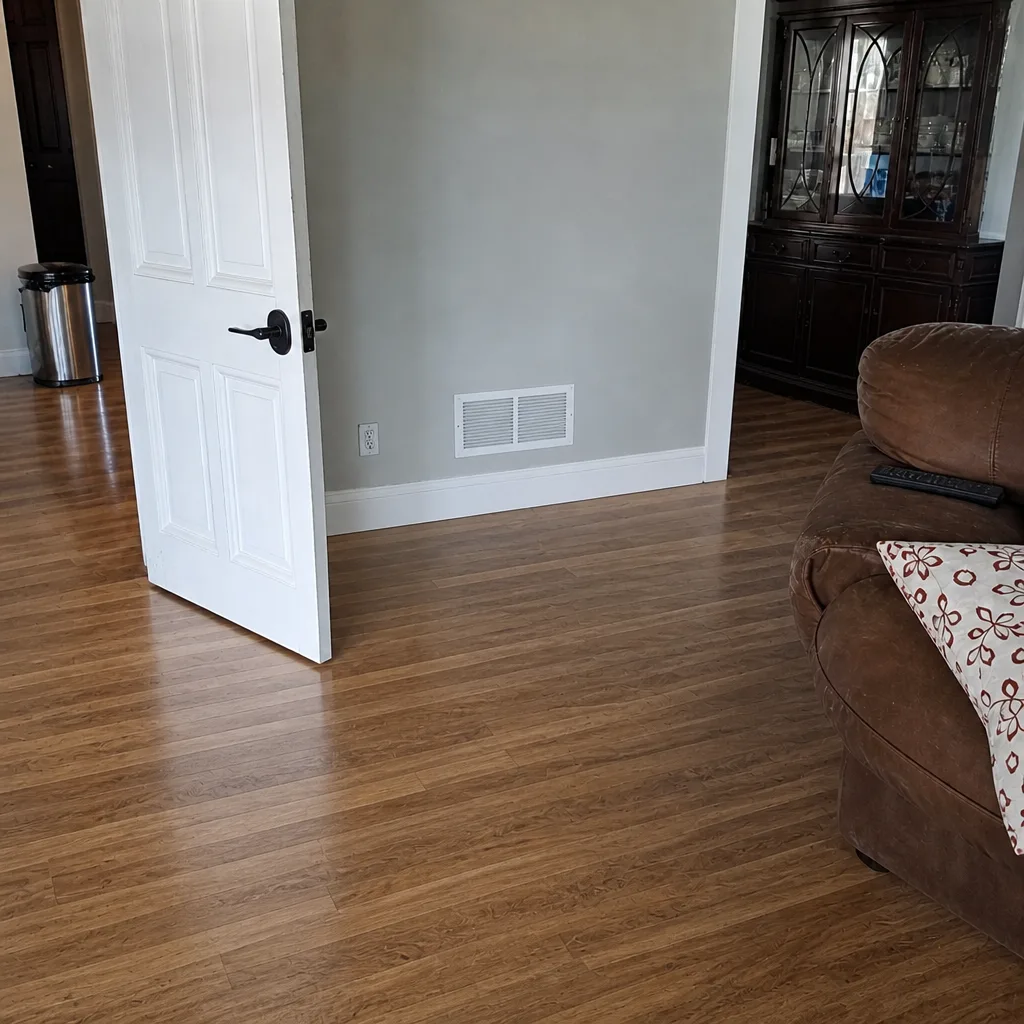 After
When to Call a Professional
Book a professional cleaning when your visible dust problems won’t go away despite regular filter changes, when you’ve just finished a renovation that left dust in the return air, when you’ve moved into an older San Angelo home with unknown duct history, or when a dryer takes two cycles to dry a load. These are the signals that the system itself needs attention, not just the filter.
Book a repair evaluation whenever airflow is uneven between rooms, registers show visible gaps or sagging flex duct, or a technician finds disconnected joints during cleaning. Duct repair is a real service with real cost, and it’s the one thing most duct cleaning companies can’t do.
The third scenario is a quote that’s suspiciously low. A $99 pitch is a reason to get a second estimate, not a reason to book.
Duct Cleaning San Angelo offers free estimates in San Angelo: call (844) 761-5306. We answer 24/7. Fast dispatch from 7am to 7pm, Sunday through Friday.
Frequently Asked Questions
A whole-system duct cleaning in San Angelo typically costs $350-$900 for a standard home, with larger or more complex systems landing between $900 and $1,200+, and the written estimate sets the final price. Dryer vent cleaning runs $100-$200 as an add-on. Prices are estimates based on scope, not fixed quotes; the written estimate given before work starts is the actual number. Call (844) 761-5306 for an exact quote. Estimates are free.
Cheap quotes usually reflect a narrower scope: one pass with shop-grade equipment, supply registers only, no return side, no documentation, and a plan to upsell add-ons once the technician is in your home. A $99 cleaning quote and a $600 quote aren’t discount versus premium pricing for the same work; they’re different services. Ask what’s included, what equipment is used, and whether the price is fixed for the system. Call (844) 761-5306 to get a whole-system quote you can compare against the cheap one.
Before-and-after photos of your own ductwork interior are the standard proof, and you should ask for them in writing before booking. A cleaning visit that doesn’t document what the ducts looked like before and after leaves you with no way to verify scope. Paired with equipment specifics (rotary brush agitation plus HEPA extraction plus air scrubbing during the job), the photography is the answer to the bait-and-switch worry. Call (844) 761-5306 to ask how the process is documented on your home.
Most homes don’t need duct cleaning on a fixed schedule. A reasonable baseline is every three to five years, sooner after major renovation, after moving into an older home with unknown duct history, or if you have a pet or allergy situation that keeps dust returning. The honest answer is: when the system shows the signs, not on a calendar. Call (844) 761-5306 to talk through whether your home’s signs point to cleaning.
No, dryer vent cleaning is a separate service in almost every quote, including ours. It’s priced at $100-$200 standalone and less when bundled with duct cleaning, and it addresses a fire hazard the ducts themselves don’t create. A dryer that takes two cycles to dry a load is the clearest sign it’s overdue. Call (844) 761-5306 to add it to a duct cleaning visit.
No, duct repair is a separate line item, but it can often be done in the same visit when cleaning finds a disconnected joint, crushed flex run, or failed seal. The repair cost depends on what’s found and is quoted in writing with photos before work continues. Bundling the two usually costs less than booking separate visits. Call (844) 761-5306 for a quote that covers both cleaning and repair inspection.
The Bottom Line
Duct cleaning pricing in San Angelo is a scope question, not a price-shopping question. The $99 loss leader and the $900 comprehensive job aren’t offers on the same service; they’re different services with different equipment, different documentation, and different results. Compare quotes on scope, equipment (Rotobrush, Nikro, Abatement Technologies), documentation, and whether the price is fixed per system. Then decide. The written estimate you get before work starts is the number that matters, and the photos afterward are the proof it was delivered. A quote you can’t decode is a quote you shouldn’t book, and a quote you can decode is one you can compare honestly against the rest. Call (844) 761-5306 for a free whole-system estimate in San Angelo. We answer 24/7. Fast dispatch from 7am to 7pm, Sunday through Friday.
Written by the team at Duct Cleaning San Angelo.