
Last updated November 16, 2026
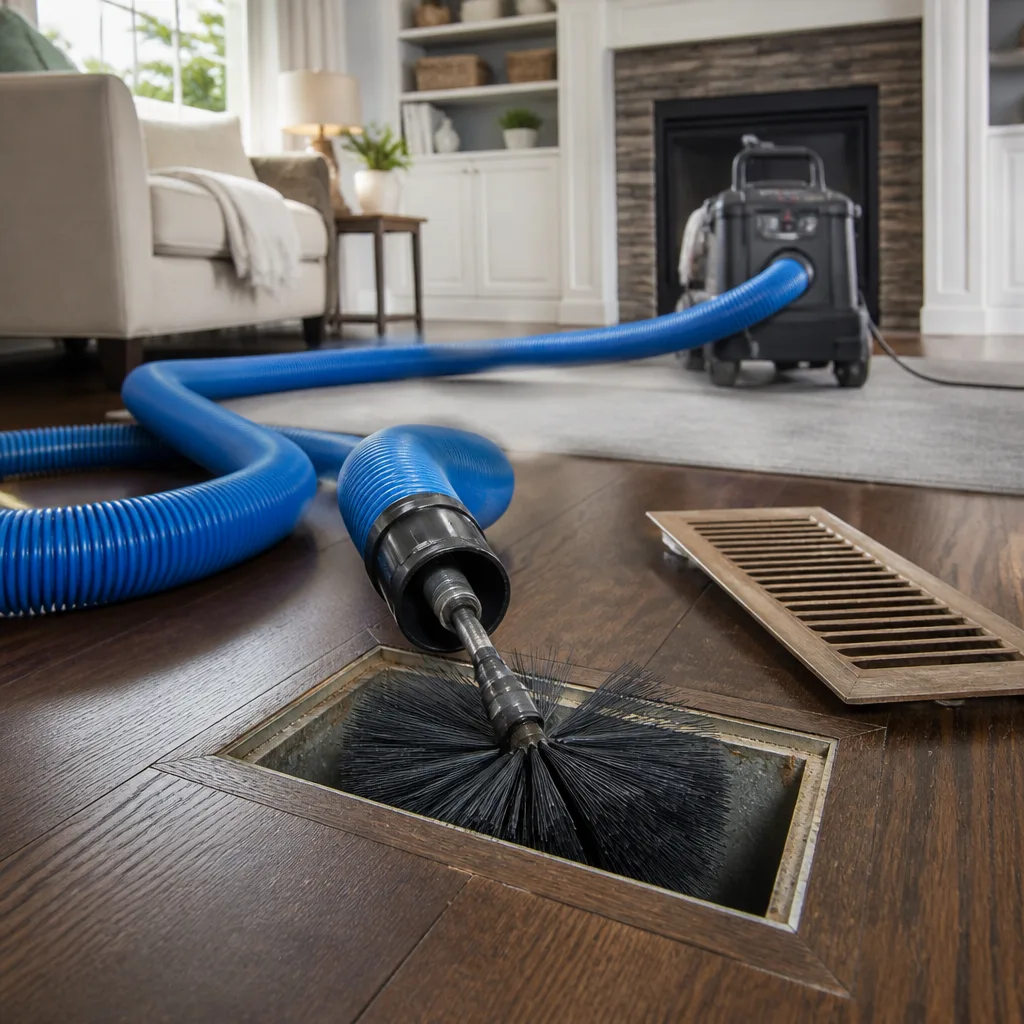 Whole-home duct cleaning
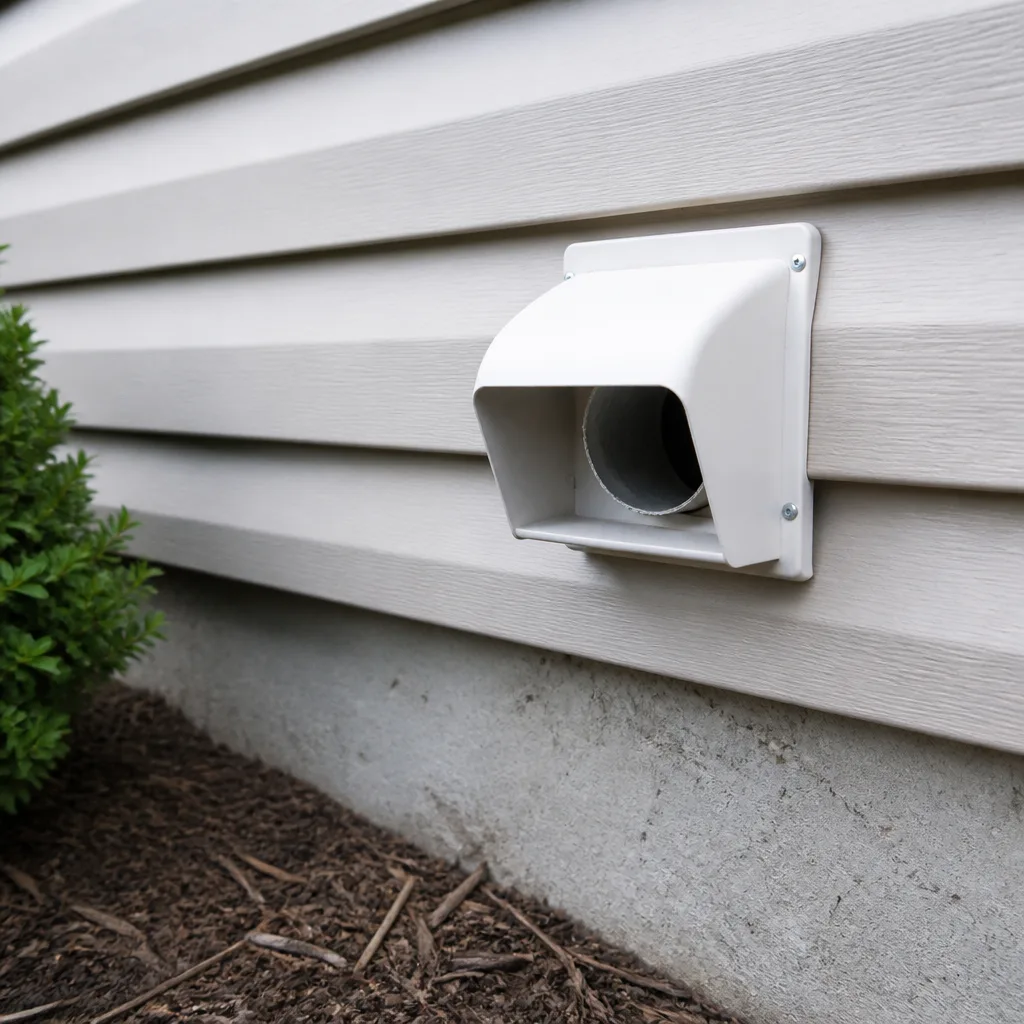 Dryer vent cleaning
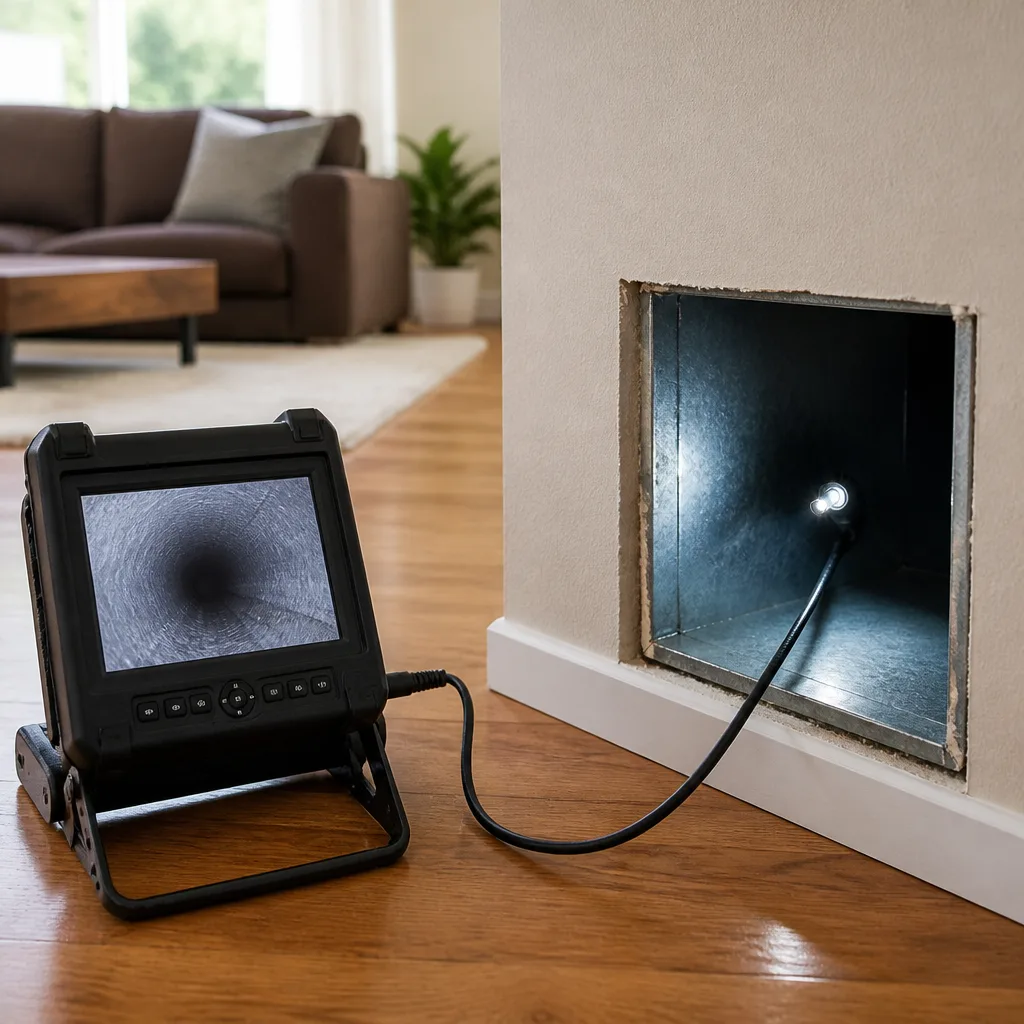 Camera inspection
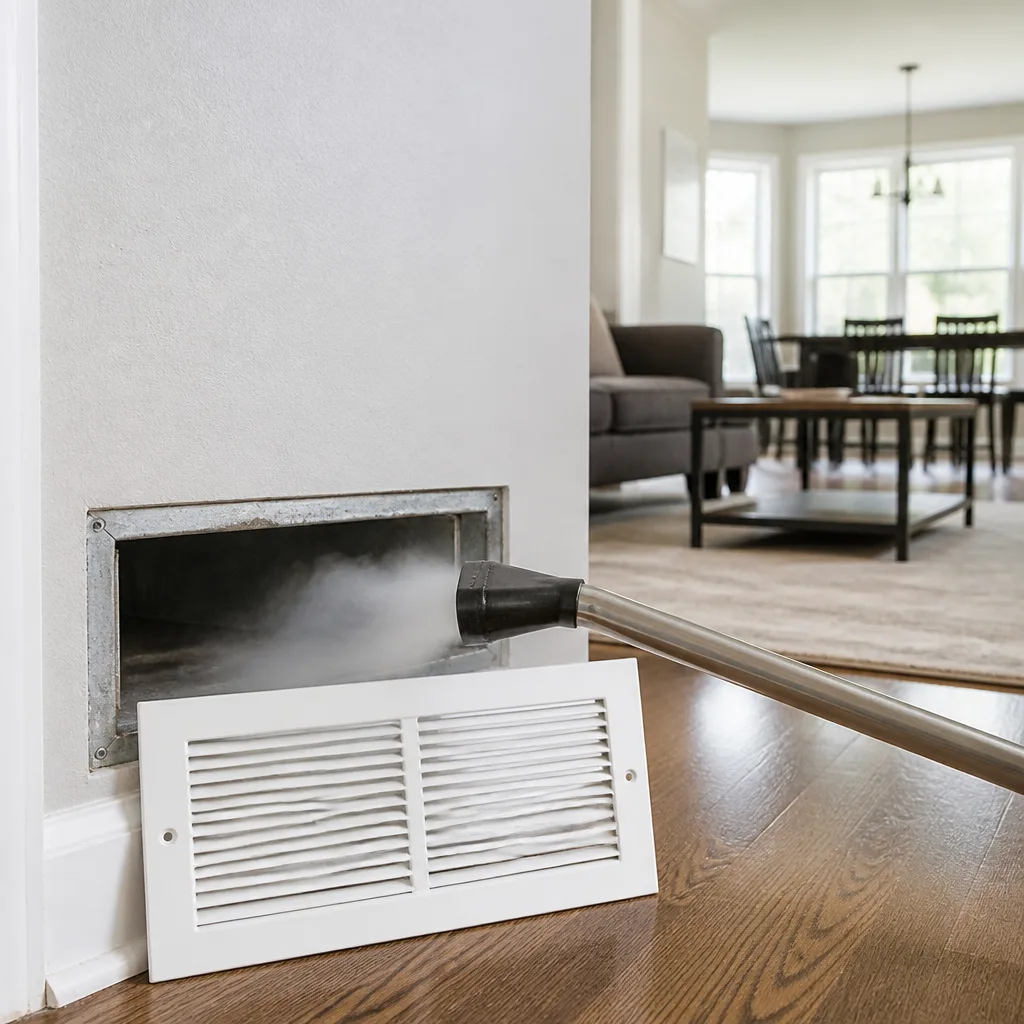 Sanitizing & deodorizing
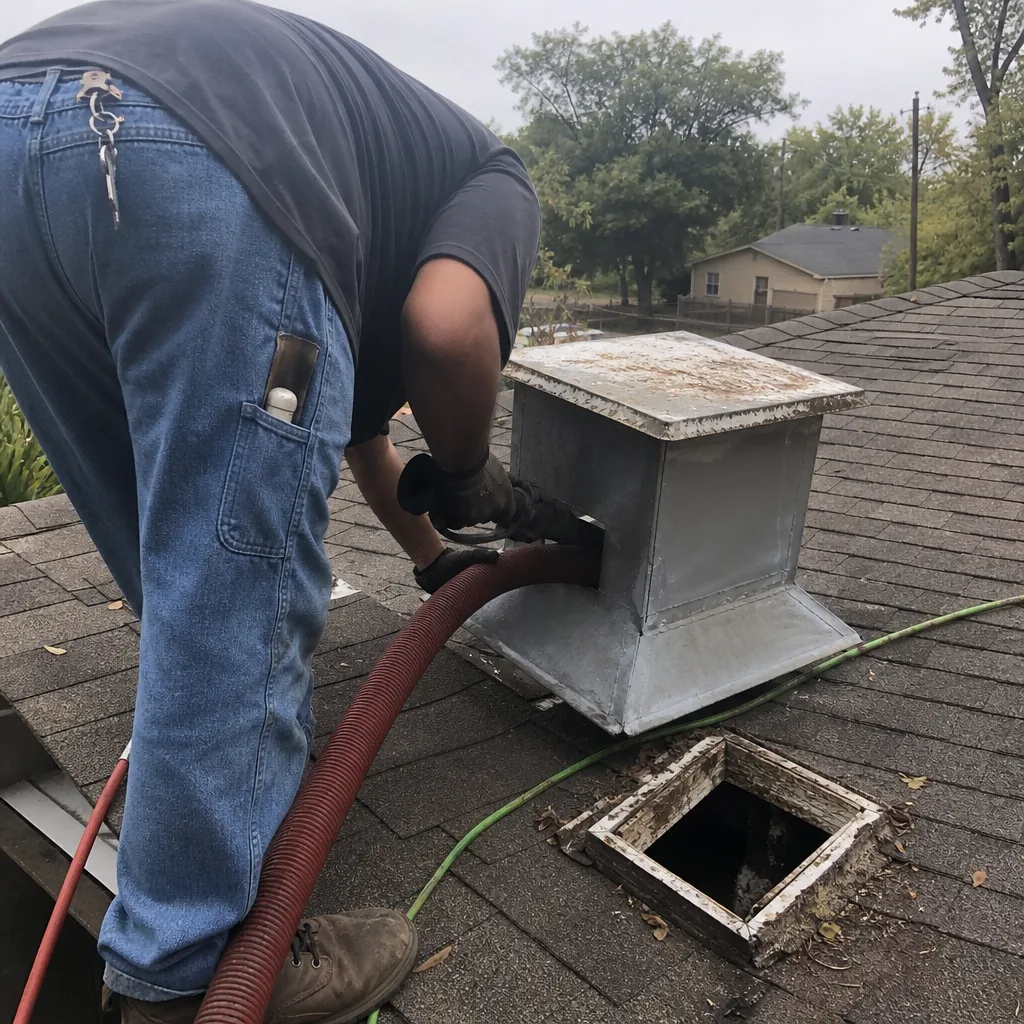
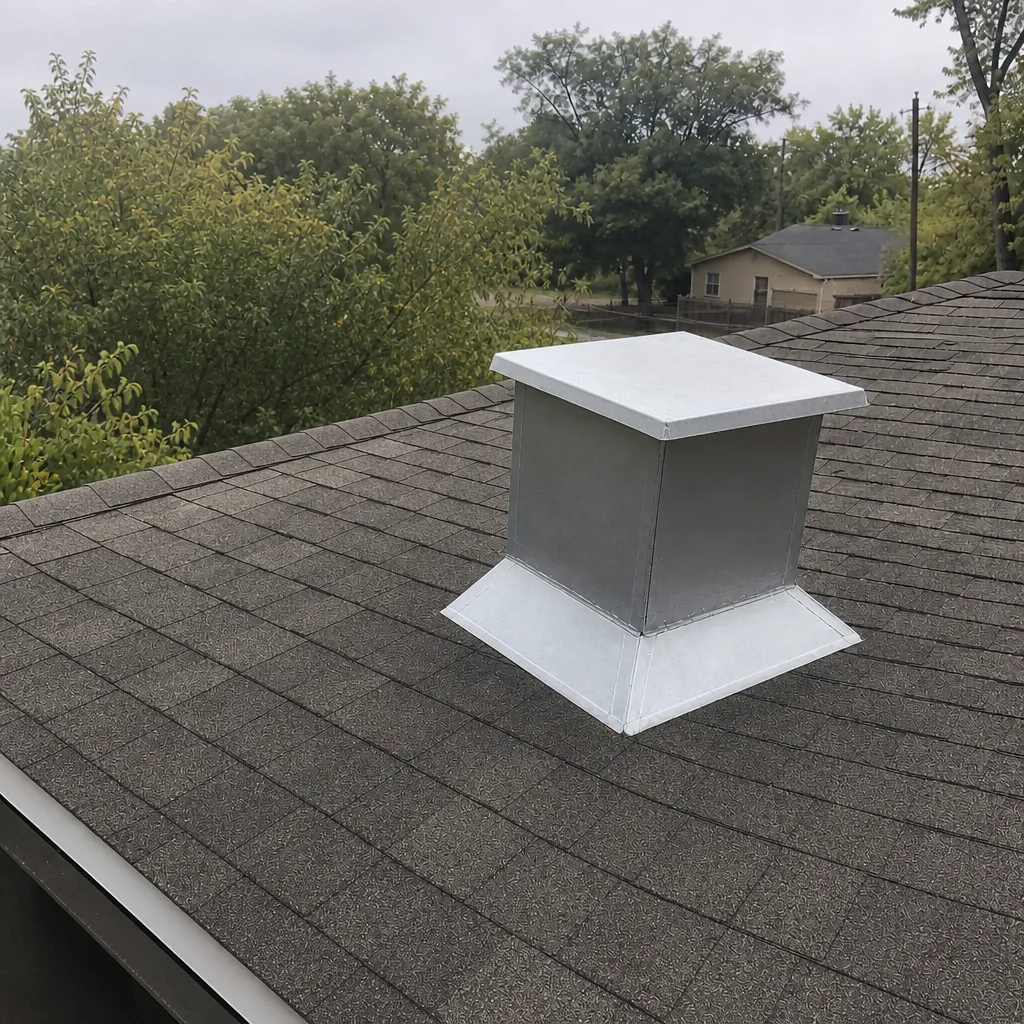
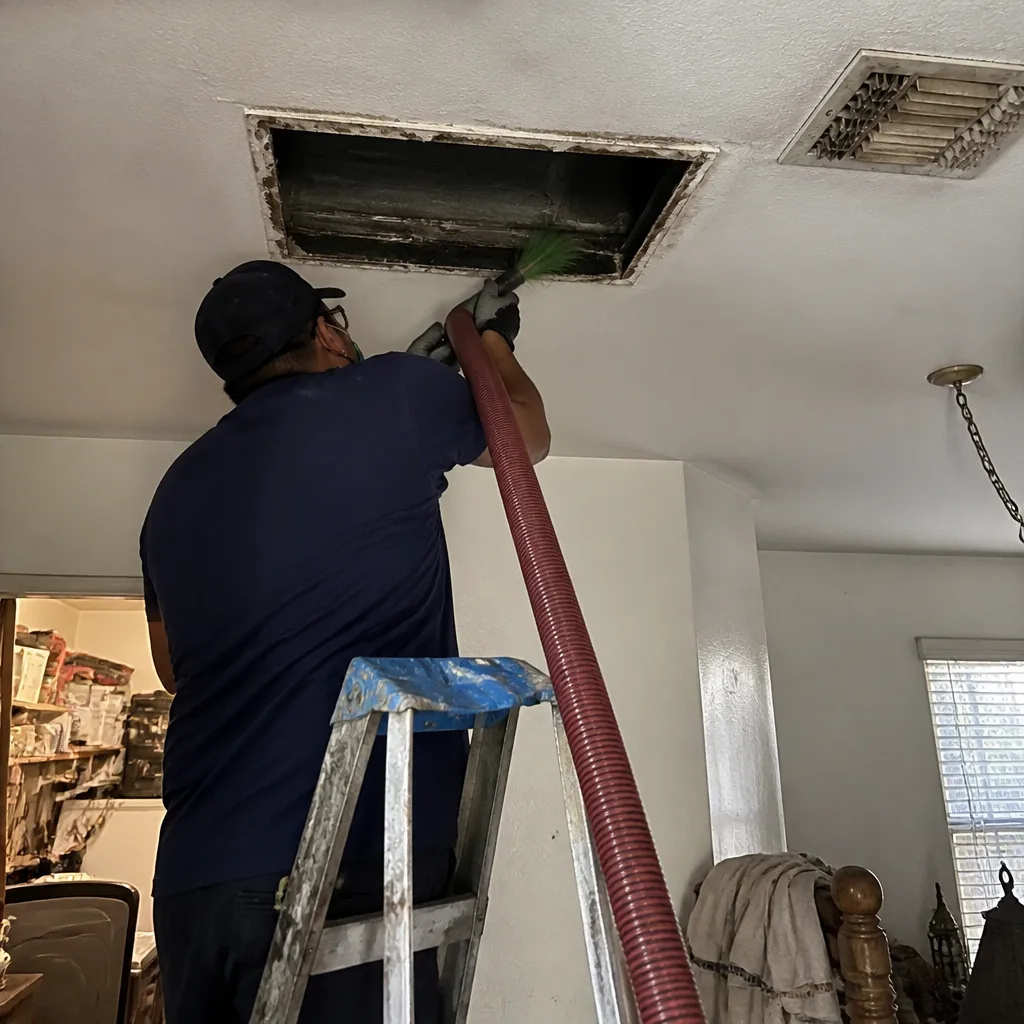
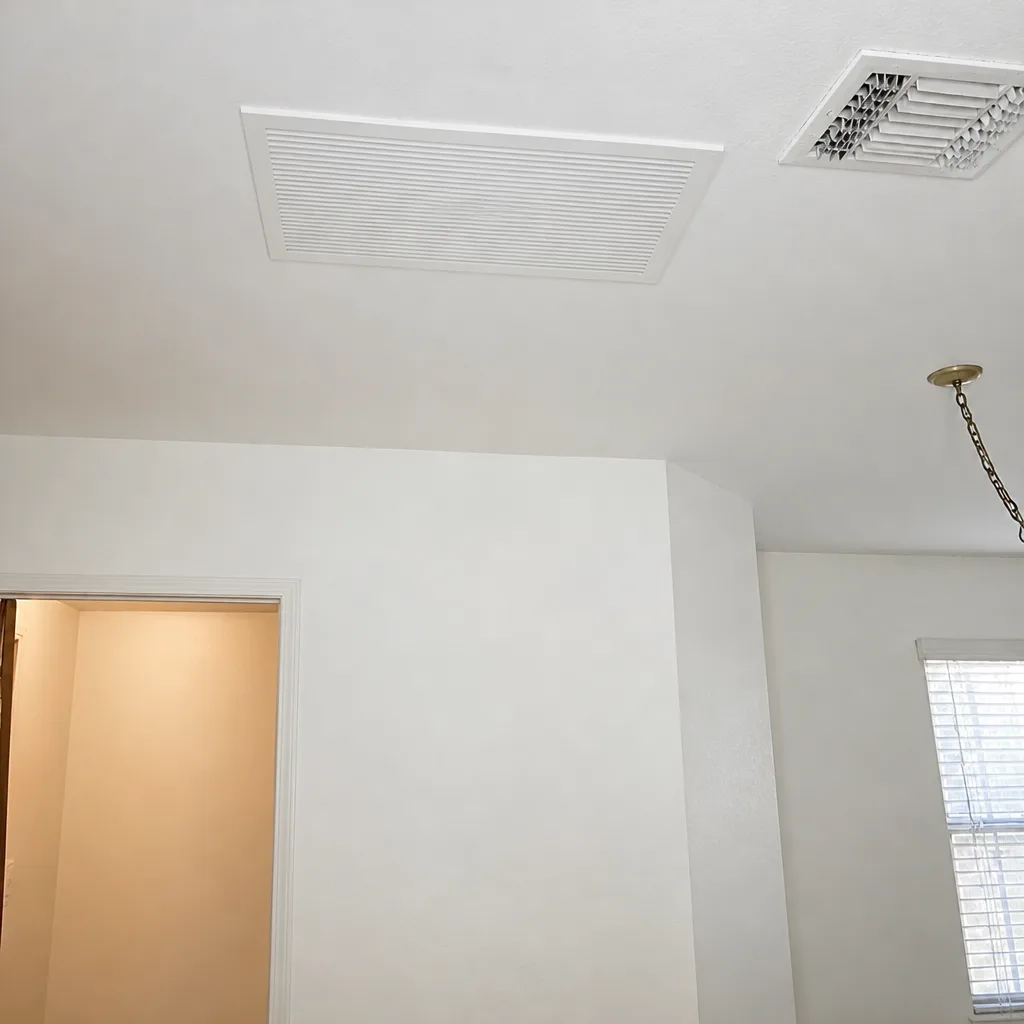
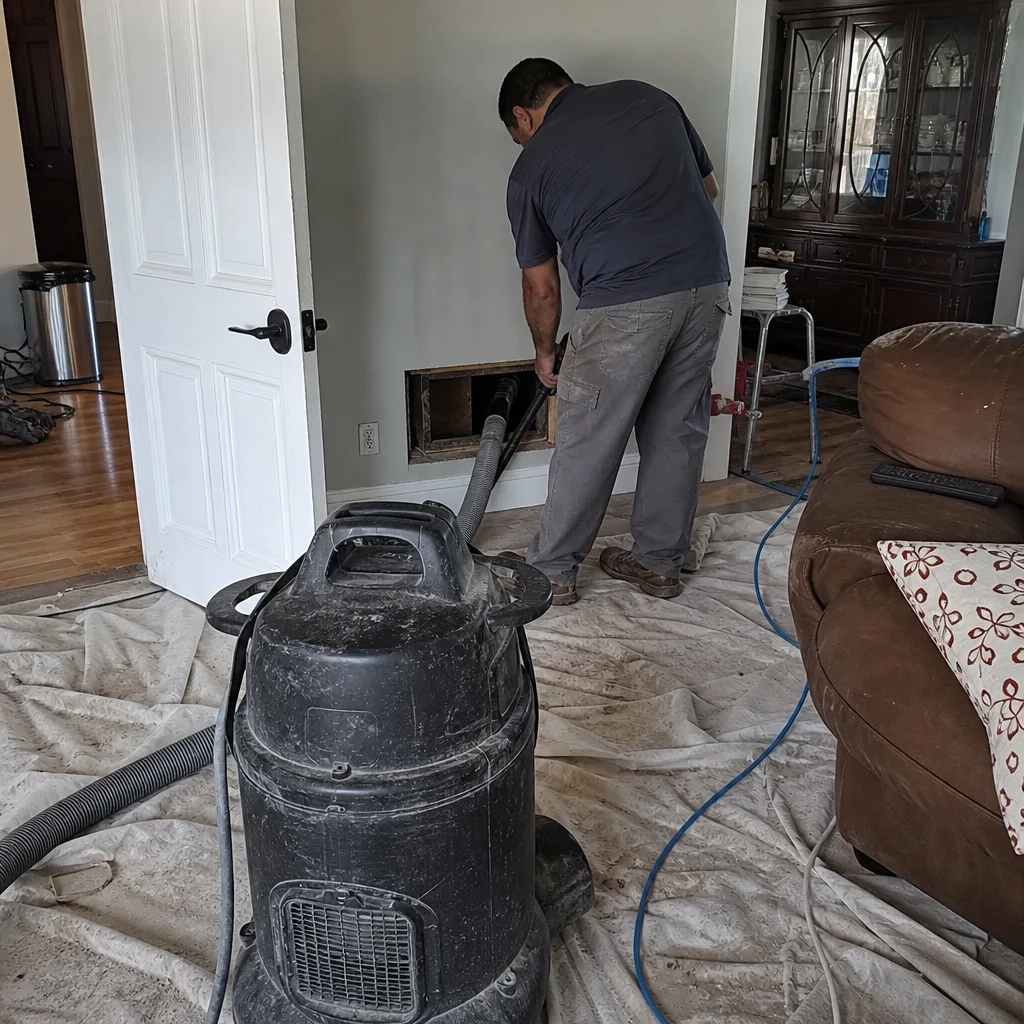
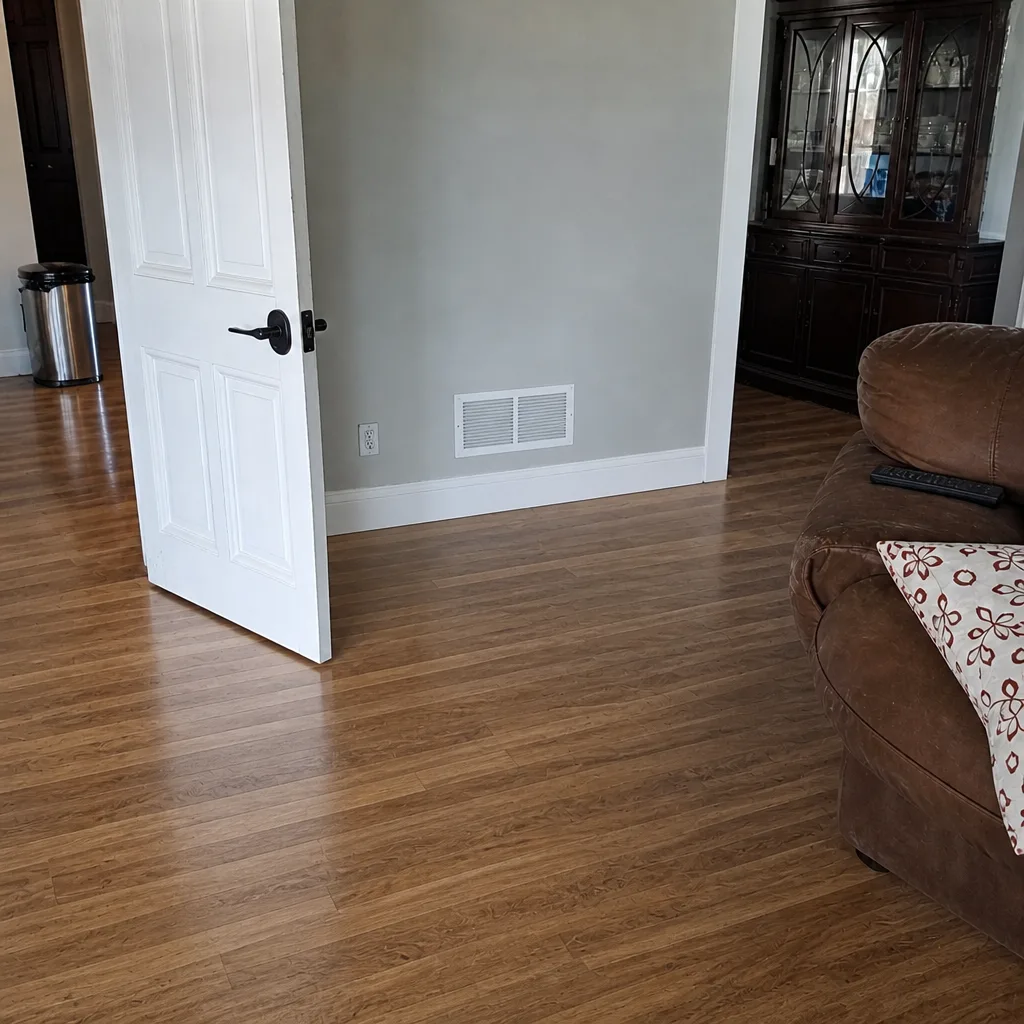
Whole-system duct and dryer vent check with before-and-after photos - you see exactly what came out of your vents
That "$99 whole-house special" is a bait ad - the real number appears once they are in your hallway, or the "clean" is a shop-vac at the register. We photograph the inside of your ducts before and after instead.
Seasonal Air Duct Cleaning Care for San Angelo: Year-Round Homeowner’s Guide
Most duct care advice you’ll find online assumes four seasons: a spring cleaning, a fall cleaning, and a quiet stretch in between. San Angelo doesn’t work that way. Our summers push past 100°F for weeks at a time and our springs bring cedar and dust that find every gap in a return line. The result is a two-peak cycle of extreme cooling demand paired with year-round dust intrusion, and the care calendar that fits it looks nothing like the national template. This guide maps duct care tasks to the actual San Angelo year: pre-summer inspection and sealing, mid-summer performance logging, the ideal September to October cleaning window, winter condensation concerns in attic runs, and spring dust and pollen defense.
Styles & brands we work with
- Whole-home duct cleaning
- Dryer vent cleaning
- Camera inspection
- Sanitizing & deodorizing
Quick Answer
In San Angelo, the best time for a full professional air duct cleaning is early fall, roughly September through October, once peak cooling demand has passed and before the heating season starts. That said, a pre-summer inspection and seal in April and May does more to protect air quality than cleaning alone, because sealing leaks stops new debris from entering under maximum airflow. A year-round homeowner should do a quick visual check each season and schedule a professional cleaning every few years, or sooner after renovations, a move, or a multi-week dusty stretch.
Table of Contents
- Why the Standard Four-Season Duct Calendar Fails in San Angelo
- Pre-Summer (April and May): Inspect and Seal Before the Peak
- Mid-Summer: Is It Duct Restriction or Just the Heat?
- Post-Summer (September and October): The Best Cleaning Window
- Winter in West Texas: Cold Snaps, Attic Condensation, and Dormant Systems
- Spring Cedar and Dust Season: Return Leaks and Pollen Control
- How Dust Actually Moves Through a San Angelo Home
- How to Assess Your Ducts Before Calling Anyone
- Common Mistakes to Avoid
- When to Call a Professional
- Frequently Asked Questions
- The Bottom Line
Why the Standard Four-Season Duct Calendar Fails in San Angelo
The generic duct guide you’ll find on most contractor sites was written for a mid-Atlantic climate where spring and fall are the peak demand seasons and summer is mild. That calendar assumes ducts sit relatively idle through winter and shoulder months. In San Angelo, the cooling system carries most of the annual load. It runs at or near full capacity from roughly May through September, and the debris that collects inside the ducts during that run doesn’t take a fall break the way it does in cooler regions. When we open up ductwork in San Angelo after a long summer, the material we pull is the accumulation of months of continuous operation, not four discrete seasonal events.
There’s a second reason the standard calendar doesn’t fit. San Angelo isn’t a single-climate town. Homes inside the city and out toward the surrounding ranch country draw in very different airborne loads: fine caliche dust in one stretch, cedar pollen from the eastern edge in another, construction dust from new build blocks in a third. A homeowner on the north side of San Angelo near the Concho River valley handles different debris than someone on higher ground toward the airport. The tasks are the same, but the frequency can be genuinely different.
What that means for planning is simple: stop thinking in terms of seasons and think in terms of HVAC run hours plus outdoor dust events. A San Angelo home that runs its cooling system for eight months straight accumulates the same debris load in one year that a cooler-climate home reaches in three. That’s the core insight of this guide, and everything below builds from it.
Pre-Summer (April and May): Inspect and Seal Before the Peak
April and May are the most consequential months for duct care in San Angelo, and the work that matters most isn’t cleaning. It’s inspection and sealing. Here’s the reasoning: as the cooling season ramps up, the pressure inside your supply and return ductwork increases dramatically. Every unsealed joint, disconnected collar, and gap at a ceiling boot becomes a small intake capable of pulling attic insulation fibers, caliche dust, and outside air straight into the airstream. Cleaning a leaky duct is a temporary fix that undoes itself under peak load. Sealing the leaks first is what makes the cleaning last.
A proper pre-summer inspection should look at a handful of specific things. In our experience, most San Angelo homes have at least one problem on this list:
- Disconnected or partially connected supply runs in the attic, especially at flexible duct collars where friction and heat have loosened the connection.
- Return air chases that pull from a garage, hallway, or mechanical closet where unfiltered air enters.
- Filter slots that don’t seal, letting air bypass the filter entirely and coat the evaporator coil and duct walls with dust.
- Boots and ceiling registers with visible gaps around the edge where the drywall meets the ducted metal.
- Attic duct runs that have lost their outer vapor barrier or insulation, leaving them exposed to summer attic temperatures and prone to condensation when cool air runs through them.
This is where a professional-grade inspection pays off over a visual walkaround. A technician with the right tools can pressure-test the system, check each branch connection, and identify which leaks matter most. If you’d rather start with a basic homeowner check, grab a flashlight and a ladder. Look at the visible collar connections in the attic or crawl space and check the seal around each ceiling register. If you see torn duct wrap, disconnected flexible run, or a gap wide enough to admit a finger, that’s a repair, not just a cleaning. Our air duct cleaning visits commonly combine cleaning with leak repair for exactly this reason.
Mid-Summer: Is It Duct Restriction or Just the Heat?
By July, every San Angelo homeowner is wondering whether the HVAC is working harder than it should. The honest answer is: sometimes it is, and sometimes it isn’t. San Angelo’s summer heat is genuinely extreme, and a system that runs continuously through the hottest part of the afternoon without ever reaching setpoint may simply be losing the battle against a 100°F-plus outdoor load. The trap is assuming that any “system running too long” symptom means ductwork is the culprit. It doesn’t always.
The way to tell the difference is to log a few specific observations over several days and then bring that log to a technician. If the system has a genuine duct problem, the symptoms will repeat a specific pattern. If the system is just working against the load, the pattern will match the outdoor temperature curve. Here’s what to write down:
- Outdoor temperature at time of observation. Take a reading each time you note a symptom.
- Room temperature at the thermostat and at one far register. A five-degree gap between rooms on the same system suggests a distribution or restriction problem.
- Whether the filter is loading with dust faster than usual. A filter that loads in three weeks instead of three months points to a return-path breach.
- Where dust settles. If dust appears on horizontal surfaces in one room and not others, the supply branch to that room may be leaking or disconnected.
- Any whistling, popping, or rattle sound. Pressure-related noise is one of the more reliable signs of a duct problem.
- Whether the system recovers quickly. A restricted system tends to lag even after outdoor temperatures drop in the evening.
The tighter pattern to watch is room-to-room temperature variance and dust concentration in specific rooms. If either shifts consistently, that’s a call worth making. If it’s uniform across the house and only happens at the peak of the afternoon, you’re probably looking at outdoor load, and duct cleaning won’t change the thermostat.
Post-Summer (September and October): The Best Cleaning Window
September and October are the strongest months of the year for a full professional air duct cleaning in San Angelo. There are three reasons this window works better than any other.
First, the cooling system has just finished its heaviest run of the year. The ducts have collected their maximum annual load. Cleaning in September captures that accumulated debris before it sits through the cooler months and gets pushed back into the air when heating fires up.
Second, the cooling demand is dropping, which means cleaning work doesn’t compromise comfort the way it might in the middle of a hot July. It also means technicians can open up a system and work through it without the outdoor-to-indoor temperature differential driving condensation issues in the attic.
Third, cleaning before heating season rather than after means you’re starting the furnace cycle with clean ductwork. In a home that runs heating for four or five months, that matters: the first weeks of furnace operation are when debris left in the ducts is most likely to be pushed into the living space, because the air is warm and buoyant and the particles it carries settle more slowly.
How much does it cost in San Angelo? Professional whole-home cleaning typically runs in the range of roughly $400 to $900 for a standard single-story home, with larger or two-story homes and homes with significant repair needs on the higher end. Pricing is per system, and a written estimate sets the final price. If you’re comparing bids, don’t accept a per-vent price that rises once a technician is on site. A real estimate accounts for the whole system, not the number of registers.
A few service features are worth asking about on any estimate for a San Angelo home:
- Rotobrush rotary brush equipment for mechanical agitation inside the duct walls, not just a shop vac pass.
- Nikro HEPA-rated vacuum equipment for containment-level extraction, so the debris leaves the home rather than getting blown into it.
- Abatement Technologies air filtration running during the job, so the air in the work area stays controlled throughout.
- Before-and-after photos of your own ducts, so you can verify what the technician found and what was removed.
Winter in West Texas: Cold Snaps, Attic Condensation, and Dormant Systems
West Texas winters are mild, but they aren’t uniform. San Angelo will see weeks of 70s followed by a hard cold snap that drops the overnight low sharply, and then back to mild. That pattern creates two specific duct care concerns.
The first is attic condensation. Duct runs in an attic that has warmed to 120°F or more during the summer will cool significantly during a cold snap. If a heating run passes through that attic and the duct wrap has a gap or a tear, the warm air inside the duct meets a cold surface and moisture forms. Over a winter, this can lead to persistent dampness around the duct collar, and eventually to rusted metal duct sections or saturated insulation wrap. A duct inspection in late fall catches this before the cold snaps begin. If you haven’t had the attic runs looked at in a few years, the fall window is the right time.
The second concern is dormant-system dust release. When heating fires up for the first time in a season, all the debris that accumulated in the ducts during the cooling season gets a fresh push. Homes that skip fall cleaning often notice a distinct “first heat” odor and a fine dust film settling on surfaces within days of the first cold snap. If your ducts were cleaned in September or October, this doesn’t happen because there’s nothing left to push.
Winter is also the time to look at the filter schedule. A San Angelo home running heating from December through February still needs filter changes on a regular interval, and the interval doesn’t relax just because the system runs less than it did in summer. A filter that loads to the point of bypass is feeding dust directly into the ducts and the evaporator coil. A clogged coil is a much more expensive problem than a clogged filter.
Spring Cedar and Dust Season: Return Leaks and Pollen Control
Spring in San Angelo brings two separate airborne problems. The first is cedar and other tree pollen, which peaks in the early spring and travels remarkably well through a return system that has breaches. The second is wind-borne West Texas dust, which arrives with the spring weather fronts and finds every unfiltered path into the home.
The critical distinction here is where the pollen gets in. Pollen that enters through an open door or window is a nuisance. Pollen that enters through a return-side leak is a much bigger problem, because once it’s in the return, it’s being pulled directly into the air handler and pushed through the supply system to every room in the house. That’s why return-side inspection matters more than supply-side inspection in the spring. The returns are where the system pulls air, and any gap in a return chase or return plenum becomes a concentrated inlet for whatever is airborne outside.
Three preventive measures reduce the pollen and dust load in the spring:
- Seal every return-side gap you can find. Return chases that pull from garages, mechanical closets, or unconditioned spaces are the highest priority. If a return is pulling from a space that shouldn’t be part of the conditioned envelope, that’s a repair, not a cleaning.
- Upgrade the filter to the right efficiency for your system. A MERV rating that’s too high can starve airflow on some systems. A MERV rating that’s too low passes fine pollen through. The right filter is system-specific, and filter brands like Honeywell and Aprilaire make whole-home solutions that fit specific air handlers more cleanly than a generic off-the-shelf option.
- Run the fan or a dedicated air cleaner during high pollen events. A whole-home filter or an in-line filtration upgrade is often a bigger air quality lever than the cleaning itself. Post-cleaning consult on whole-home filtration is where partners like Aprilaire or Honeywell systems make a real difference.
Dust events are harder to predict, but the response is simple: after a significant wind event or a wildfire that pushes smoke into the area, check the filter. If it’s loaded, change it. If the return side has been breached, that event sends a shortcut straight into the ductwork, and the fix is a repair, not repeated filter changes.
How Dust Actually Moves Through a San Angelo Home
Understanding how dust travels through a home helps explain why cleaning alone doesn’t solve a persistent problem. Dust enters a home in three ways: through the outdoor-air intake, through infiltration at doors and windows, and through return-side duct breaches. It leaves in three ways: through the filter, through exhaust fans and dryer vent, and through a professional cleaning that captures material rather than redistributing it.
The trap most homeowners fall into is assuming that cleaning a system will solve an air quality problem by itself. It won’t, if the source of the dust is still open. A duct system that has three unsealed return-side breaches will pull outdoor dust and attic insulation into the air handler continuously, whether or not the ducts were cleaned last month. That’s why we pair cleaning with repair on the same visit whenever the inspection turns up a real breach.
The equipment matters too. Shop vacuums and consumer-grade duct brushes leave behind the fine particles that stick to duct walls, and they kick up dust into the work area during the job. Professional-grade systems like Rotobrush and Nikro are built for this specific work: rotary agitation inside the duct to loosen adhered material, and HEPA-rated extraction to remove it without redistribution. Deploying Abatement Technologies air filtration during the work controls the work area air so the contamination doesn’t drift through the home during the job itself. That combination is the difference between a cleaning that produces a measurable result and one that produces a pleasant smell.
For San Angelo specifically, the caliche and clay dust that dominates much of the outdoor dust load is very fine. It resists vacuuming when it’s adhered to duct walls and it needs the mechanical agitation of a rotary brush to loosen. In our experience, homes in San Angelo and the surrounding Concho Valley often have finer debris profiles than what we’d see in wetter climates, which makes equipment quality a more significant variable.
How to Assess Your Ducts Before Calling Anyone
You can do a meaningful preliminary check before scheduling a professional visit. The goal of this check isn’t to diagnose the system, it’s to give a technician a specific problem to investigate.
- Check every visible register. Remove the grille and look inside. You’ll see the interior duct wall. If it’s coated with dust thick enough to write through, that’s a branch worth cleaning. If the grille is loose or the boot has visible gaps, that’s a repair.
- Inspect the filter slot. Look at how the filter sits inside the slot. If there’s a gap around the filter, air is bypassing the filter entirely. That’s a common cause of dirty duct walls and dirty evaporator coils.
- Look at the accessible attic or crawl space runs. Look for disconnected flexible duct, torn outer wrap, or a run that’s loose at the collar. Any of these will pull attic air into the supply airstream.
- Check where the returns draw air. If any return is drawing from a garage, closet, or mechanical space that isn’t part of the conditioned area, that’s a significant breach.
- Look at the dryer vent. If the dryer takes two cycles to dry a load, the vent is probably restricted. Dryer vent restriction is a fire hazard, and in San Angelo homes with louvered wall vents it’s easy to miss from the outside.
If you find more than one significant issue, the right first step is a real inspection visit, not a cleaning bid. A professional visit should pressure-test, photograph, and give you a written estimate before any work begins. One flat price per system, agreed before work starts, is the standard to hold anyone to. If a quote is based on the number of vents you have and shifts once the technician arrives, walk away.
Common Mistakes to Avoid
- Cleaning before sealing. If the ducts leak, the cleaning undoes itself the first time peak airflow runs through the system. Seal first, then clean. This order matters more in San Angelo than in most markets because the summer run is so continuous.
- Trusting a per-vent quote. Per-vent pricing is the industry’s bait-and-switch format. A real duct cleaning is priced by the system, and the estimate should be written and final before any work starts.
- Skipping the fall window. Cleaning in the middle of summer is workable, but in San Angelo the September and October window is genuinely better. Cleaning before heating season means the furnace cycle starts with clean ductwork.
- Ignoring the dryer vent. A dryer vent full of lint is a leading cause of house fires, and it’s a service most duct cleaners don’t quote unless you ask. If your dryer takes two cycles, that vent is restricted. Call for dryer vent cleaning.
- Assuming filters are enough. A filter catches what reaches it. It doesn’t clean duct walls. It doesn’t seal a return-side breach. Filter changes and duct cleaning address two different parts of the same system.
- Choosing the cheapest equipment. A shop vac and a brush don’t loosen adhered caliche dust. Professional-grade equipment is a real variable in San Angelo. Ask what equipment is being used on the visit.
- Believing in the four-season calendar. If you’re following a duct care guide written for a cooler climate, you’re doing the right tasks at the wrong times. San Angelo needs its own schedule.
When to Call a Professional
A DIY check gets you most of the way, but a few situations call for a real inspection. Visible dust coating the interior walls of more than one supply branch, especially combined with a sharp increase in filter loading, calls for a professional look. Any return-side breach that pulls from a garage or mechanical space is worth a call because the repair closes a path that filter changes will never fix. Post-renovation homes, homes that were recently purchased, and homes that haven’t had a ventilation system inspected in several years all earn a professional visit on their own. Dryer vents with slow dry times or a visible lint buildup at the exterior termination deserve a call as a fire-safety issue. Duct Cleaning San Angelo offers free estimates in San Angelo. Call (844) 761-5306 – we answer 24/7, fast dispatch from 7am to 7pm. If your home is outside the city and you want to check coverage first, our San Angelo page explains the local area.
Frequently Asked Questions
Most San Angelo homes benefit from a professional cleaning every three to five years, with the September to October window being the best time. Homes with pets, allergy sufferers, recent renovations, or a heavy outdoor dust environment often need it sooner, closer to every two to three years.
September and October are the best months. Cleaning after the summer cooling season captures the year’s maximum debris load, and cleaning before heating season means the furnace starts clean. April and May inspection and sealing supplement this with a pre-summer preventive step. Call (844) 761-5306 for a free estimate on fall scheduling.
Duct cleaning helps when the duct system is part of the problem, meaning the ducts are themselves a dust reservoir or there are return-side leaks pulling outdoor allergens in. Cleaning plus sealing is the combination that makes a meaningful difference. Cleaning alone won’t solve an allergy issue if the outdoor-to-indoor air path is still open.
Typical whole-home air duct cleaning in San Angelo runs roughly $400 to $900, depending on system size, the number of branches, and any repair work. Pricing is per system, not per vent. A written estimate sets the final price before any work starts. Call (844) 761-5306 for an exact quote, which is free.
Duct cleaning can improve airflow if the ducts were restricting the system, which is different from the system just working against outdoor heat. The surest way to tell is to log room temperature variance and dust patterns over a few days and bring that log to the technician. Cleaning plus leak repair is where the airflow gain usually shows up.
Dryer vent restriction is a leading cause of house fires because lint is highly flammable and a restricted vent concentrates heat in the system. Slow dry times, especially two cycles to dry a load, are the most common warning sign. A professional vent cleaning restores flow and removes the risk in the same visit.
The Bottom Line
San Angelo doesn’t fit the national duct-care calendar, and trying to follow one costs you money and air quality. Build the schedule around the actual demands of the year: inspect and seal in April and May, monitor room-to-room variance through summer, clean in September and October, watch attic duct wrap through the winter cold snaps, and defend the returns through spring cedar and dust. Pair cleaning with repair when the inspection turns up a real breach, use professional-grade equipment, and hold anyone who quotes your home to a written estimate and one flat price per system. If you’re ready to schedule, call (844) 761-5306. We answer 24/7. Fast dispatch from 7am to 7pm, Sunday through Friday.
Written by the team at Duct Cleaning San Angelo.
See the difference
 Before
 After
 Before
 After
 Before
 After