
Last updated November 16, 2026
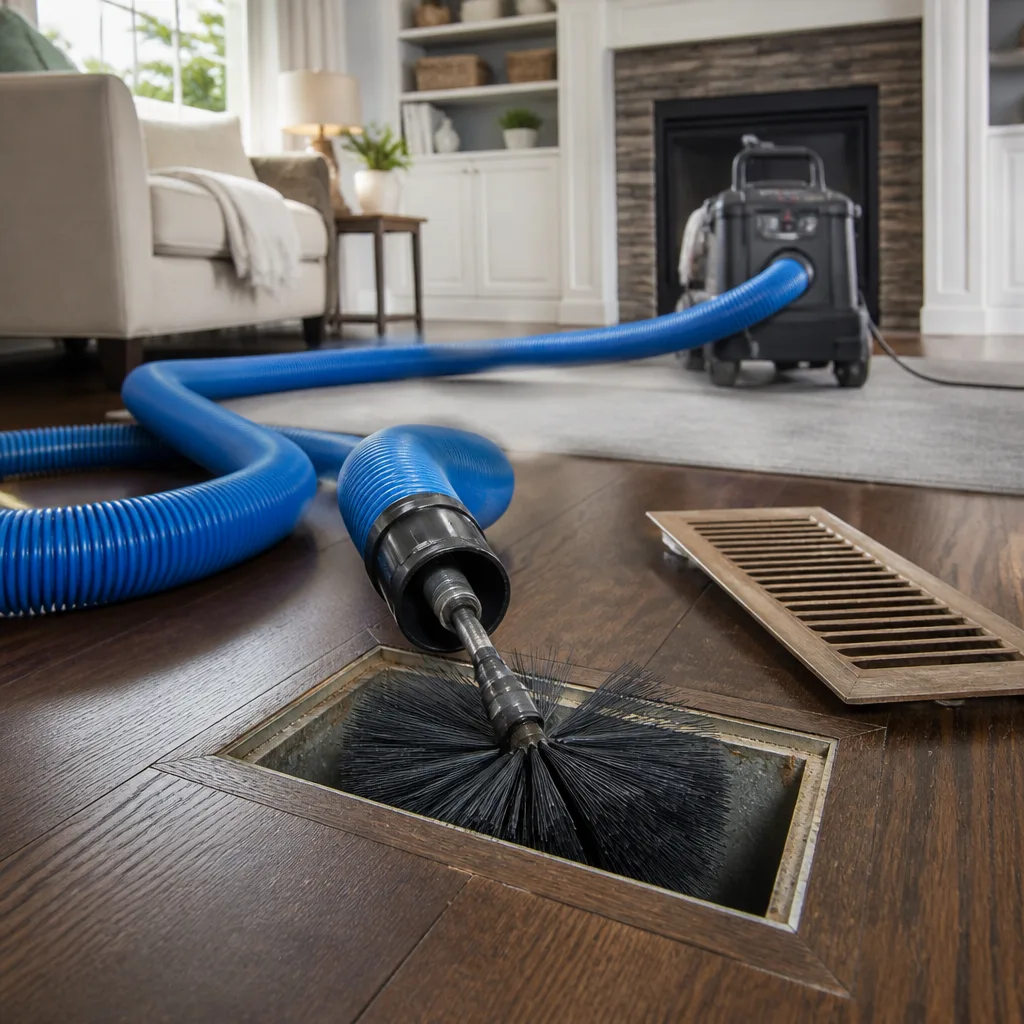 Whole-home duct cleaning
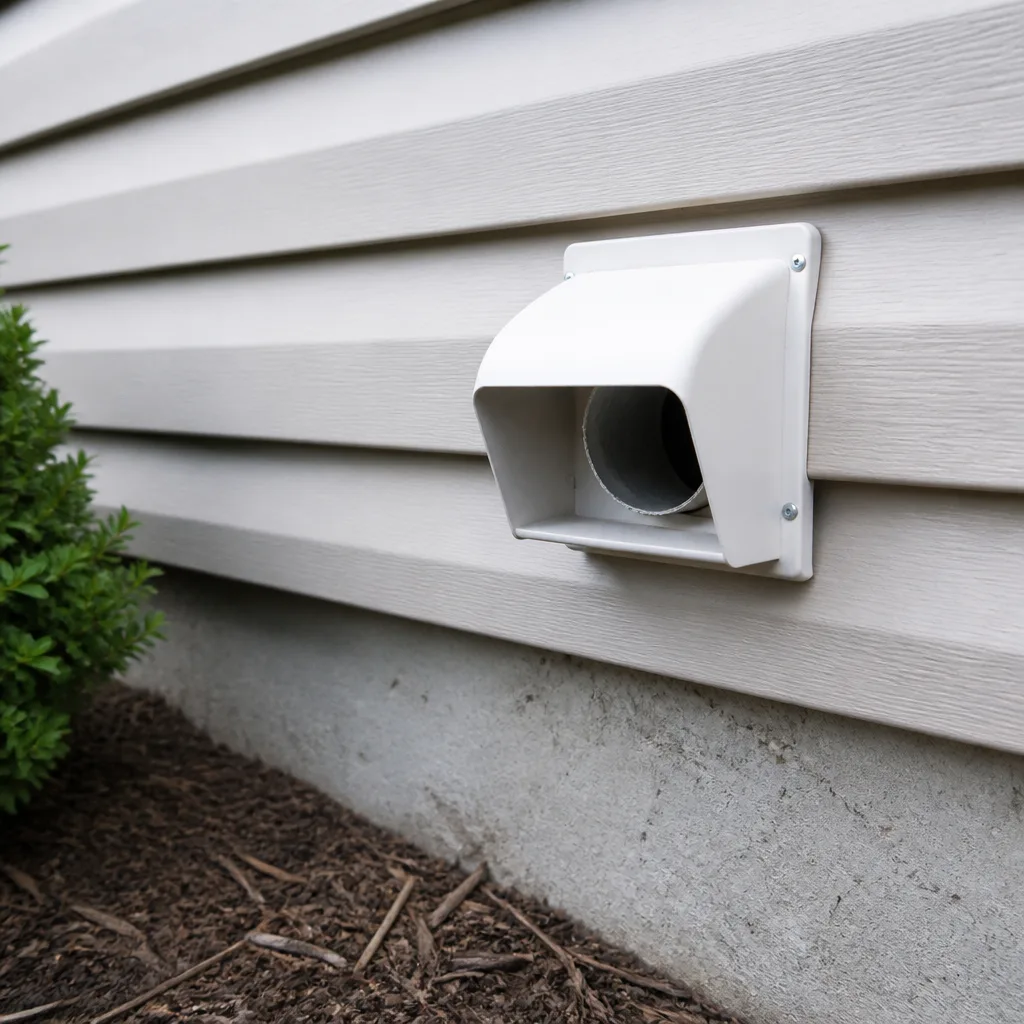 Dryer vent cleaning
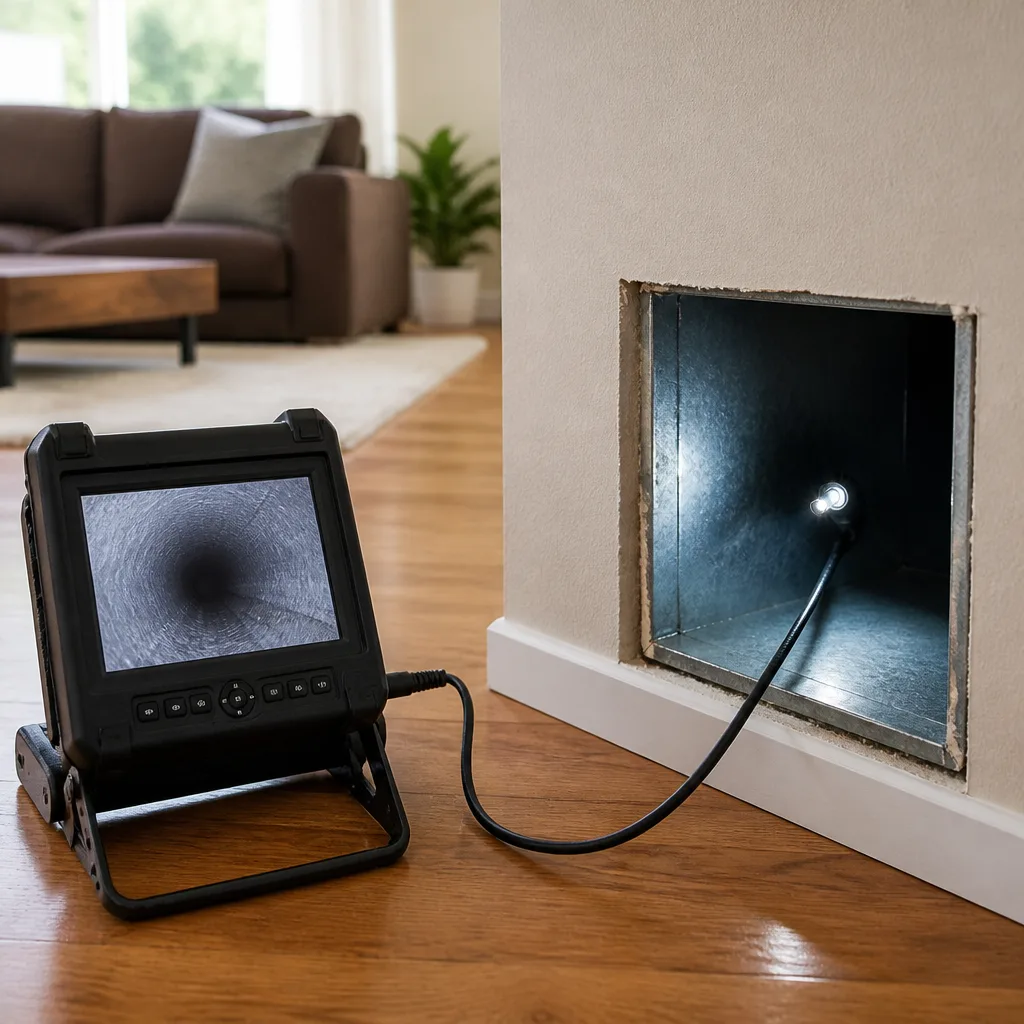 Camera inspection
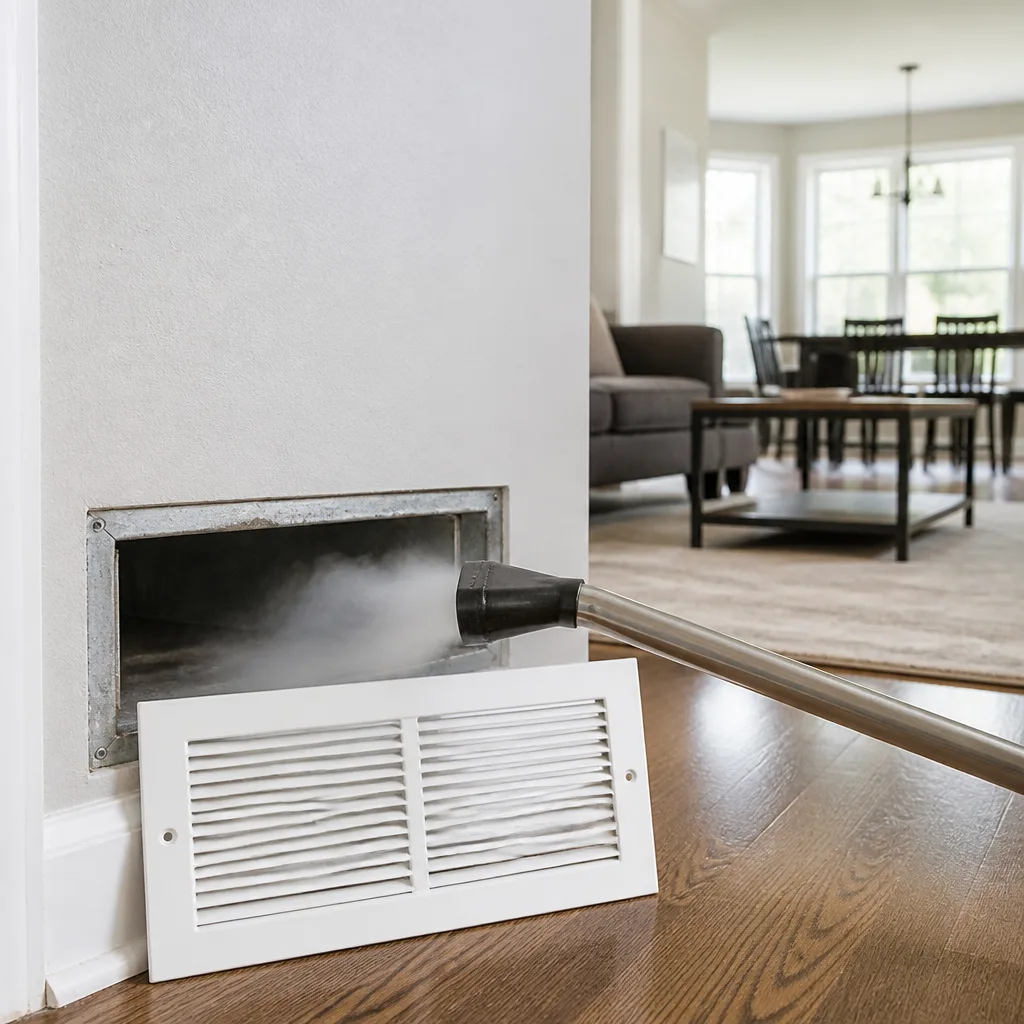 Sanitizing & deodorizing
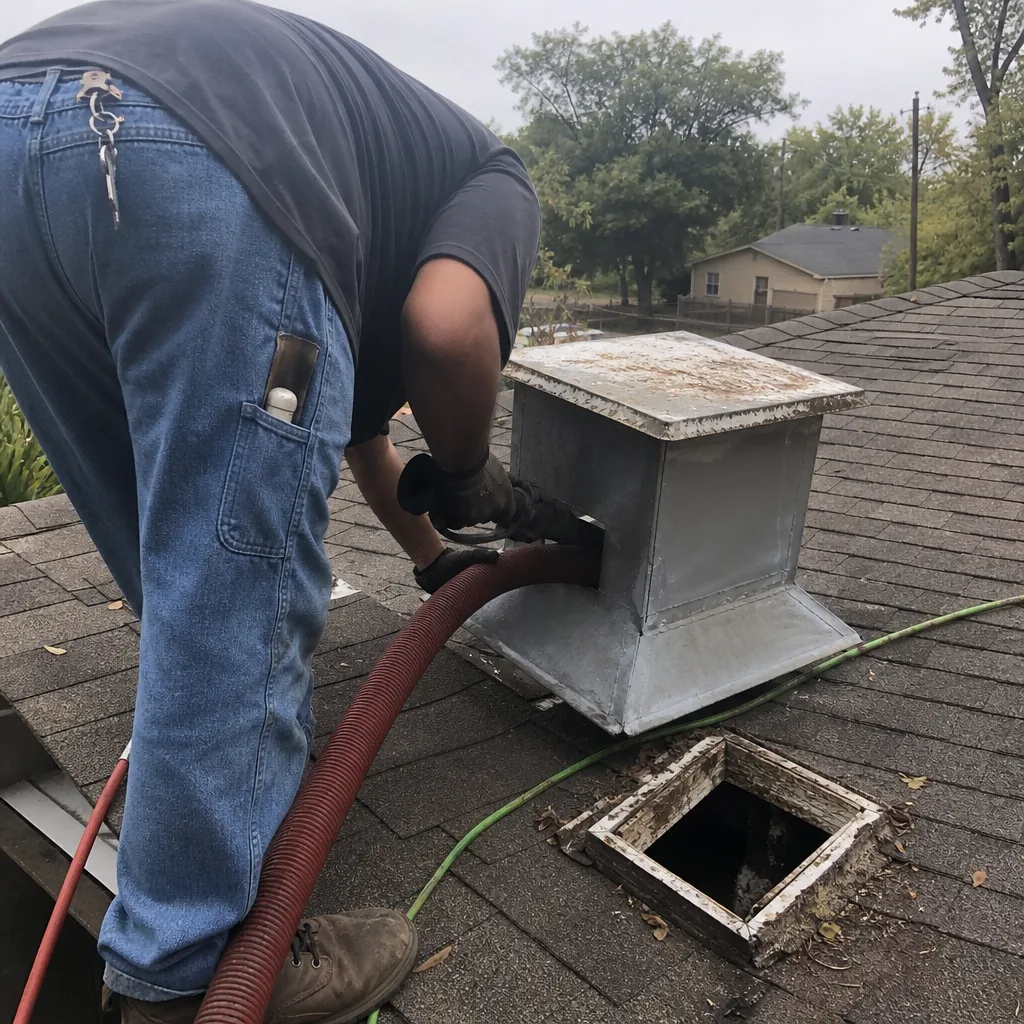
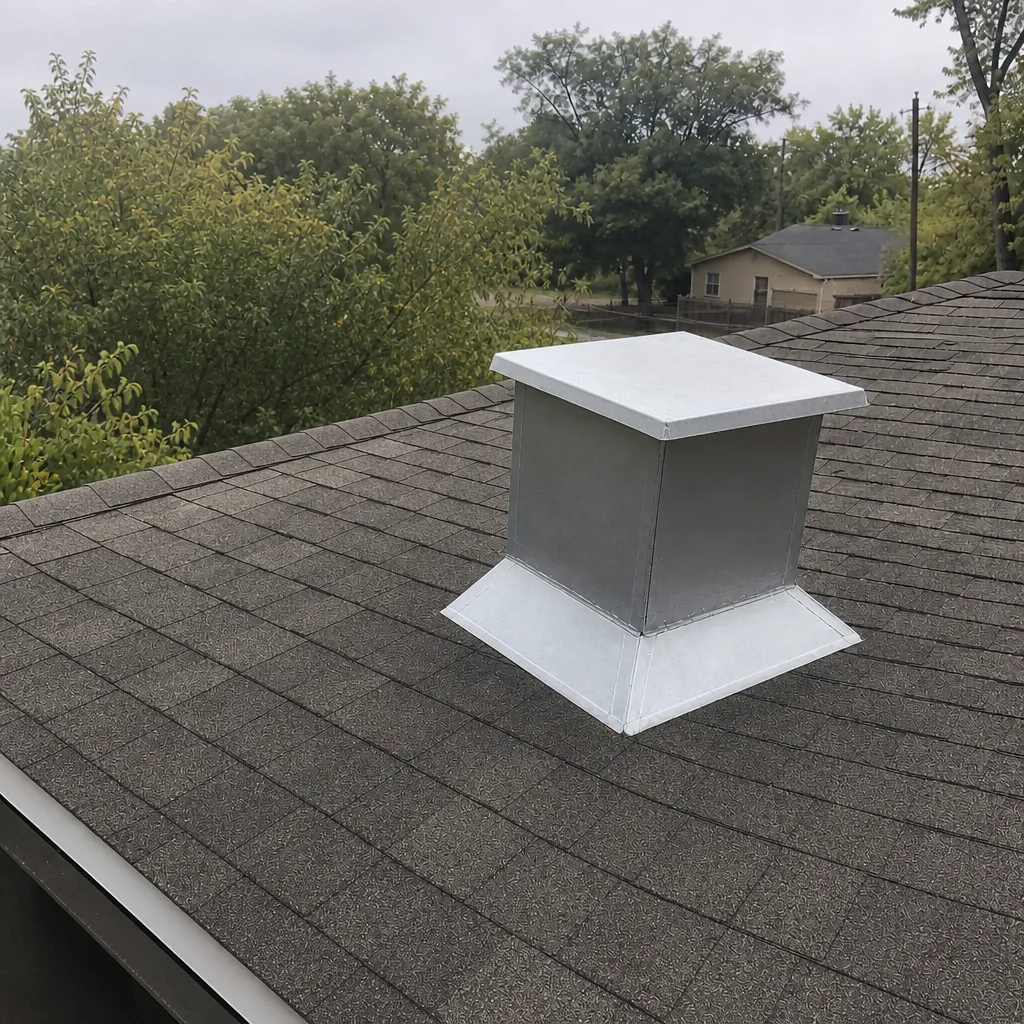
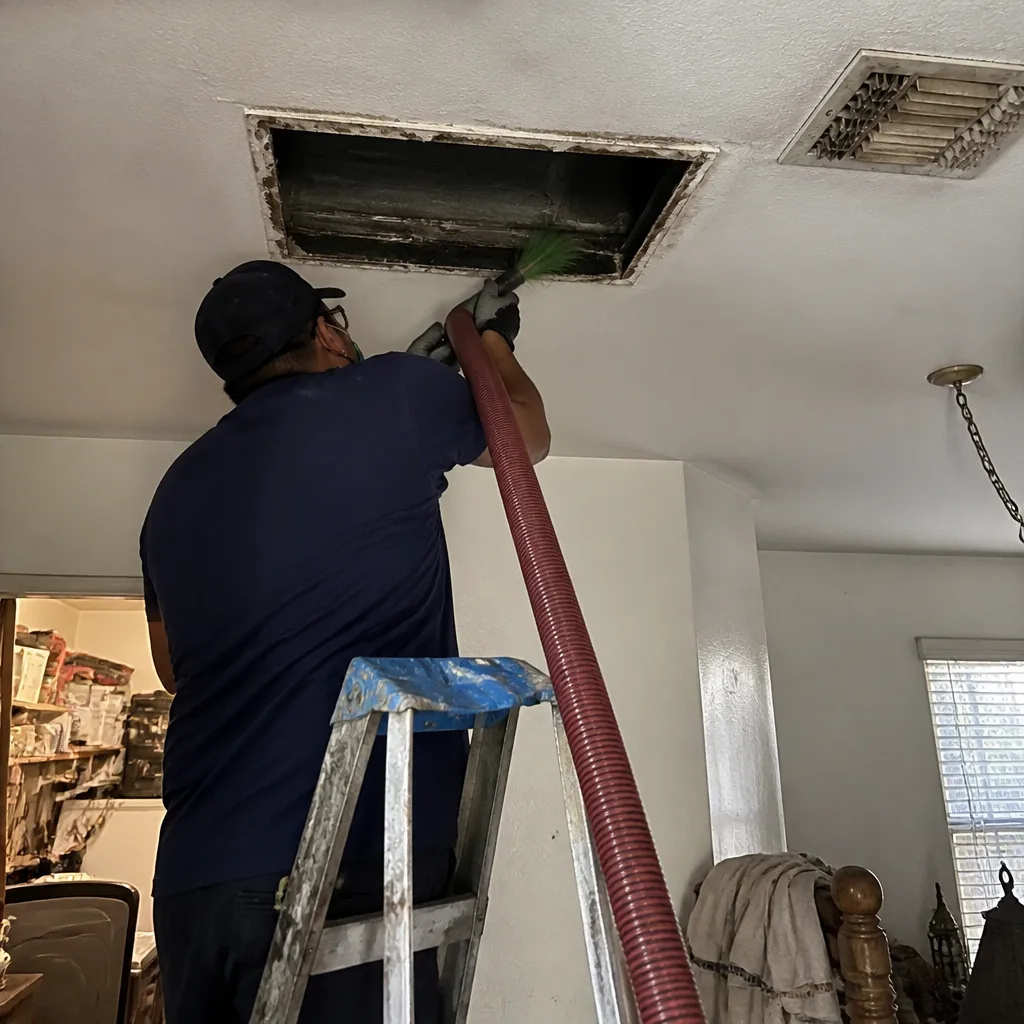
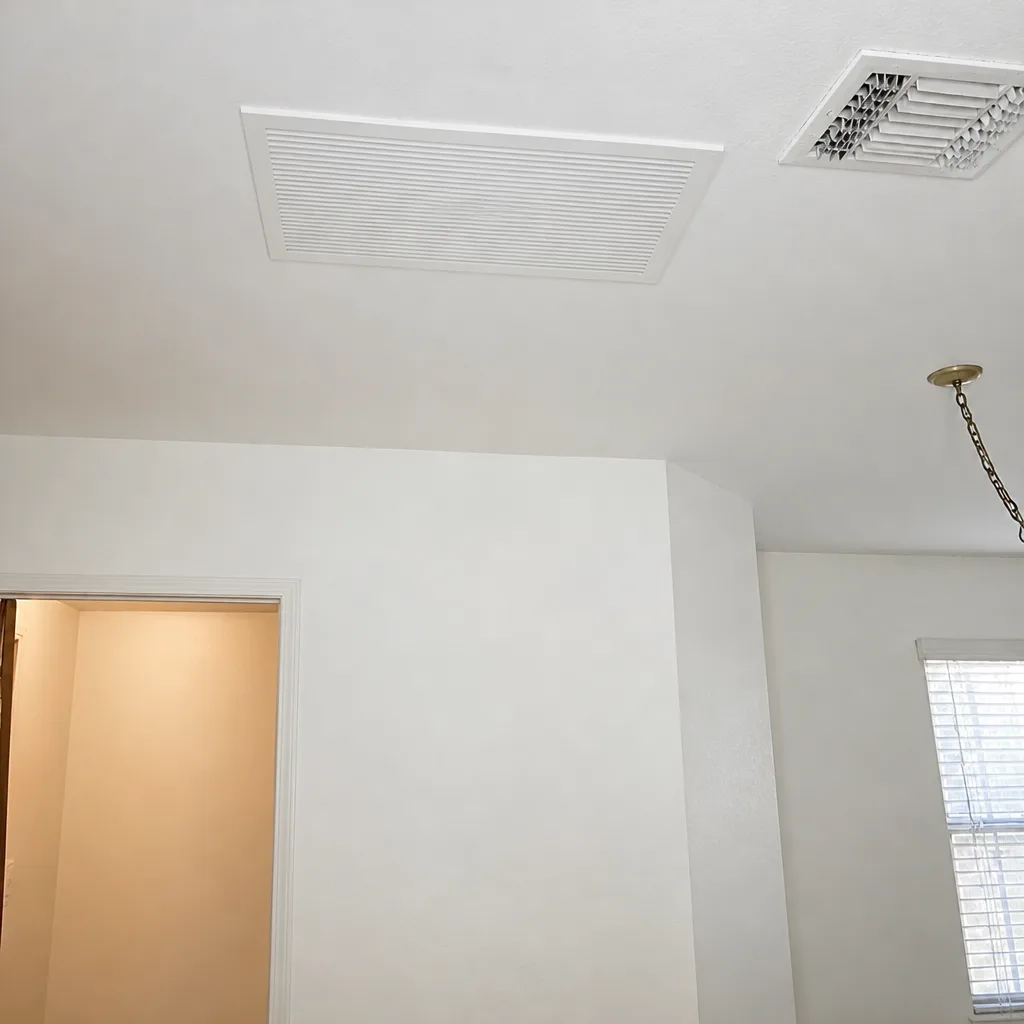
Whole-system duct and dryer vent check with before-and-after photos - you see exactly what came out of your vents
That "$99 whole-house special" is a bait ad - the real number appears once they are in your hallway, or the "clean" is a shop-vac at the register. We photograph the inside of your ducts before and after instead.
Air Duct Cleaning Maintenance Schedule: What to Do and When
Most cleaning schedules you’ll read online land on the same number: every three to five years. That figure was built around average homes in cooler, wetter parts of the country where windows stay shut for months and dust settles slowly. San Angelo doesn’t work that way. We’re in semi-arid West Texas, where wind moves topsoil across open ground and a single blowing dust event can push more particulate into a return grille than a full season of ordinary living. The right schedule for your house depends on what’s actually happening inside it: pets, people, renovations, allergies, and how often the wind picks up. This guide builds a maintenance calendar around those variables so you clean when your system needs it, not on a calendar someone in another climate wrote.
Quick Answer
Most San Angelo homes need professional air duct cleaning every two to four years, not the generic three-to-five-year figure. Homes with shedding pets, recent renovation dust, allergy-sensitive occupants, or a high-particulate location near open rangeland or construction should lean toward the two-year end. Homes with minimal occupancy, no pets, and good filtration can stretch to four. Dryer vents should be checked yearly and cleaned when airflow drops or lint builds. Your filter is the piece you touch monthly.
Styles & brands we work with
- Whole-home duct cleaning
- Dryer vent cleaning
- Camera inspection
- Sanitizing & deodorizing
Table of Contents
- Why the Standard “Every 3-5 Years” Advice Misses the Mark
- How to Score Your Home’s Duct Cleaning Risk Factors
- The Post-Renovation Protocol Most Homeowners Skip
- Seasonal Checkpoints for a San Angelo Duct System
- What You Can Do Between Professional Cleanings
- How to Document Your System’s Baseline After Cleaning
- The Dryer Vent on Your Schedule
- Where Duct Repair Fits Into Maintenance
Why the Standard “Every 3-5 Years” Advice Misses the Mark
The three-to-five-year interval became industry shorthand because it’s easy to publish and easy to repeat. It’s not wrong, exactly. It’s just incomplete. That range assumes a house in a temperate climate with moderate dust loads, a couple of occupants, and no major construction events. Move that same house to San Angelo and the math changes, because our dust load isn’t moderate.
West Texas wind carries fine particulate year round, and it doesn’t stop at your door. Every time a return pulls air from the living space it also pulls whatever was floating in it, and dust, pollen, and lint settle on duct walls where they accumulate faster than in a sealed-up northern home. Add a dog that sheds, a handful of occupants, or a kitchen renovation, and the accumulation curve steepens considerably. What we’ve seen in our work is a wide spread, not a tidy average: some homes in San Angelo are fine at four years, others are overdue at eighteen months. The difference is almost always explained by the risk factors we walk through next.
The cost of getting this wrong runs both directions. Over-servicing wastes money on cleaning a system that didn’t need it. Waiting too long means debris builds past the point of a routine clean, HVAC components work harder, and in the middle of summer your system struggles to move air. Our approach to air duct cleaning starts by looking at the system, not the calendar. The right schedule for your home is the one your risk factors point to.
How to Score Your Home’s Duct Cleaning Risk Factors
Before you pick a number, score your home. Each factor below pushes your interval shorter or longer. Add up where you land and you’ll have a defensible starting point rather than a guess.
Pets
One shedding dog or cat pushes you toward the short end. Two or more, especially double-coated breeds, and two years is the ceiling. Pet dander and hair are heavier than dust in some ways and finer in others, and they load up return ducts and the blower cabinet faster than you’d expect.
Occupant count
More people means more skin cells, more foot traffic tracked in, and more hours the system runs. A household of two is a different situation than a household of five. If your home doubles as a workspace or you regularly host, lean shorter.
Construction history
Any renovation in the last two years is a hard flag. Drywall dust and insulation fibers are among the worst things to let migrate through a duct system, and they don’t clear on their own. More on this in the next section.
Allergy sensitivity
If someone in the house deals with seasonal allergies or dust sensitivity, you’re not optimizing for cost, you’re optimizing for a cleaner air baseline. That typically means the short end of the range and closer attention to filtration.
Local dust exposure
Homes near open ground, active construction, or on the windward side of town see more particulate load. San Angelo’s spring wind season is the heaviest contributor, and a home on the western edge of the city catches more of it than one tucked into a sheltered residential pocket.
Filtration quality
A properly sized, regularly changed filter extends your interval. A cheap filter run past its service life shortens it, because everything the filter doesn’t catch lands in the ducts.
Score each factor as low, medium, or high. Mostly low: four years. Mostly medium: three. Any highs, or more than two mediums: two years or sooner. That’s your starting schedule. Adjust as you observe what your system actually does.
The Post-Renovation Protocol Most Homeowners Skip
If you’ve had drywall work, a kitchen remodel, an addition, or new flooring installed, the schedule resets. It doesn’t matter when your last cleaning was. Renovation dust is a different category of debris: fine, abrasive, and produced in volume. The moment the crew packs up, that dust is still airborne and still finding its way into returns. Run the HVAC during a renovation without containment and it distributes across the whole system, then settles into duct walls.
Skipping this step has consequences. Drywall dust coats the blower wheel and evaporator coil, cutting airflow and efficiency. It also packs into gaps and joints where it stays suspended in the airstream every time the system cycles. What we’ve seen in our work is that a system cleaned before a renovation but not after is effectively back to renovation-day condition, sometimes worse.
Here’s the sequence we recommend:
- During the renovation, seal return grilles with a temporary barrier and change the filter frequently.
- After the final sweep, before you move furniture back or turn the system to normal operation, schedule a professional duct cleaning.
- Replace the filter with a new one sized for the system after cleaning.
- Have the ductwork inspected for dislodged joints or damage, since demolition and framing can shift connections.
Most duct cleaning companies run a shop vac and a brush. That’s not enough for post-renovation work, because drywall dust is fine enough to be pulled straight through a weak vacuum and redistributed. Our process uses professional-grade equipment purpose-built for the job, including a Rotobrush rotary brush system for mechanical agitation inside duct walls and Nikro HEPA-rated vacuum equipment for containment-level extraction. We also run Abatement Technologies air filtration during the job, which controls contaminants in the work area rather than pushing them back through the house. If the renovation turned up damaged or disconnected duct sections, we handle the repair as part of the visit. Cleaner ducts. Healthier air. Verifiable results.
Seasonal Checkpoints for a San Angelo Duct System
San Angelo runs through several seasonal patterns that affect what’s in your ducts and how hard the system works. Building a few checkpoints into your year keeps you ahead of the accumulation instead of reacting to it.
Spring: cedar pollen window and wind season
This is the heaviest particulate season of the year for most San Angelo homes. Cedar and other pollen loads rise alongside the wind, and both end up in the return. Check your filter every few weeks during this stretch rather than monthly, and if you’re due or overdue for a cleaning, spring is the right time to get it done, before summer pushes the system hard.
Summer: HVAC heavy-use period
Your system runs more hours in a San Angelo summer than almost any other stretch of the year. That means more air moving through the ducts, more debris picked up, and more strain on the blower and coil if the ducts are loaded. Check airflow at the registers month to month. If a room that used to cool well starts running warm, that’s a signal worth investigating, and sometimes it’s a duct issue rather than an equipment one.
Fall: wildfire smoke events
West Texas sees smoke drift from regional fires in dry years, and when outdoor air quality drops, windows close and your system carries the load. Keep the filter fresh and consider upgrading filtration if the household is sensitive. This is also a good time to inspect return grilles for visible dust buildup, since it’s the last dry stretch before winter.
Winter: mild-season inspection
Winters here are mild, which means the system typically gets a lighter workload than in cooler regions. Use the slower season for inspection and planning: look at the return grilles, check the dryer vent, and decide whether the coming spring is a cleaning year.
If you want a second opinion on where your system stands, we’re glad to look. Our duct cleaning San Angelo service starts with an inspection so you know what you’re dealing with before you spend anything.
What You Can Do Between Professional Cleanings
Some maintenance is genuinely yours to handle. Some of it shouldn’t be, because the tools and containment required to do it safely aren’t consumer equipment. Knowing the difference keeps you from wasting effort or, worse, making things harder on your system.
What you can do
- Filter grading and replacement: Check the filter monthly, replace on the manufacturer’s schedule, and step up to a higher MERV rating if the system supports it. Don’t overshoot; a filter too restrictive for the blower hurts airflow.
- Return grille inspection: Look at the grilles monthly. Visible dust or lint buildup on the grille face is a sign the filter is being bypassed or overloaded.
- Register airflow checks: Feel the airflow at each register periodically. A weak register may point to a duct leak, a damper issue, or a blockage.
- Dryer vent lint checks: Pull the lint trap every load, and once a year check the exterior vent flap for lint buildup and confirm the flap opens freely when the dryer runs.
- Keeping returns clear: Don’t block return grilles with furniture or rugs. Restricted returns pull harder and can draw dust past the filter.
What needs professional equipment
- Inside-the-duct cleaning: Reaching the duct walls requires rotary agitation and HEPA-rated extraction. A shop vac pulled up to a register creates negative pressure but doesn’t scrub the walls, and it can redistribute fine dust back into the room.
- Containment filtration: Professional jobs run air filtration during the work so contaminants stay controlled. That’s a category of equipment, not a consumer accessory.
- Duct repair: Sealing leaks, reconnecting dislodged joints, and repairing damaged sections require access and the right materials. We clean it, and if it’s broken, we fix it.
- Blower and coil cleaning: Those components sit behind panels most homeowners shouldn’t open, and doing so carelessly can damage the system.
The professional-grade equipment we use is worth explaining because it’s the difference between a cleaning and a surface pass. Rotobrush is purpose-built for air duct cleaning rather than repurposed shop equipment, and Nikro’s HEPA-rated vacuums are designed for containment-level extraction. The same tools used in remediation and restoration work. That’s the standard we hold ourselves to on every job in San Angelo.
How to Document Your System’s Baseline After Cleaning
The single most useful thing you can walk away from a professional cleaning with isn’t a clean system. It’s a documented baseline you can compare against in the future. Without one, every future decision is a guess.
Here’s what we recommend capturing right after a cleaning:
- Before-and-after photos of your own ducts. Not stock images. Actual photographs of your system taken by the technician before and after. These give you a real comparison point.
- Filter type and size noted. Write down the exact replacement specification so you’re not guessing at the hardware store.
- Date and scope of the cleaning. Which components were cleaned, and whether any duct repair was done. Keep this with your home maintenance records.
- Airflow notes. Record your sense of airflow at each register. This is subjective, but it’s the simplest way to spot a change later.
- Any identified issues. If the technician flagged a compromised joint, a sagging flex run, or a filtration limitation, note it and plan for it.
With a baseline in hand, future decisions get easier. If airflow drops noticeably a year in, you have a record to compare against. If the ducts are still clean at three years, you may be able to stretch the next interval. We provide before-and-after photos of your own ducts on every visit precisely so you have that reference point. A real record beats an estimate every time.
The Dryer Vent on Your Schedule
Duct maintenance and dryer vent maintenance are different schedules, and the dryer vent is the one more homeowners neglect. That’s a safety issue first and a performance issue second. Lint accumulation in a dryer vent is a leading cause of house fires, and dryers that take two cycles to finish a load are usually telling you the vent is loaded.
Here’s the schedule we recommend:
- Every load: clean the lint trap.
- Every year: inspect the exterior vent flap and the run for lint accumulation, ideally before the heavy-use winter stretch.
- Any time drying times rise: schedule a professional cleaning. Two cycles to dry a load is the clearest signal.
- After moving into a home or buying a dryer: clean the vent regardless of when it was last done, since you don’t know the history.
We treat dryer vent cleaning as a fire safety service, not an air quality one, and we bring the same professional equipment to it. If you’ve noticed your dryer running long, that’s the cue to book it.
Where Duct Repair Fits Into Maintenance
Most duct cleaning schedules assume the ducts themselves are in decent shape. In older San Angelo homes, that’s not always the case. Disconnected flex runs, torn duct insulation, failing tape at joints, and sagging sections are common enough that we inspect for them as part of the visit. Cleaning a system with a compromised run is only part of the job, because the leak pulls attic air or crawl space air into the system every time it cycles.
Our service mix includes air duct repair specifically because cleaning alone doesn’t fix damaged ductwork. When we find a problem, we flag it and repair it if it’s within scope. If a filtration upgrade makes sense for the household, we’re familiar with Honeywell and Aprilaire systems and can advise on whole-home air quality improvements that extend past the cleaning. Most duct cleaning companies don’t offer repair. We do, because a maintenance schedule that ignores damaged ductwork isn’t really maintenance.
Common Mistakes to Avoid
- Following the generic three-to-five-year rule on autopilot. That interval was built for a different climate. In San Angelo’s dust load, you need to factor in your household. Use the risk score, not the calendar.
- Skipping the post-renovation clean. Renovation dust doesn’t clear on its own. Cleaning before a renovation and skipping after is worse than doing neither, because the system ends up loaded right when you think the work is done.
- Hiring on price alone. A quote that’s dramatically lower than every other bid usually reflects a shop vac and a brush, not professional equipment. The work looks done until you have photos.
- Running a filter too long or upgrading to an oversized MERV without checking the system. Both cause problems. Change on the manufacturer’s schedule, and step up filtration only if the blower can handle it.
- Ignoring the dryer vent. It’s on a separate schedule, and it’s the piece with the fire risk. A yearly check and prompt cleaning when drying times rise matter more than most duct maintenance steps.
- Not documenting the baseline. Without before-and-after photos of your own system, every future decision is a guess. Ask for them.
- Assuming a cleaning fixes airflow problems. Sometimes the issue is a damaged or disconnected duct. If airflow drops after the cleaning, that’s a signal to check the ductwork, not to clean it again.
See the difference
 Before
 After
 Before
 After
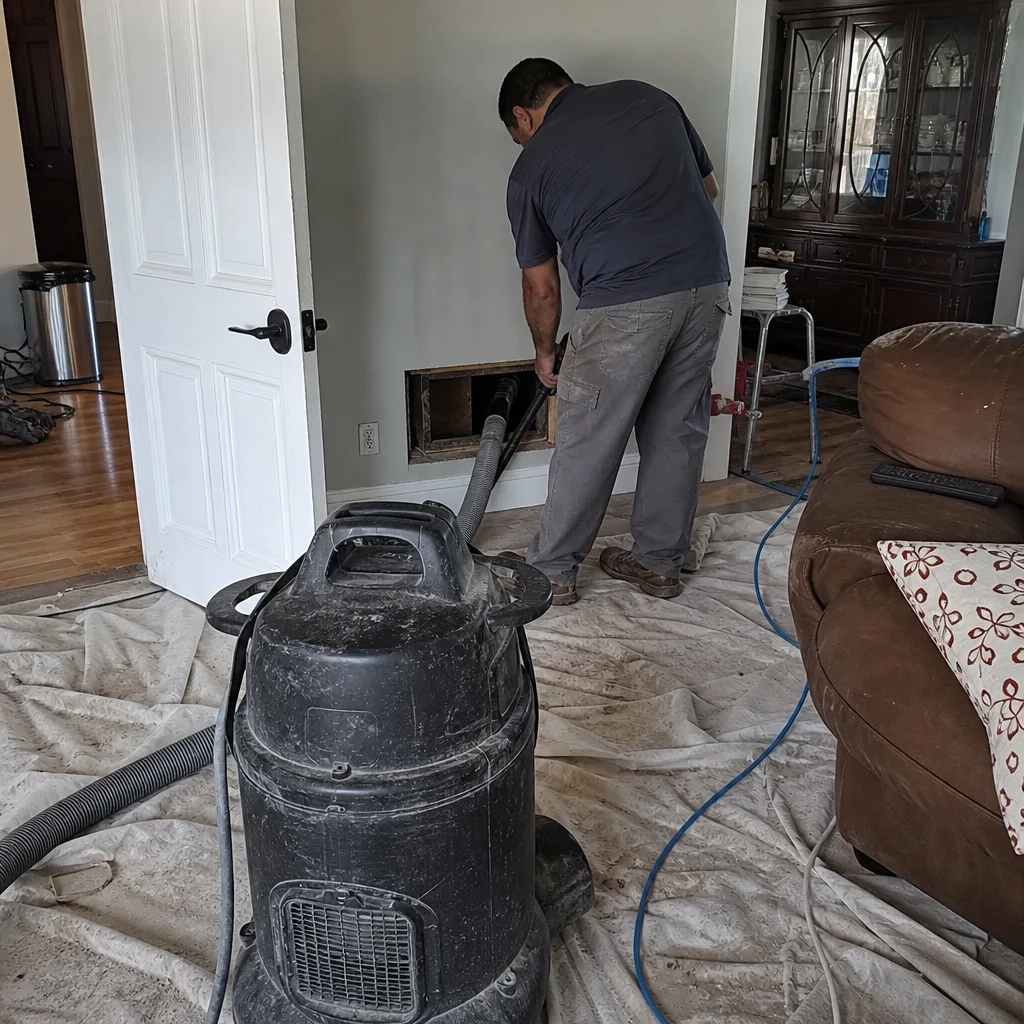 Before
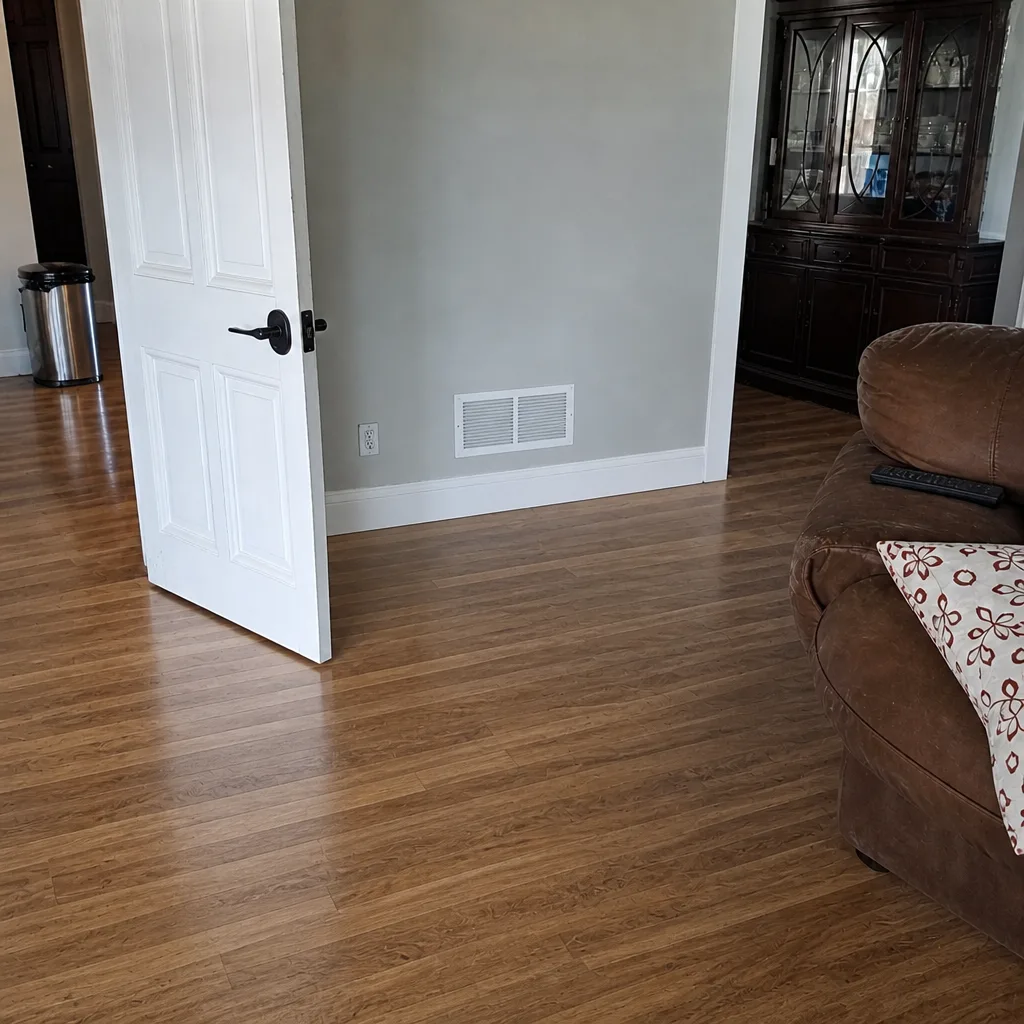 After
When to Call a Professional
Some situations call for a professional visit rather than a wait-and-see. Any renovation in the last two years is one. So is a household with allergy sensitivity and visible dust on the return grilles. If your airflow drops noticeably, if your dryer takes two cycles, if you’ve just moved into an older home without a maintenance history, or if a technician has flagged damaged ductwork, that’s a clear signal. We answer 24/7. Fast dispatch from 7am to 7pm, Sunday through Friday.
Duct Cleaning San Angelo offers free estimates in San Angelo and the surrounding area. Call (844) 761-5306 to schedule an inspection and find out where your system actually stands. Our technicians have up to 13 years of experience, and every job gets a written estimate before work starts.
Frequently Asked Questions
For most San Angelo homes, every two to four years, not the generic three to five. The shorter interval reflects the area’s higher dust load, wind season, and the way West Texas particulate accumulates in return ducts. Homes with pets, recent renovations, or allergy-sensitive occupants should aim for the two-year end, while low-occupancy homes with no pets and good filtration can stretch to four.
Yes, and soon. Drywall dust, insulation fibers, and construction particulate are fine and abrasive. They coat the blower wheel and coil, reduce airflow, and settle into duct walls. Cleaning after a renovation is a separate step from any previous cleaning, regardless of when the last one happened. Skipping it means the system carries that debris for years.
You can change the filter, inspect return grilles, check airflow at the registers, and clean the dryer lint trap. Those tasks make a real difference to the system’s health. What you shouldn’t attempt is cleaning the inside of the duct walls, opening panels to clean the blower and coil, or repairing ductwork. Those require professional equipment and the containment filtration that comes with a proper job.
Ask for before-and-after photos of your own system. A professional job gives you photos taken during the work, not stock images. That’s the simplest way to verify the work happened and to establish a real baseline you can compare against later. We provide before-and-after photos on every visit.
Lower quotes usually skip the equipment that makes a cleaning work. A shop vac and a brush pulled up to a register looks like a cleaning, but it doesn’t scrub the duct walls and can redistribute fine dust into the room. Professional jobs use purpose-built rotary agitation and HEPA-rated extraction with containment filtration running. The equipment roster is what you’re paying for, and it’s the reason the results hold up.
Sometimes, but not always. If debris has been restricting the system, cleaning restores airflow. But a drop in airflow often points to a damaged or disconnected duct rather than a dirty one. In that case, the fix is duct repair, not another cleaning. That’s why we inspect the ductwork as part of the visit and offer repair within the same service.
Call (844) 761-5306 for an exact quote. Estimates are free.
The Bottom Line
Your cleaning schedule should reflect your household, not a number written for a cooler, calmer climate. Score your home on pets, occupants, renovations, allergies, and local dust load, and let those factors set the interval. Reset the clock after any renovation, whether or not the system was recently cleaned. Watch the spring pollen and wind window, the heavy summer stretch, and the fall smoke season as natural checkpoints. Between visits, change your filter and inspect return grilles, and let professional equipment handle the inside of the ducts. Get before-and-after photos of your own system so you have a baseline, and keep your dryer vent on its own yearly check. That combination keeps the schedule honest and the system working the way it’s supposed to.
When you’re ready, Duct Cleaning San Angelo is a phone call away. Call (844) 761-5306 for a free estimate. We answer 24/7. Fast dispatch from 7am to 7pm, Sunday through Friday. Our technicians have up to 13 years of experience, and we use professional-grade equipment, not consumer shortcuts. Licensed & insured for total confidence, one flat price per system agreed before work starts, and before-and-after photos of your own ducts on every visit.
Written by the team at Duct Cleaning San Angelo.