
Last updated November 16, 2026
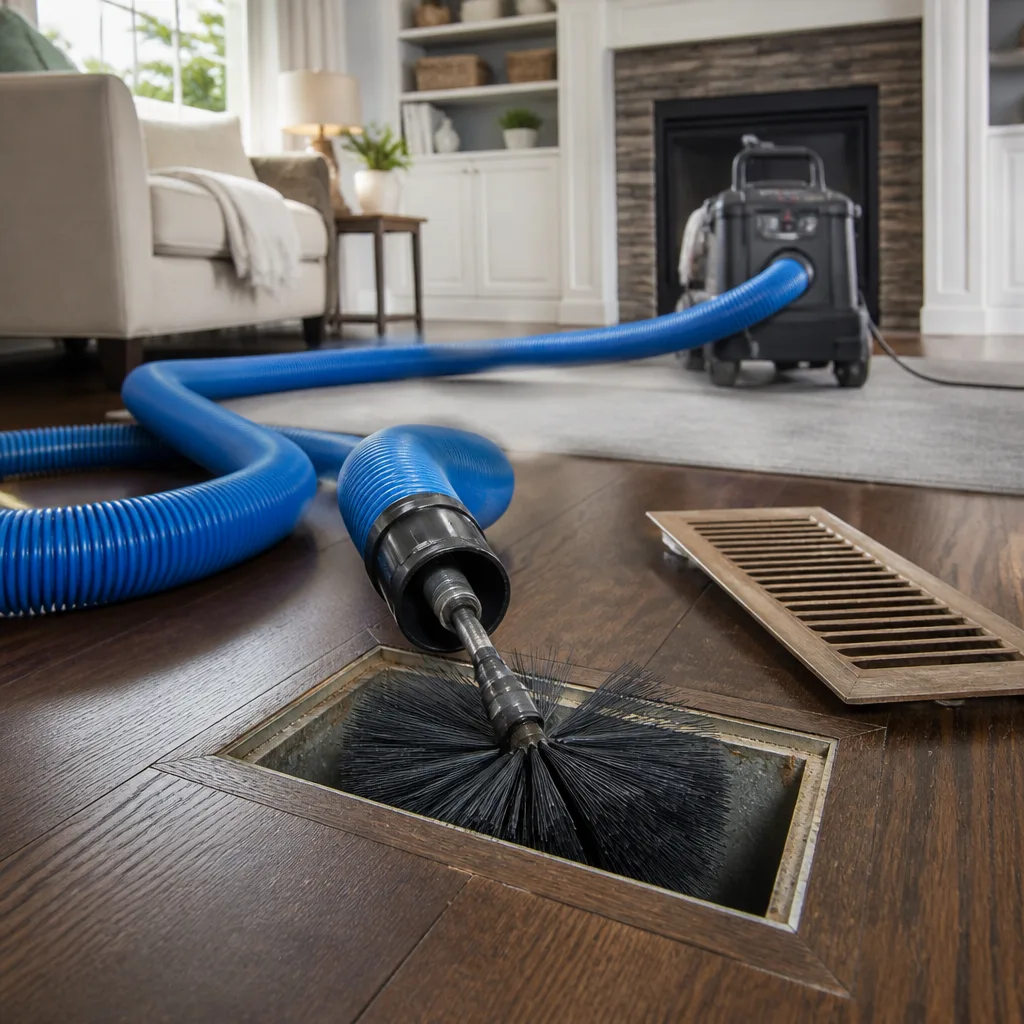 Whole-home duct cleaning
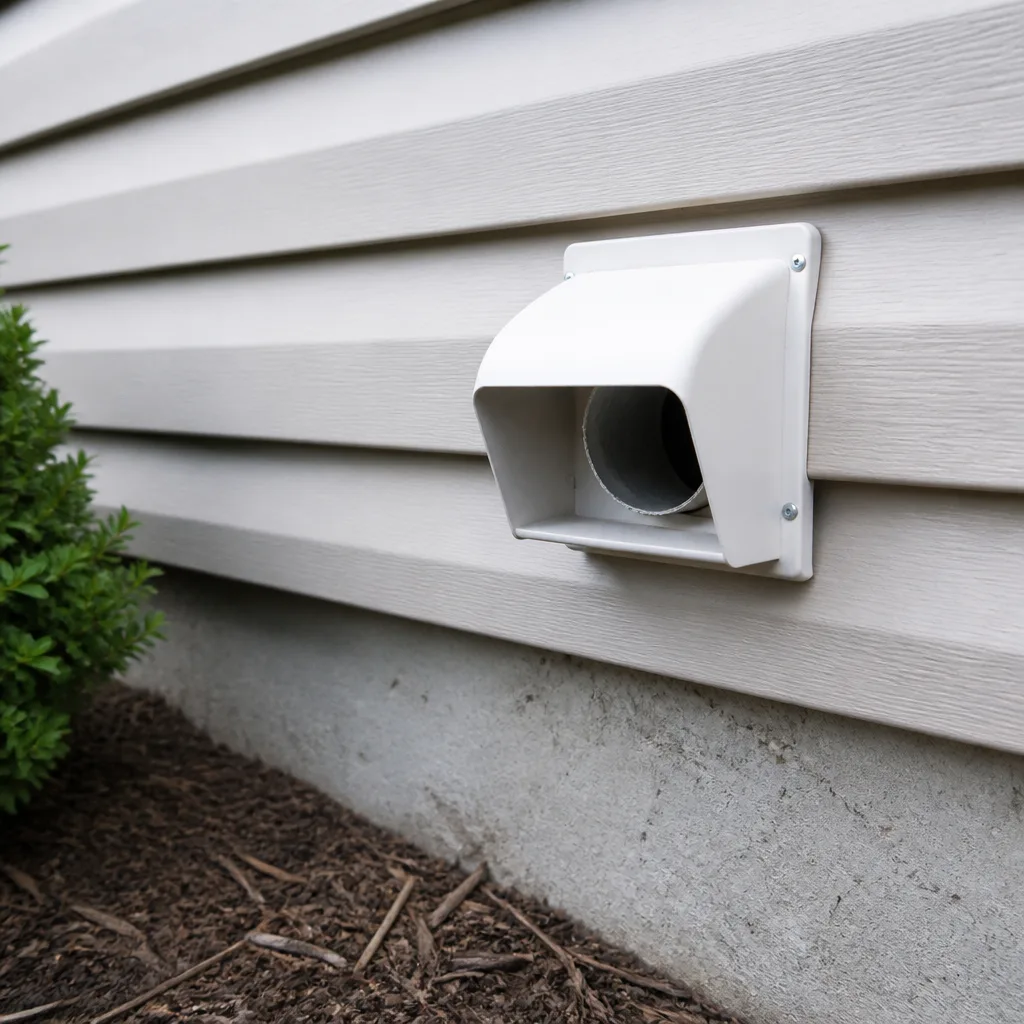 Dryer vent cleaning
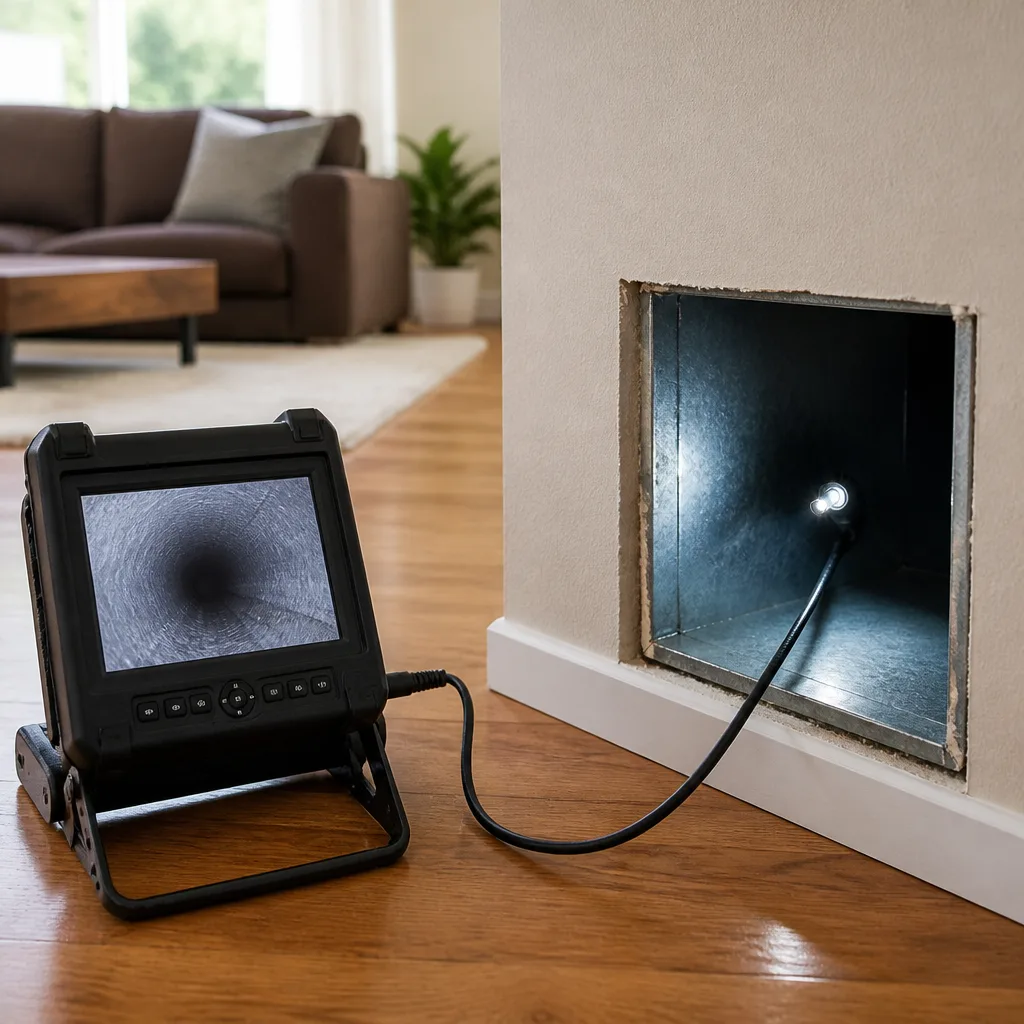 Camera inspection
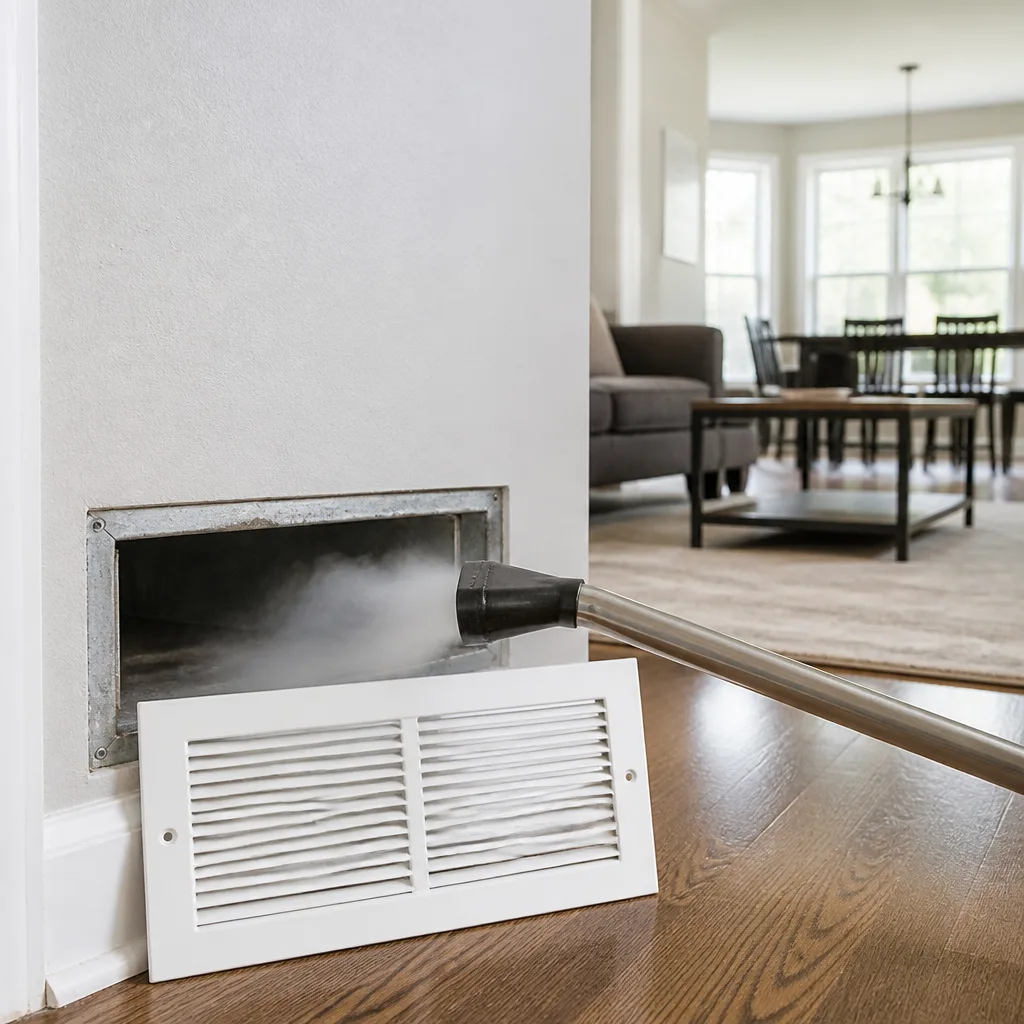 Sanitizing & deodorizing
Whole-system duct and dryer vent check with before-and-after photos - you see exactly what came out of your vents
That "$99 whole-house special" is a bait ad - the real number appears once they are in your hallway, or the "clean" is a shop-vac at the register. We photograph the inside of your ducts before and after instead.
Air Duct Cleaning Troubleshooting in San Angelo: Common Problems and How to Fix Them
If your upstairs rooms stay hot all summer even after an AC tune-up, the technician may have looked at the wrong system entirely. Weak airflow, uneven temperatures, and dust that keeps coming back after you clean are the classic signs of duct restriction and debris loading, not equipment failure, and no amount of refrigerant or filter changing fixes a duct problem. In this guide we walk through how to read those symptoms accurately, what musty and burning smells from your vents actually mean, and why a pressure imbalance check has to come before anyone runs a brush through your ducts. You’ll learn the San Angelo environmental factors that accelerate buildup here, and when cleaning alone won’t clear the problem because the ductwork itself needs repair.
Quick Answer
Most air duct problems in San Angelo show up as symptoms homeowners blame on the HVAC unit: weak airflow to certain rooms, uneven temperatures between floors, and dust that returns within days of cleaning. The fix starts with a pressure imbalance check to separate equipment failure from duct restriction, followed by professional-grade cleaning using rotary brush agitation and HEPA-rated extraction, and then duct repair where flex duct has collapsed, seams have failed, or a trunk line has come disconnected. Cleaning without that diagnostic step often makes no difference at all.
Styles & brands we work with
- Whole-home duct cleaning
- Dryer vent cleaning
- Camera inspection
- Sanitizing & deodorizing
Table of Contents
- Equipment Failure vs. Duct Restriction: How to Tell the Difference
- What Musty, Burning, and Earthy Smells From Your Vents Actually Mean
- Why a Pressure Imbalance Check Comes Before Any Cleaning
- The San Angelo Factors That Speed Up Duct Debris Buildup
- When Cleaning Won’t Fix It: Collapsed Flex Duct, Failed Seams, Disconnected Trunks
- What a Proper Diagnostic-and-Clean Process Should Look Like
- How to Verify the Work Was Done Right
Equipment Failure vs. Duct Restriction: How to Tell the Difference
The single most expensive mistake in home comfort is paying to fix the HVAC equipment when the duct system is the real problem. Both produce weak airflow, and both make rooms uncomfortable, but they leave different fingerprints. Learning to read them saves you from throwing money at the wrong system.
An equipment problem shows up as a whole-house symptom. If every vent feels weak at once, the blower, the coil, or the refrigerant charge is likely involved. A duct restriction is usually uneven: some rooms get strong airflow, others feel like a whisper. That difference is your first clue, and it costs nothing to check with your hand.
Here’s how to run a simple vent-by-vent check yourself:
- Turn the system on and let it run at least ten minutes so airflow stabilizes.
- Hold your hand or a strip of tissue at each supply vent and note the relative strength: strong, moderate, or weak.
- Use a cheap kitchen thermometer to read the temperature at each vent, and write the numbers down.
- Compare rooms on the same floor, then compare floors. A spread of more than a few degrees between rooms that share a floor points to a duct issue, not an equipment issue.
- Check the air filter. If it loads up gray and heavy faster than expected, debris is being pulled through the system from somewhere in the return path.
In San Angelo, the pattern of weak upstairs airflow is common because a lot of homes put the air handler and trunk lines in the attic, where the runs to the far rooms are long and vulnerable to kinks. Our technicians have up to 13 years of experience reading these patterns, and the uneven-temperature tell is one we look for before we touch any equipment. If the equipment was just tuned and the rooms are still uneven, the ductwork deserves the closer look.
What Musty, Burning, and Earthy Smells From Your Vents Actually Mean
Smell is information. Each odor class from a vent points to a different problem, and each one calls for a different cleaning method. Treating them all the same way is why some cleaning visits don’t solve the complaint.
Musty, damp, or cellar-like smells. This usually means moisture has been sitting in the duct interior long enough for microbial growth to take hold. In a dry climate like ours, that’s less about humidity and more about a past roof or plumbing leak that wet the insulation, or a condensate issue near the air handler. Cleaning requires mechanical agitation of the duct walls (a rotary brush system reaches the surface; a shop vac doesn’t) plus HEPA-rated extraction so disturbed material is captured rather than blown through the house. Air filtration during the job matters enormously here. If the duct board itself is saturated and degraded, cleaning won’t fix it; replacement of that section is the honest answer.
Burning or hot-dust smells. A dusty smell at the start of the heating season is often dust scorching on the heat exchanger and settles within a day or two. A persistent burning smell during operation is different: shut the system down and have the heat exchanger and nearby wiring inspected by an HVAC professional before running it again. That’s a safety call, not a cleaning call.
Earthy, granular, or animal smells. Rodent or insect intrusion leaves droppings, nesting material, and carcasses in duct runs, and the odor doesn’t go away with a surface pass. The work here includes removing the contamination, cleaning the affected sections thoroughly with HEPA extraction, and then repairing the breach where the animal got in. Cleaning an entry point that stays open just invites a repeat.
If you’re unsure which category you’re dealing with, that’s exactly the conversation to have before booking work. Getting the diagnosis right is more than half the job.
Why a Pressure Imbalance Check Comes Before Any Cleaning
Static pressure measurement tells you whether the system is moving the air it’s designed to move. It’s the difference between guessing and knowing, and it’s the step most cheap bids skip entirely. Without it, a cleaning crew has no baseline to compare against, and no way to tell you whether the cleaning actually changed anything.
Here’s what the diagnostic involves and why each piece matters:
- Static pressure readings at the supply and return plenums show whether the blower is fighting a restriction. High pressure on one side and low on the other points to a specific bottleneck rather than general dirt.
- Airflow velocity at the registers confirms what the pressure numbers suggest. If pressure is high but the registers are weak, the restriction is upstream.
- A visual scope inspection of the duct interior (not just the vent opening) reveals collapsed sections, disconnected joints, and debris accumulation that no flashlight from the floor can see.
- Filter loading assessment shows where the dirt is coming from and whether it’s bypassing the filter at a poorly sealed frame.
In our experience, this four-step diagnostic takes about the same time as a good cleaning and it changes the plan for perhaps one in four homes. Sometimes the recommendation is cleaning. Sometimes it’s repair first, then cleaning. And sometimes the honest answer is that a sealed and balanced system just needs a filter upgrade rather than a full clean. A crew that shows up, opens a vent, and quotes a price on the spot hasn’t done the work that determines whether cleaning will accomplish anything. The diagnostic is where the answered question lives, and it’s what makes the final price trustworthy.
The San Angelo Factors That Speed Up Duct Debris Buildup
West Texas loads a duct system differently than humid climates do. Where a coastal home worries about mold from ambient moisture, a San Angelo home contends with wind-borne particulate that never really stops. Understanding the local drivers explains why the recommended cleaning interval here isn’t the same as what you’ll read in a national article.
Caliche dust. The fine, alkaline dust from caliche soils is a persistent West Texas presence. It works into return air pathways through gaps around filters and door frames, and it settles inside duct runs where it acts as a binding layer that catches other debris. A house near new construction or a lot where grading was done is especially prone to this.
Pollen seasons. Cedar and mesquite pollen here are heavy spring contributors. Cedar in particular releases fine pollen that pulls through the return system and loads the filter fast. A homeowner who finds themselves changing the filter twice as often in spring is seeing the system’s real exposure, not an equipment problem.
Wind events. West Texas wind lifts soil and dust into the air regularly, and older San Angelo homes with attic duct runs in poorly sealed chases are vulnerable. Wind-driven dust finds every unsealed joint in a duct system and deposits material at the first restriction it hits.
Attic heat. The attic gets hot enough that flex duct insulation degrades over time, and duct board seams separate as the assembly expands and contracts across long hot summers. That’s a durability issue that our local climate makes worse than a shorter, cooler cooling season would.
These factors together argue for a closer look at your duct system than the generic national guidance suggests. Most San Angelo homeowners who call us about dust after a deep clean are dealing with one or more of these local loaders.
When Cleaning Won’t Fix It: Collapsed Flex Duct, Failed Seams, Disconnected Trunks
Cleaning a duct system with structural problems is money on the floor. Air that escapes through a disconnected trunk or a collapsed section never reaches the room it was meant for, so the cleaning removes dirt that would have come out anyway, and the airflow problem stays exactly where it was. This is the biggest reason we offer air duct repair alongside cleaning when most duct cleaning companies don’t.
Three failure modes account for most of what we find:
- Collapsed flex duct. Flex duct runs can sag, crush, or kink, especially in attic runs where the installer took a sharp corner or stretched the duct too tight. A collapsed run delivers a fraction of its designed airflow, and the room at the end of it feels the loss. The fix is to replace the affected section with properly supported duct, and then clean the rest of the system once airflow is restored.
- Failed duct board seams. Duct board is rigid but its taped and mastic-sealed seams can separate as the assembly moves with temperature swings. When that happens, air leaks into the attic and the system loses pressure. Sealing the seams restores the system, and the diagnostic will show the improvement immediately.
- Disconnected trunk lines. A trunk line that has come loose from the plenum or a branch is a major leak. Some rooms get too much air, most get too little, and the equipment runs longer than it should. Reconnecting and sealing the trunk is the first step; cleaning and balancing come after.
Our position is straightforward: we clean it, and if it’s broken, we fix it. Cleaning dirt from a system that can’t move air correctly is a partial job, and we’d rather walk you through the repair before we quote the cleaning.
What a Proper Diagnostic-and-Clean Process Should Look Like
A professional-grade job follows a sequence, and the sequence is what separates it from a shop vac and a brush. Here’s the process step by step, so you can compare it to whatever a bidder proposes:
- Whole-system inspection and pressure diagnostic. Readings, register airflow, filter assessment, and a scope pass of the duct interior. This is where the plan gets built.
- Containment setup. Air filtration equipment deployed in the work area keeps dust and disturbed debris out of your living space. Our crews use Abatement Technologies air scrubbers during service for exactly this reason: the contaminants get captured at the work zone, not redistributed through the house.
- Mechanical agitation. A rotary brush system (we use Rotobrush) reaches the duct walls and loosens the debris layer that accumulated there. A passive vacuum alone can’t break that binding layer apart.
- HEPA-rated extraction. Nikro HEPA-rated vacuum equipment pulls the loosened material out at containment-level filtration. This is the step that determines whether the job actually removed what was in the ducts.
- Register and grille cleaning. Supply and return covers, diffusers, and the boots around them get cleaned separately because they hold their own dust load.
- Repair, where needed. Any collapsed, disconnected, or leaking section is fixed before the system goes back into service.
- Post-job verification. Repeat pressure and airflow readings, and before-and-after photos of your own ducts so you can see what changed.
- Recommendations. Filter selection and any whole-home air quality improvements worth considering. We work with Honeywell and Aprilaire systems and can advise on filtration options that match the home.
If your dryer vent is also overdue, that’s a separate but related job, and it matters because lint in the vent is a fire hazard, not just a drying-speed issue. Our dryer vent cleaning addresses both the fire risk and the two-cycle dryer complaint. When you’re ready to schedule any of this, start with duct cleaning in San Angelo and we’ll route you to the right service. For the full scope of what we do, the air duct cleaning page covers the process in detail.
How to Verify the Work Was Done Right
Before and after photos of your own ducts, not a stock image, are the simplest verification. Any crew doing professional work should be able to show you what was in your system and what changed. If they can’t, that’s information about the job.
Beyond photos, there are measurable checks you can ask for:
- Post-job pressure readings compared to the pre-job baseline. Improvement in static pressure is the proof that the work moved the needle.
- Airflow feel at the registers after the job. Weaker rooms should feel noticeably better if the restriction was the issue.
- Filter loading pattern over the following weeks. A properly cleaned system with a well-sealed filter frame loads more evenly.
- Dust settling in the house. If surfaces stay cleaner over the following weeks, the return path is passing less debris.
One flat price per system, agreed before work starts, is the other piece of verification you should insist on. A quote that changes once the technician is on site is the industry’s most common complaint, and it’s the reason we set the price from the estimate and hold to it. If cleaning is the right call, the price reflects the whole system, not a per-vent shortcut that climbs as the job progresses.
Common Mistakes to Avoid
- Buying a cheap coupon price without a diagnostic. A low teaser bid that grows after the crew arrives is the bait-and-switch play in this trade. Ask for the whole-system estimate in writing before anyone starts.
- Letting a crew clean without containment. Without air filtration during the job, disturbed debris simply moves from the ducts into the rooms you were trying to protect. Ask what filtration equipment they deploy.
- Cleaning a duct system with structural problems. Cleaning a collapsed flex run or a disconnected trunk is wasted work because airflow won’t improve. The repair has to come first.
- Assuming the HVAC is at fault because the house is uneven. In San Angelo, attic runs and long duct distances to far rooms make duct restriction the likelier culprit when only some rooms are uncomfortable.
- Skipping the dryer vent because it’s “just a vent.” Lint accumulation in a dryer vent is one of the leading causes of house fires. A dryer that takes two cycles to dry a load is a warning sign worth acting on.
- Changing filters more often instead of finding the bypass. A filter that loads fast is telling you air is bypassing a poorly sealed frame or the return path has a gap. Fix the bypass before you buy more filters.
- Trusting a visual check from the floor. You can’t see the inside of a duct run from a vent opening. A scope inspection and pressure readings are what separate a real diagnostic from a sales visit.
See the difference
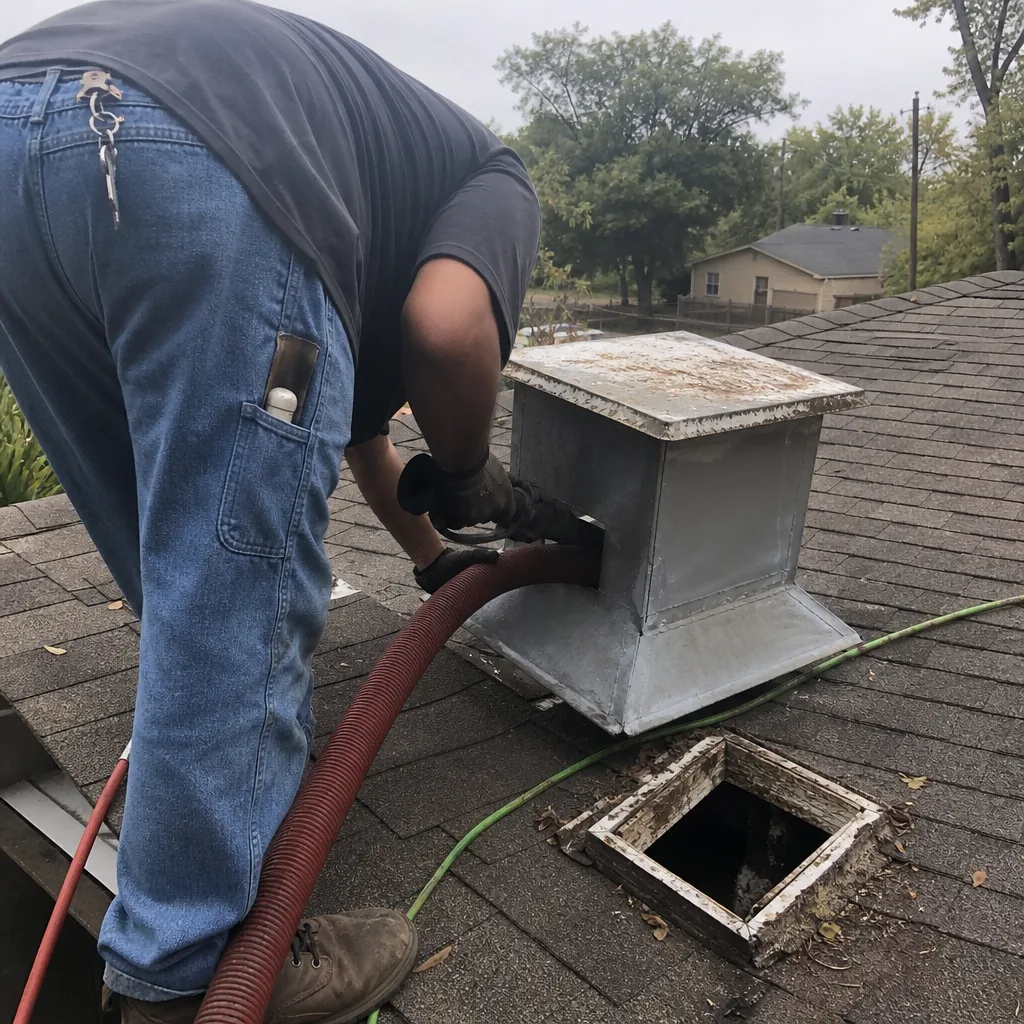 Before
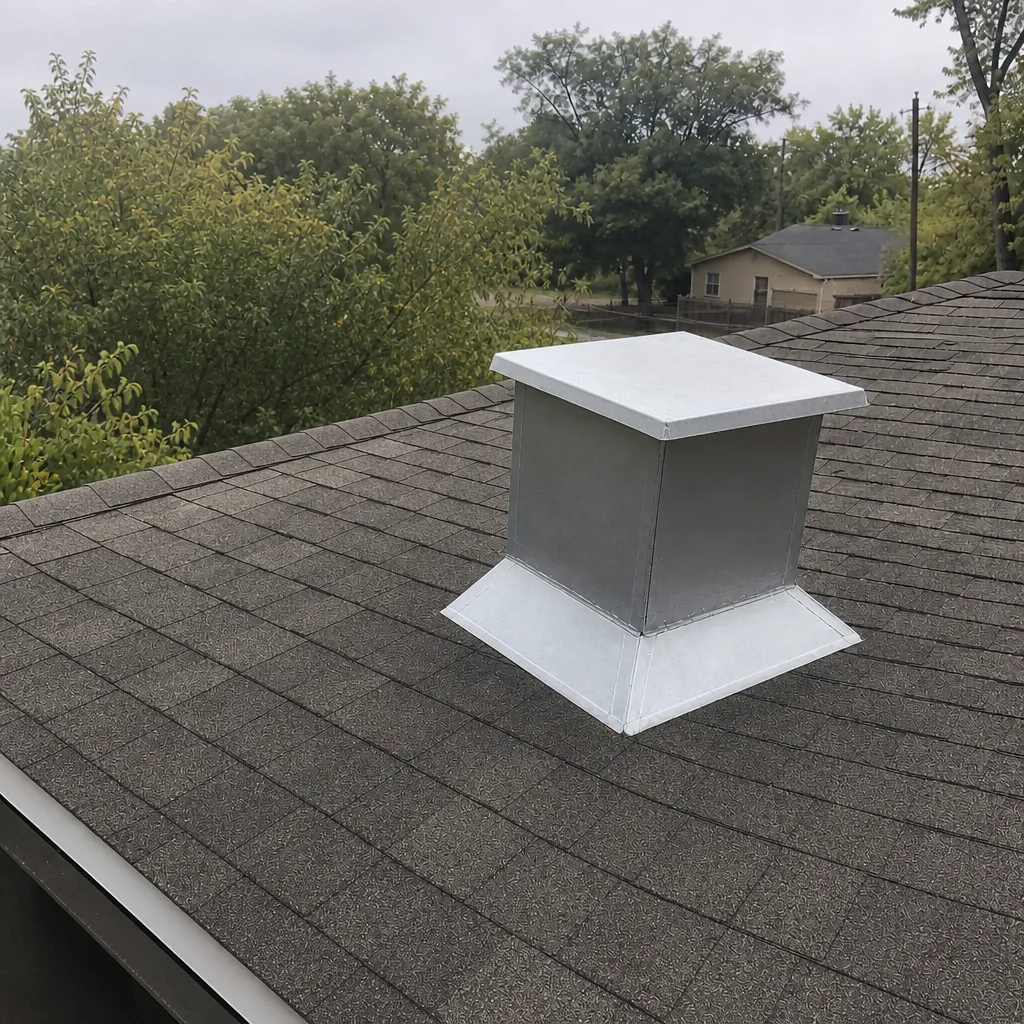 After
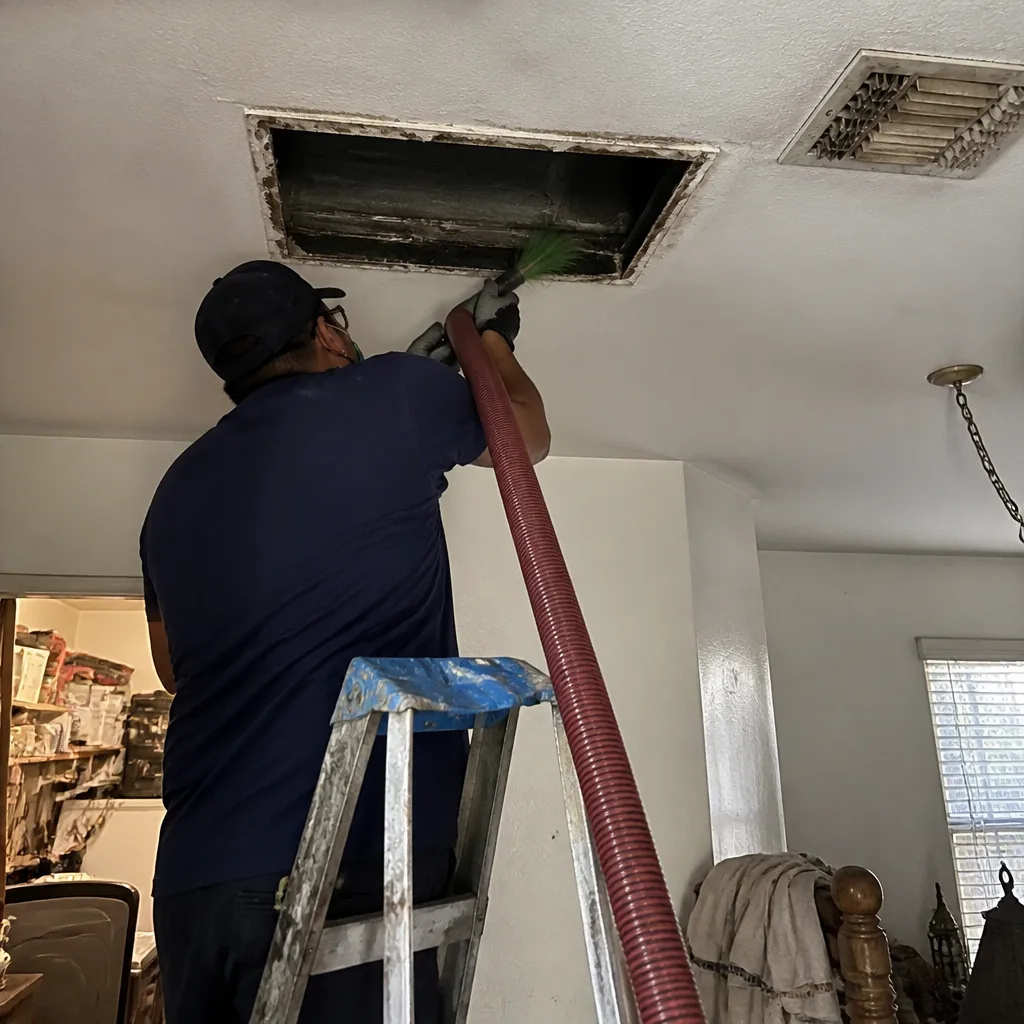 Before
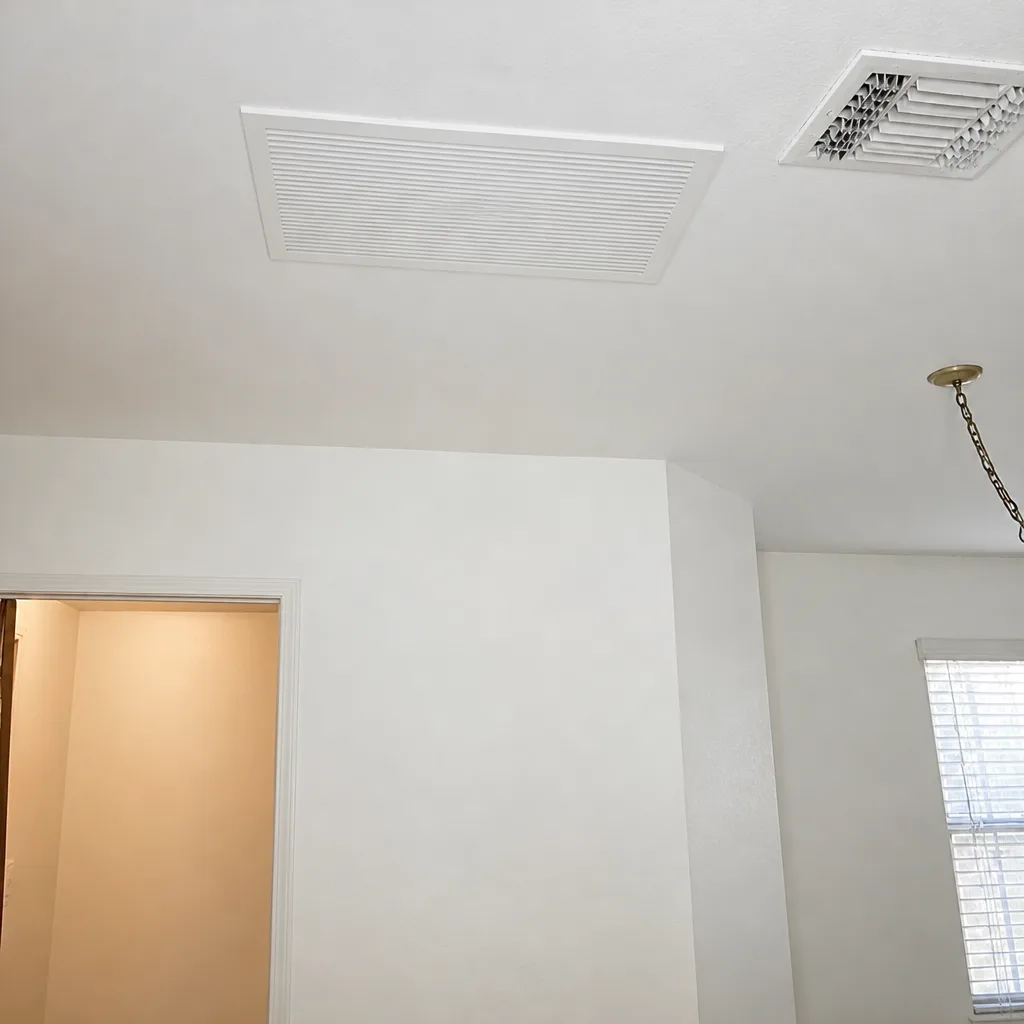 After
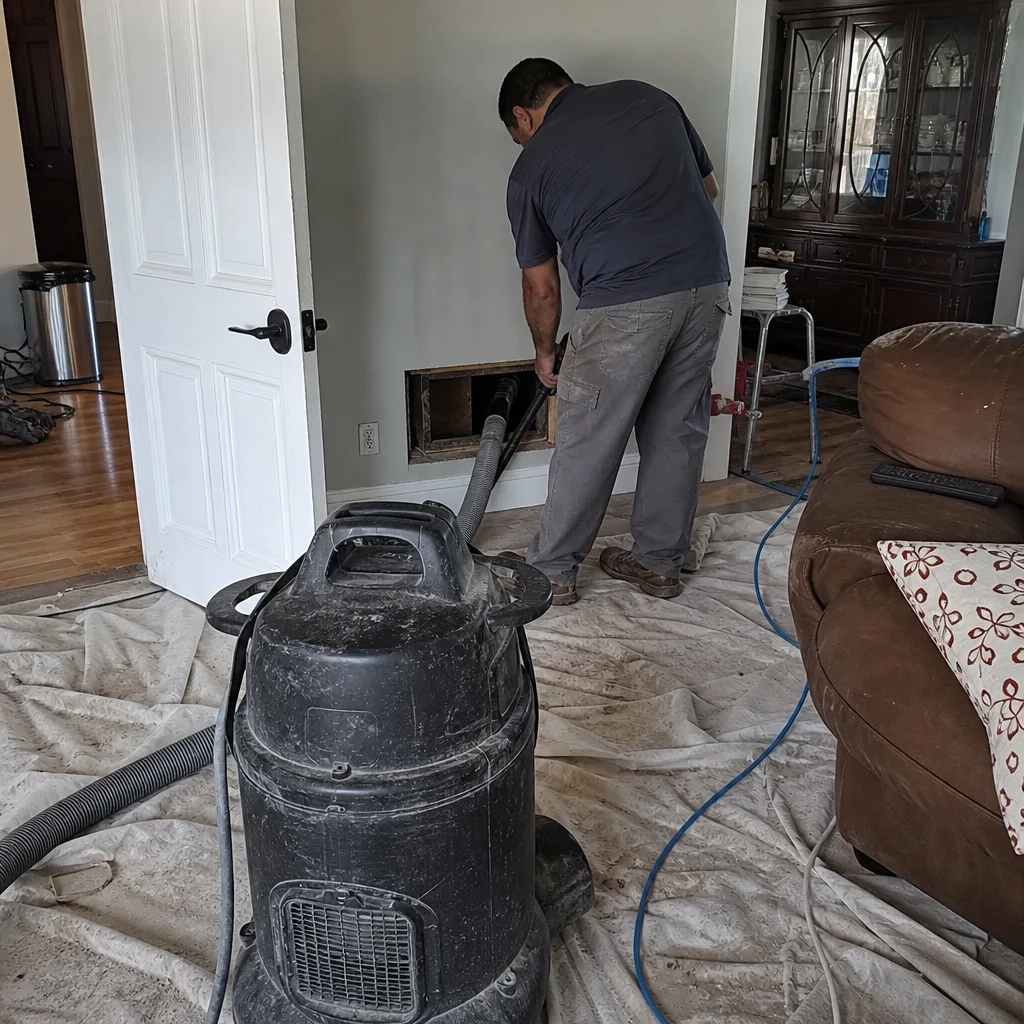 Before
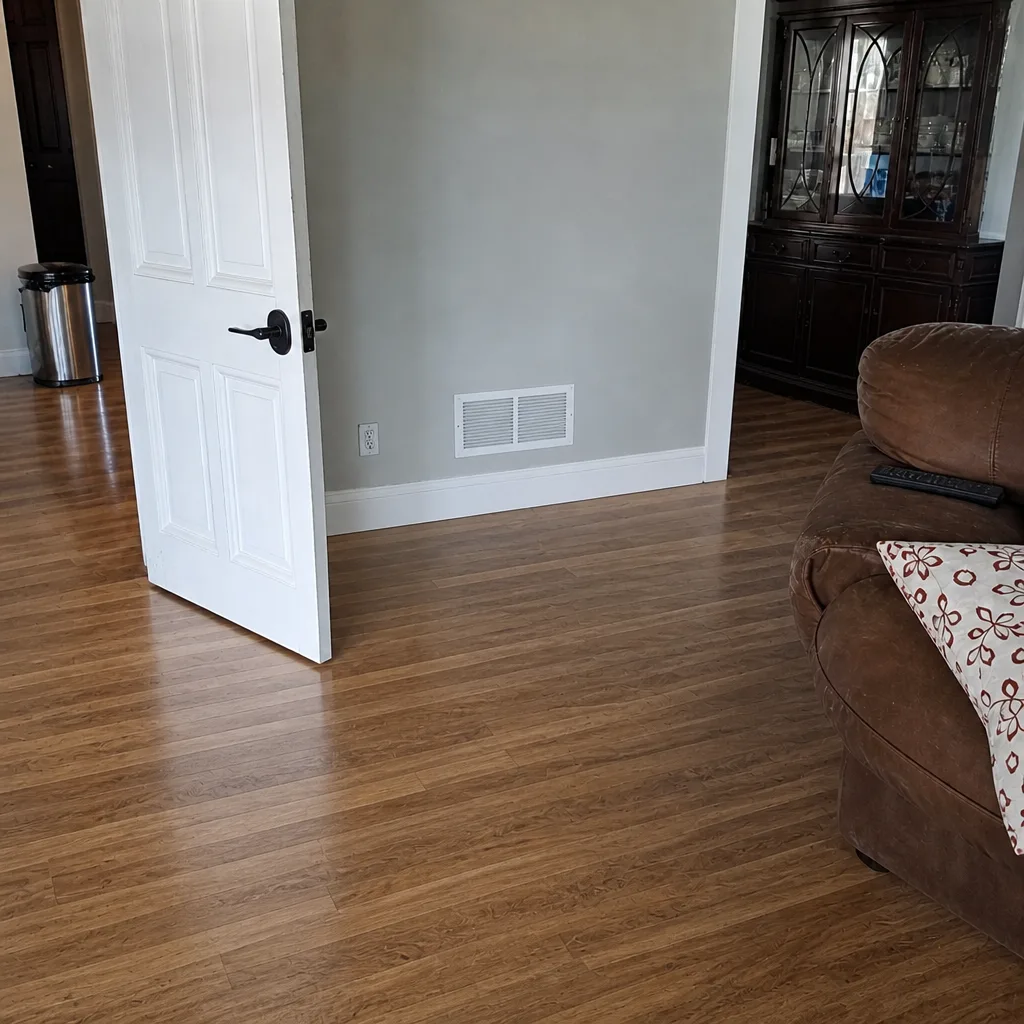 After
When to Call a Professional
Some things you can check yourself, like filter loading and basic vent-by-vent airflow. The rest is work for someone with the diagnostic tools and the equipment. Call us when you smell something persistent from the vents, especially musty or earthy odors, because those point to contamination in the ducts that won’t clear without professional extraction. Call when the house is uneven by more than a few degrees room to room after an HVAC tune-up, because that pattern is a duct problem. Call before any remodeling or after moving into an older home, when you have no history on the ducts. Call when your dryer takes two cycles to dry a load. And call if a previous cleaning didn’t change anything, because that usually means the problem was never inside the ducts at all. Duct Cleaning San Angelo offers free estimates in San Angelo: call (844) 761-5306. We answer 24/7. Fast dispatch from 7am to 7pm, Sunday through Friday.
Frequently Asked Questions
The deciding factor is whether airflow improves at the registers after a thorough diagnostic. If pressure readings show a restriction and the scope reveals no structural damage, cleaning is the answer. If the scope finds a collapsed flex run, a failed duct board seam, or a disconnected trunk, repair comes first and cleaning follows. Ask for both the pressure reading and the scope findings before you approve any work.
West Texas conditions load a duct system harder than a humid climate does. Caliche dust, cedar and mesquite pollen, regular wind events, and hot attics that stress flex duct insulation all contribute. A San Angelo home near active construction or in an older neighborhood with attic duct runs tends to need attention sooner than the national average suggests. Call (844) 761-5306 for a free estimate on a system-specific inspection.
Musty odors usually mean moisture has been sitting in the duct interior long enough for microbial growth. In our dry climate, that points to a past leak or a condensate issue near the air handler rather than general humidity. The fix is mechanical agitation of the duct walls with a rotary brush system, HEPA-rated extraction of the disturbed material, and air filtration in the work area during the job. If the duct board itself is saturated, that section needs replacement rather than cleaning.
A dusty smell at the start of heating season is normal and usually clears. A persistent burning odor during operation is not: shut the system off and have the heat exchanger and nearby wiring inspected by an HVAC professional before running it again. That’s a safety matter and not a duct cleaning job. Once the equipment is cleared, call (844) 761-5306 for a free estimate if you want the ducts checked too.
There’s no one interval that fits every home here. Homes near construction, with pets, with someone in the household sensitive to dust, or in older neighborhoods with attic duct runs tend to need attention more often than homes in a settled subdivision with newer ductwork. The right way to decide is with a diagnostic: pressure readings and a scope inspection tell you whether the system actually needs cleaning, rather than guessing from a calendar. Call (844) 761-5306 for a free estimate.
Yes. Dryer vents are a fire hazard and we treat them that way, because lint accumulation is a leading cause of house fires and a dryer that takes two cycles to dry a load is a warning sign. Our dryer vent cleaning addresses both the fire risk and the efficiency issue. If you’re booking duct work anyway, ask about having the dryer vent cleaned on the same visit. Call (844) 761-5306 for a free estimate.
The Bottom Line
Weak airflow, uneven temperatures, and dust that comes back are usually duct symptoms, not equipment failures. The right path is diagnostic first (pressure readings, register airflow, filter assessment, and a scope pass), then professional-grade cleaning with rotary brush agitation and HEPA extraction, and then repair where the ductwork itself is compromised. In San Angelo, caliche dust, cedar and mesquite pollen, wind events, and hot attics all make that path more necessary than the national average suggests. One flat price per system, agreed before work starts, with before-and-after photos of your own ducts, is the standard to hold any crew to. If you’d rather have the answer than the guess, we’re the call.
Ready to sort out the duct problem behind the comfort problem? Call (844) 761-5306 for a free estimate. We serve the San Angelo area with professional-grade equipment and a diagnostic-first approach. We answer 24/7. Fast dispatch from 7am to 7pm, Sunday through Friday.
Written by the team at Duct Cleaning San Angelo.