
Last updated November 16, 2026
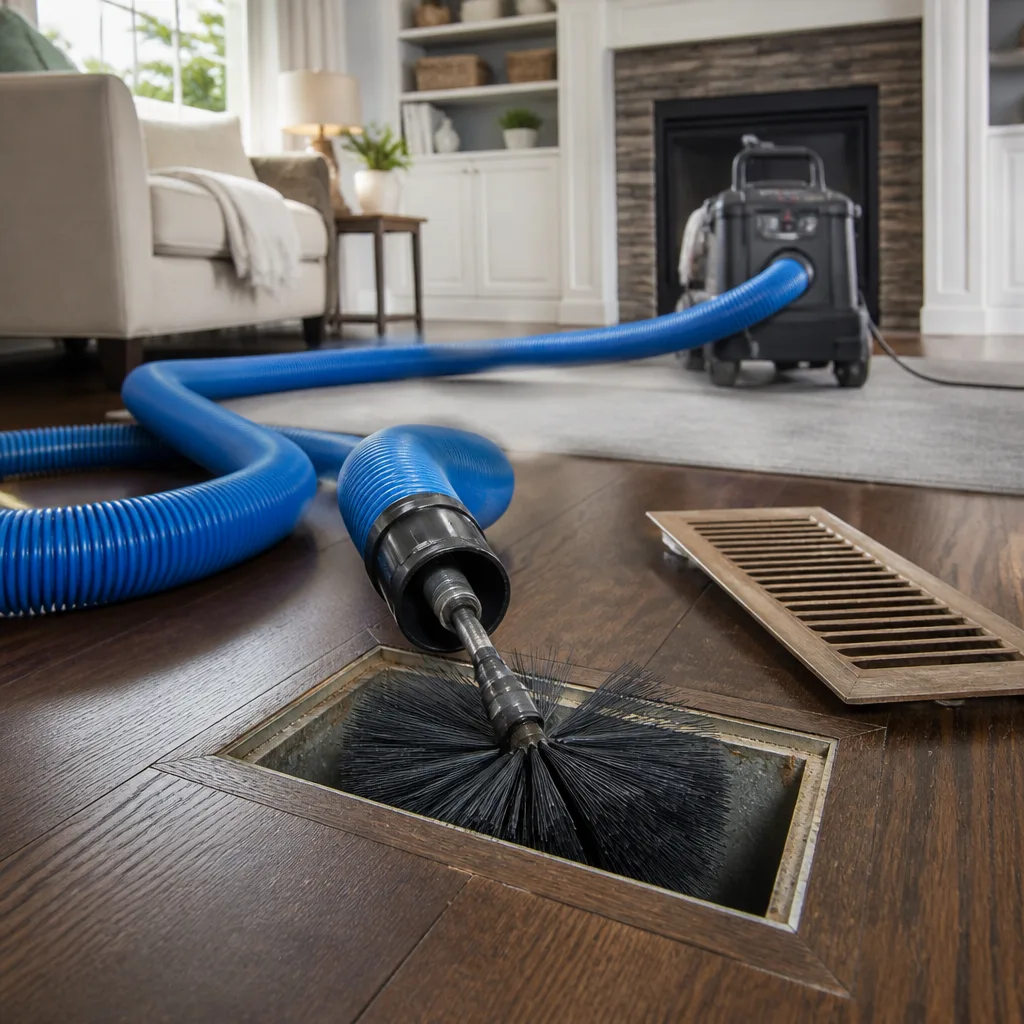 Whole-home duct cleaning
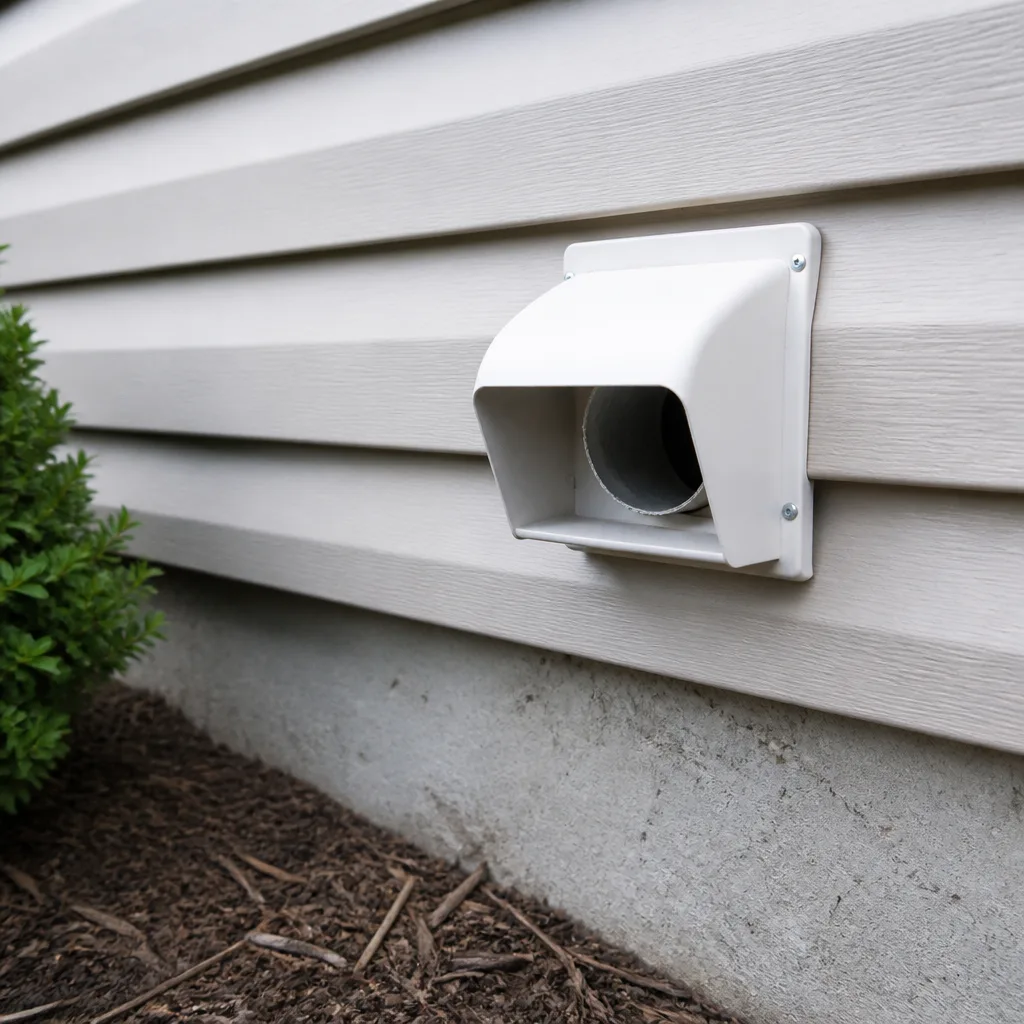 Dryer vent cleaning
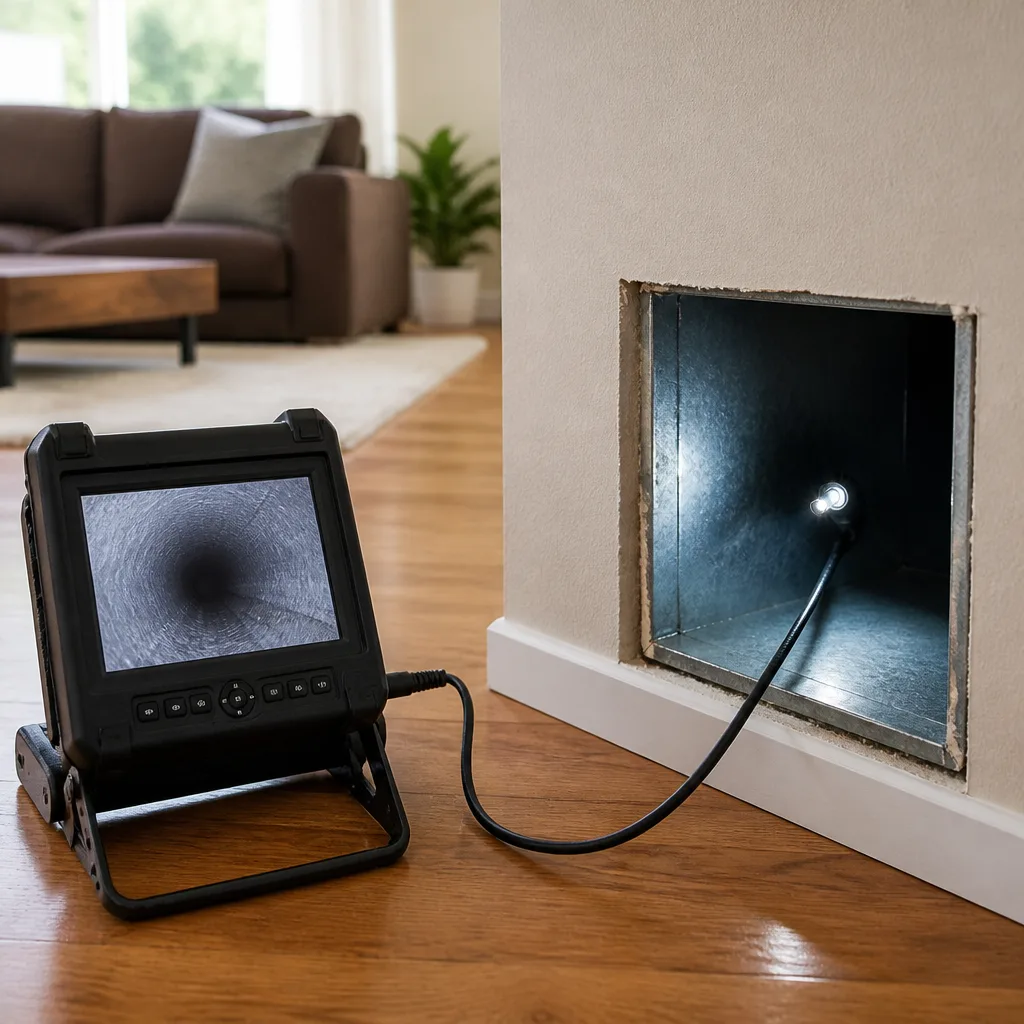 Camera inspection
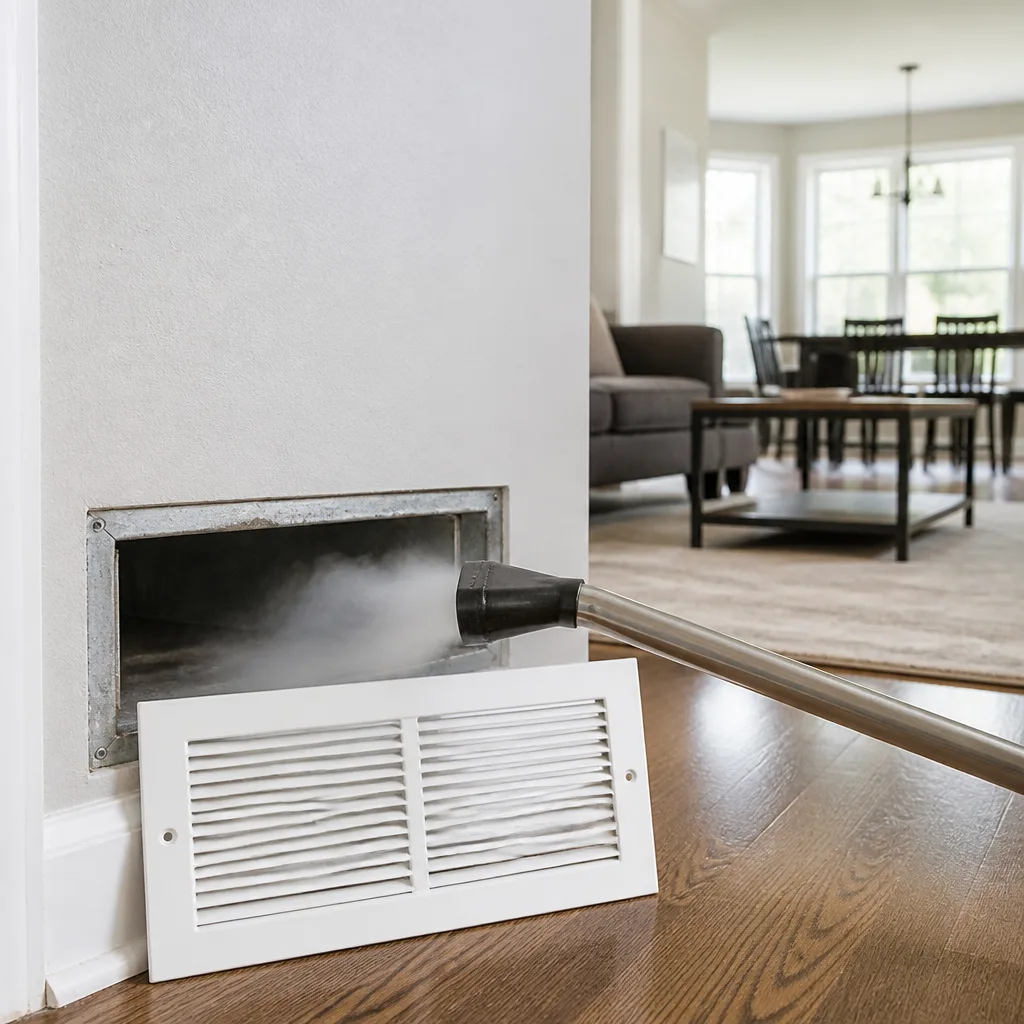 Sanitizing & deodorizing
Whole-system duct and dryer vent check with before-and-after photos - you see exactly what came out of your vents
That "$99 whole-house special" is a bait ad - the real number appears once they are in your hallway, or the "clean" is a shop-vac at the register. We photograph the inside of your ducts before and after instead.
Choosing the Right Air Duct Cleaning Brand: A Buyer’s Guide for San Angelo
When a duct cleaning company lists their equipment by name, that’s a signal. Companies running shop vacs and hardware-store brushes have no equipment worth mentioning, so they talk about pricing and specials instead. The brands behind the machines tell you what kind of work a crew can physically deliver: how much debris it can pull out, how well it can contain what it disturbs, and whether it can fix a problem instead of just wiping a surface. This guide walks through the platforms that matter, what each one does in a San Angelo home, and how to ask about equipment on a sales call without sounding like you’re interrogating anyone.
Quick Answer
The right air duct cleaning company is the one running professional-grade extraction equipment like Rotobrush and Nikro, containing dust with filtration such as Abatement Technologies air scrubbers while the work happens, and offering duct repair alongside cleaning. Ask what equipment they own, ask to see before-and-after photos of your own ducts, and treat a quote given as one flat price per system as a sign of a crew that knows its costs.
Styles & brands we work with
- Whole-home duct cleaning
- Dryer vent cleaning
- Camera inspection
- Sanitizing & deodorizing
Table of Contents
- Why Equipment Is the Clearest Signal of a Duct Cleaning Company
- What Rotobrush Systems Do That Manual Brushing Can’t
- Nikro and HEPA-Filtered Extraction: Containment-Grade Work
- Abatement Technologies and Contamination Control
- How to Ask About Equipment Without Sounding Adversarial
- Why Equipment Alone Doesn’t Guarantee Quality
- Cleaning Versus Repair: The Gap Most Companies Leave Open
- What Honeywell and Aprilaire Do for Whole-Home Air
Why Equipment Is the Clearest Signal of a Duct Cleaning Company
Equipment is the hardest thing to fake on a phone call. A crew can talk about customer service, but the machines they load up tell you what the job will actually look like. Professional-grade systems are engineered for extraction performance: airflow, filtration ratings, and the geometry of the tools that reach into a duct wall and lift what’s clinging there. Consumer and semi-pro equipment physically cannot match that, no matter how long the technician spends inside your system.
In San Angelo, where homes deal with dust from dry, windy stretches through the spring and a long cooling season, that difference adds up. Ductwork here runs hard for most of the year, moving cooled air and pulling in whatever the return side picks up. A shop vac can pull a little loose debris out of a floor register. It can’t agitate the inside of a run that’s thirty feet long and then extract what it loosens in a controlled way.
There’s a second signal: whether the company names the equipment at all. A business running a purpose-built platform is usually glad to explain it, because the machines do the selling. A business that dodges the question or answers vaguely is telling you something too.
What to listen for when a company describes their process:
- Whether the machine runs agitation and vacuum at the same time or brushes first and vacuums later
- Whether the vacuum is HEPA-rated and what the filter class is
- Whether air filtration runs during the job to protect the work area
- Whether the crew can seal and repair a compromised duct, not just clean it
None of that requires brand trivia. You’re asking what the tool does, not memorizing a catalog. Our technicians have up to 13 years of experience running these platforms, and the difference between a proper extraction system and a repurposed shop machine is obvious within the first few minutes of a job.
What Rotobrush Systems Do That Manual Brushing Can’t
Rotobrush systems pair a rotary brush head with a vacuum hose that runs inside the duct at the same time. The brush spins and knocks debris loose from the duct wall; the vacuum pulls it out as it’s released. That simultaneous action is the whole point. When you brush first and vacuum afterward, or brush with a hand tool while someone else runs a separate vacuum at a different register, the debris you loosen drifts into parts of the system you weren’t working on.
Rotobrush platforms are purpose-built for residential and light commercial ductwork. They’re not repurposed shop equipment with a brush attachment bolted on. The rotary head fits through standard runs, the hose keeps a continuous pull going, and the machine is designed so that the operator can move through a system methodically, one run at a time, rather than blowing a single blast of air down a trunk and calling it done.
Here’s the sequence a professional-grade rotary brush job typically follows:
- The technician inspects the system and identifies the supply runs, the return side, and the air handler or furnace connection point.
- Registers get pulled and the system is opened at the appropriate access points.
- The rotary brush and hose run through each branch, agitating duct walls while extraction pulls debris out in the same pass.
- The main trunk and return get the same treatment, with the extraction path established first so nothing is pushed back into the system.
- The technician photographs the ductwork before and after so the homeowner can see the result.
- Access points and registers go back together, and the crew confirms airflow at each register before leaving.
That sequence matters in San Angelo homes where a system has run for years without attention. Sheet metal and flex duct both hold a layer of dust that settles along the bottom of a run and climbs the sides. A rotating brush working with extraction removes that layer. A sweep with a hand brush leaves the dust in the air or, worse, pushes it further in.
Nikro and HEPA-Filtered Extraction: Containment-Grade Work
Nikro builds vacuum systems used in remediation and restoration work, which is a different category of machine from a shop vac. The key word is HEPA-rated filtration. A HEPA vacuum traps fine particles that a typical vacuum would exhaust back into the room, which is the whole reason remediation crews use them when work stirs up material that shouldn’t be breathed in.
That matters most in homes where someone is sensitive. If a family member has asthma or allergies, or if a newborn is in the house, or if someone is recovering from an illness, the fine dust a vacuum fails to capture becomes part of the air in the room. HEPA-rated extraction pulls that dust into a containment path instead of redistributing it. The same logic applies in a home that just finished a renovation: drywall dust sits deep in the system, and a vacuum that can’t trap fine particles only moves it around.
In our experience working San Angelo homes, two situations come up again and again where containment-grade extraction is the whole job:
- Older homes with aging ductwork. Seams loosen over time, and a cleaning job that stirs up debris can push fine dust back through gaps if the vacuum can’t hold it.
- Homes after renovation or a major repair. Construction dust is fine and travels; it needs a vacuum that captures it at the filter, not one that exhausts it into the room.
- Households with vulnerable occupants. Anyone with respiratory concerns benefits from a job where particles are controlled rather than stirred.
Containment isn’t a marketing phrase. It’s a filter class and a hose path and a negative pressure setup. Ask a company whether their vacuum is HEPA-rated and where the exhaust goes. A straight answer tells you whether they’re set up for it. For anyone weighing the cost of a proper job against a cheap one, the air duct cleaning guide covers what goes into a whole-system price.
Abatement Technologies and Contamination Control
Abatement Technologies makes air scrubbers and filtration units used in remediation, restoration, and abatement work. Those aren’t tools a routine cleaning job strictly needs to own, and that’s exactly why their presence tells you something. A company with Abatement equipment on hand can control the air in the work area during a job, capturing particles as they’re disturbed, and can handle situations that need a step beyond routine cleaning.
This is where you see the line between a cleaning-only company and one with remediation-level capability. A cleaning-only crew shows up, connects a vacuum, and runs brushes through the system. If the job turns out to involve compromised ductwork or conditions that need the air held under control, they either stop or keep going and hope for the best. A company set up with filtration can keep the work area contained while the job is underway and protect the rest of the house.
Abatement scrubbers see the most use in a few specific situations:
- Homes where a cleaning job is going to disturb a lot of settled material and the occupants are sensitive
- Properties being prepared after water damage or a situation where the system may carry more than dust
- Renovation aftermath where fine construction dust has spread through the system
- Any job where keeping the air in the work area clean matters as much as the duct itself
We deploy Abatement filtration during jobs so the working area stays under control rather than turning into a dust cloud. It’s the same tools used in remediation and restoration work, applied to a residential cleaning job. That’s a different posture than a crew that only owns a vacuum and a brush. If you’ve ever watched a cleaning job fill a room with dust, you know the difference.
Note what this capability does and doesn’t cover. Abatement equipment lets a company control the work area and handle more demanding jobs; it doesn’t turn a cleaning company into a mold remediation contractor, and any company claiming full remediation services should be able to explain their scope and credentials. What you want is a crew that knows what their equipment is for and what it isn’t, and can say so plainly.
How to Ask About Equipment Without Sounding Adversarial
You don’t need to interrogate anyone. The right questions sound like curiosity, not a cross-examination. Phrase them as “what do you guys run?” rather than “prove to me you have it.” A company that genuinely owns the equipment will happily talk about it; a company name-dropping brands will get vague fast. Here’s a set of questions that reveal the answer without putting anyone on the defensive.
- “What extraction equipment do you use?” Not which brands. Just what they load on the job. If the answer is a shop vac, you’ve learned what you needed to know.
- “Is your vacuum HEPA-rated?” A simple yes or no. If yes, ask where the exhaust goes. If the answer is fuzzy, press once.
- “Do you run air filtration while you work?” This separates a contained job from one that redistributes dust.
- “Do you agitate the duct walls, and do you vacuum at the same time?” The follow-up here reveals whether they understand why simultaneous action matters.
- “Can you show me before-and-after photos of my own ducts?” Any crew that does a proper job will have photos of your system, not a stock image.
- “Can you repair ductwork if you find damage?” If not, what happens when they find a problem?
- “Is the quote one flat price per system, or does it change once you’re on site?” The answer tells you whether the number you were given actually means anything.
Ask two or three of these and you’ll know more about the company than any review page tells you. The tricky thing about name-dropping equipment brands is that a lot of companies do it now, and it’s easy to claim. Ask specifically what the machine does, and whether they can walk you through a job in sequence. A crew running Rotobrush will describe extraction and agitation together because that’s how their machine works. A crew running a shop vac will describe brushing, then vacuuming, then brushing again.
Local context helps here too. San Angelo’s long cooling season means duct systems accumulate a lot of airborne material over a year, and a crew that’s spent time in homes here knows how much dust a given run tends to hold. If you call and the person on the line can’t tell you anything about the equipment beyond the brand name, that’s the answer.
Why Equipment Alone Doesn’t Guarantee Quality
A professional-grade machine in untrained hands delivers unprofessional-grade results. This is the part most equipment-brand content skips. Rotobrush and Nikro systems are only as good as the technician running them: knowing how to sequence the extraction, where to open the system for access, how to inspect what’s inside a run before brushing it, and how to tell the difference between a dirty duct and a damaged one.
Inspection is the step that separates a proper job from a rushed one. Before anyone runs a brush, a trained technician should look at the system. Supply and return runs behave differently. Sheet metal and flex duct behave differently. A joint that’s loosened over years, a flex run that’s collapsed, or a connection at the air handler that was never sealed properly all matter before cleaning starts. A crew that inspects can tell you what the job will look like and flag a repair before it becomes a bigger problem.
Here’s what training and inspection should produce on any job in San Angelo:
- An initial walkthrough that identifies the system layout, not just the register locations
- A scoped look at the runs so the technician knows what’s inside before touching it
- A clear sequence for each branch and trunk, worked in order rather than at random
- An inspection after extraction, so the technician can confirm the result and check for damage
- A photograph record of the work, before and after, that the homeowner gets to keep
We clean it, and if it’s broken, we fix it. That’s the phrase we come back to because equipment can deliver extraction but only a trained technician can read what the system needs. Our technicians have up to 13 years of experience running the platforms discussed here, and that experience is the piece that makes equipment worth having.
What to ask about the process itself, beyond the machines:
- “How long will the job take?” A properly sequenced whole-system clean takes real time. A rushed job shows in the result.
- “Do you scope or inspect before cleaning?” Yes is the right answer.
- “What happens if you find damage?” A company that can repair has a real answer. A cleaning-only company isn’t sure yet.
San Angelo isn’t a city where duct cleaning companies are hard to find. The difference between them shows up in process, not equipment alone.
Cleaning Versus Repair: The Gap Most Companies Leave Open
Most duct cleaning companies clean, and nothing else. If a job turns up a loose joint, a torn flex run, or a connection that was never sealed right, a cleaning-only crew either cleans past it or tells you to call someone else. That leaves you coordinating two trades for a problem that started in the same system.
Full repair capability is a real differentiator here in San Angelo. Ductwork loosens over years of hot, dry summers and long cooling runs. Flex duct can tear where it’s pinched around a corner or a framing member. Joints under a slab or in a tight closet can come loose without anyone noticing, and the symptom shows up as uneven airflow or a room that never quite cools. Cleaning won’t fix a leak. It cleans what’s reachable and leaves the leak in place.
A crew that cleans and repairs can do both in one visit:
- Inspect the system and flag damage during the walkthrough.
- Clean the runs as planned, working around any damage that needs attention.
- Seal or repair the compromised sections using proper duct materials.
- Confirm airflow at the registers after repairs are complete.
That closes the loop. A duct system that’s been cleaned but still leaks is only half-fixed, and the dust that enters through the leak comes back fast. If you’re choosing a company for a home where the system has never been opened, ask whether they can repair. If the answer is no, that’s a decision for you, but you should know it going in.
For homeowners in San Angelo dealing with old ductwork, the air duct cleaning and repair question is often the deciding factor. A cleaning job done well is worth the money. A repair done during that same visit is worth a lot more.
What Honeywell and Aprilaire Do for Whole-Home Air
Duct cleaning is not the last word on indoor air. It resets the system, removing what’s accumulated and giving you a clean baseline. What happens after the cleaning depends on the equipment your home runs: the filter setup, the filtration media, and whether the system is set up to handle a better filter than the one currently in it.
This is where brand awareness on the part of the company matters. Honeywell and Aprilaire are two names that come up in whole-home air quality discussions. Honeywell makes filtration and air quality components used in residential systems; Aprilaire builds filtration and humidity control equipment. A company familiar with those systems can point a homeowner toward a filter upgrade or a duct-side solution that makes sense for their house, without overselling a product the system can’t handle.
Note the limit. Knowing Honeywell and Aprilaire platforms well enough to recommend an upgrade is a different thing from installing HVAC equipment. A duct cleaning company should stay in its lane: clean the system, repair the ductwork, clean the dryer vent, and advise on filtration the way a technician who’s seen a thousand systems can. Installation of a new air handler or a full HVAC changeout belongs with the HVAC contractor.
For homes with a return that runs into a small closet and holds a filter that never seems to fit right, a filter and filtration conversation is one of the most useful things a cleaning visit can trigger. It’s the kind of thing a generalist company skips. A shop that works with these brands regularly knows what’s available and what’s realistic for a given system.
Dryer vent cleaning belongs in the same conversation. It’s part of the air and safety picture in a home, and often overlooked. Lint accumulates in the vent and behind the dryer over years, and a dryer that needs two cycles to dry a load is telling you something. Dryer vents are a fire hazard, and we treat them that way. The dryer vent cleaning service is part of what we do because it’s the other duct in the house that most people never look at.
Common Mistakes to Avoid
- Choosing on price alone. A quote that’s dramatically lower than the others isn’t a deal. It’s a number that usually grows once the technician is on site, and it tells you the company never planned to do the full job.
- Accepting “we have professional equipment” without specifics. That phrase covers everything from a Rotobrush platform to a shop vac with a new hose. Ask what they run and whether the vacuum is HEPA-rated.
- Ignoring the return side of the system. A company that only cleans supply registers is doing part of the job. The return carries the dust in first.
- Skipping the before-and-after photos. A proper job generates its own evidence. If a company can’t show you pictures of your own system, you have no way to confirm what was done.
- Not asking about repair. If the system needs a repair and the company can’t do it, you’re hiring two companies for one job. Ask before you book.
- Treating the dryer vent as an afterthought. It’s a separate system, and it’s a fire hazard. If a company doesn’t offer dryer vent cleaning, that’s a gap worth noting.
- Believing brand names alone. A company can claim Honeywell or Aprilaire familiarity without ever touching the equipment. A short conversation about what a filter setup does separates the two.
See the difference
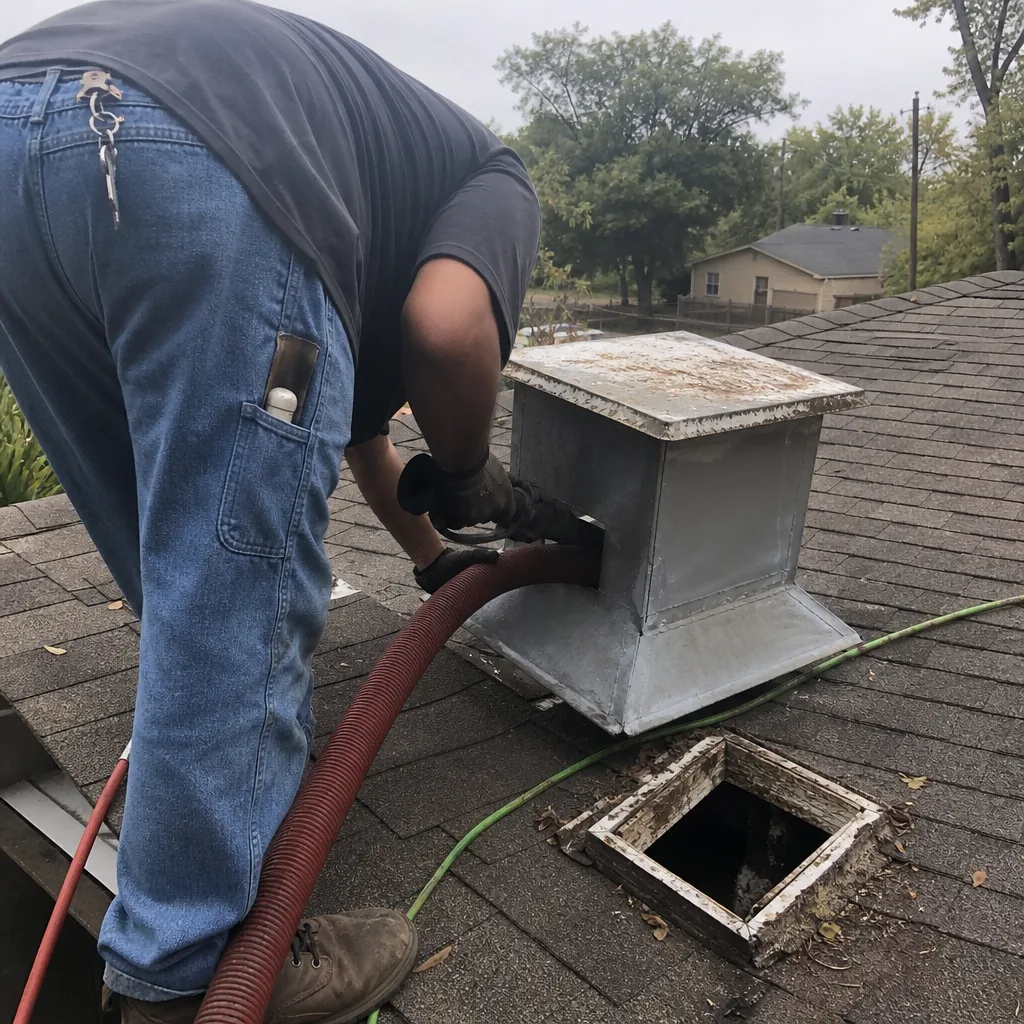 Before
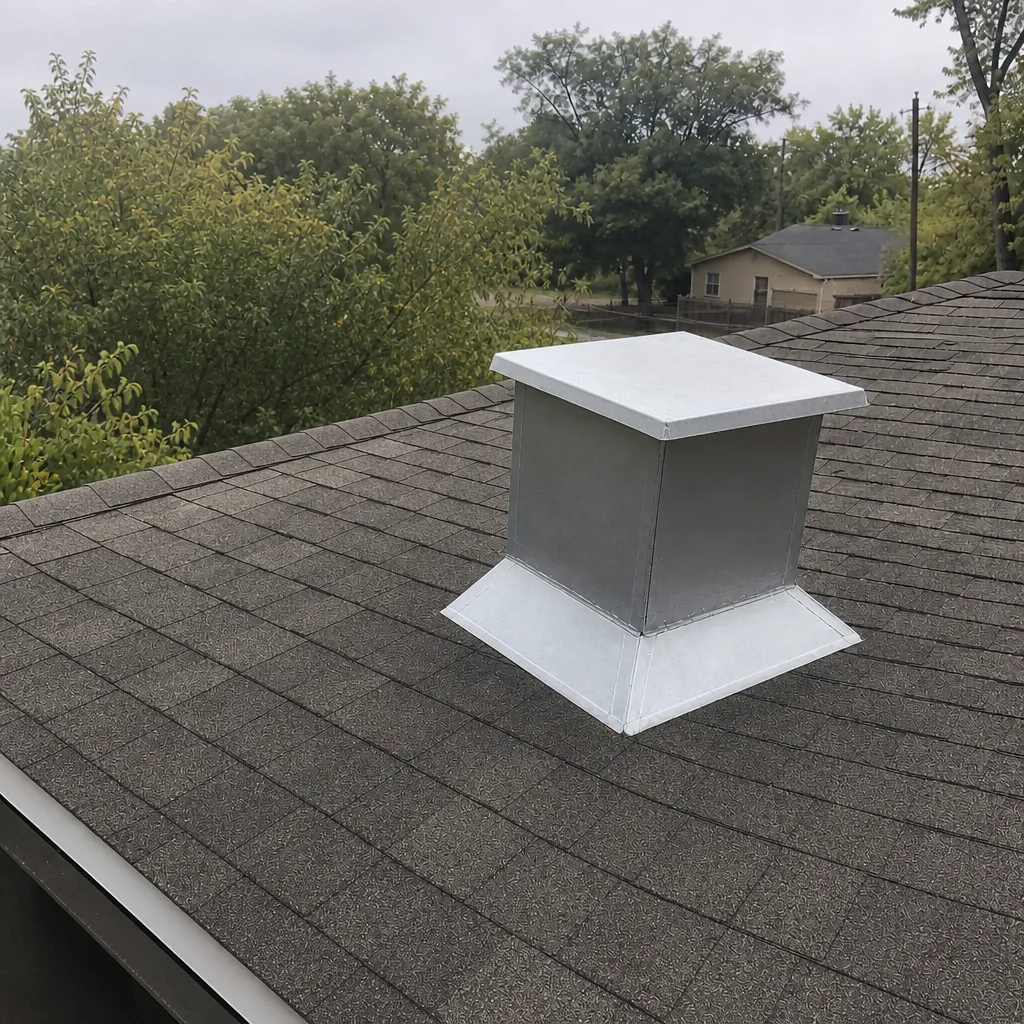 After
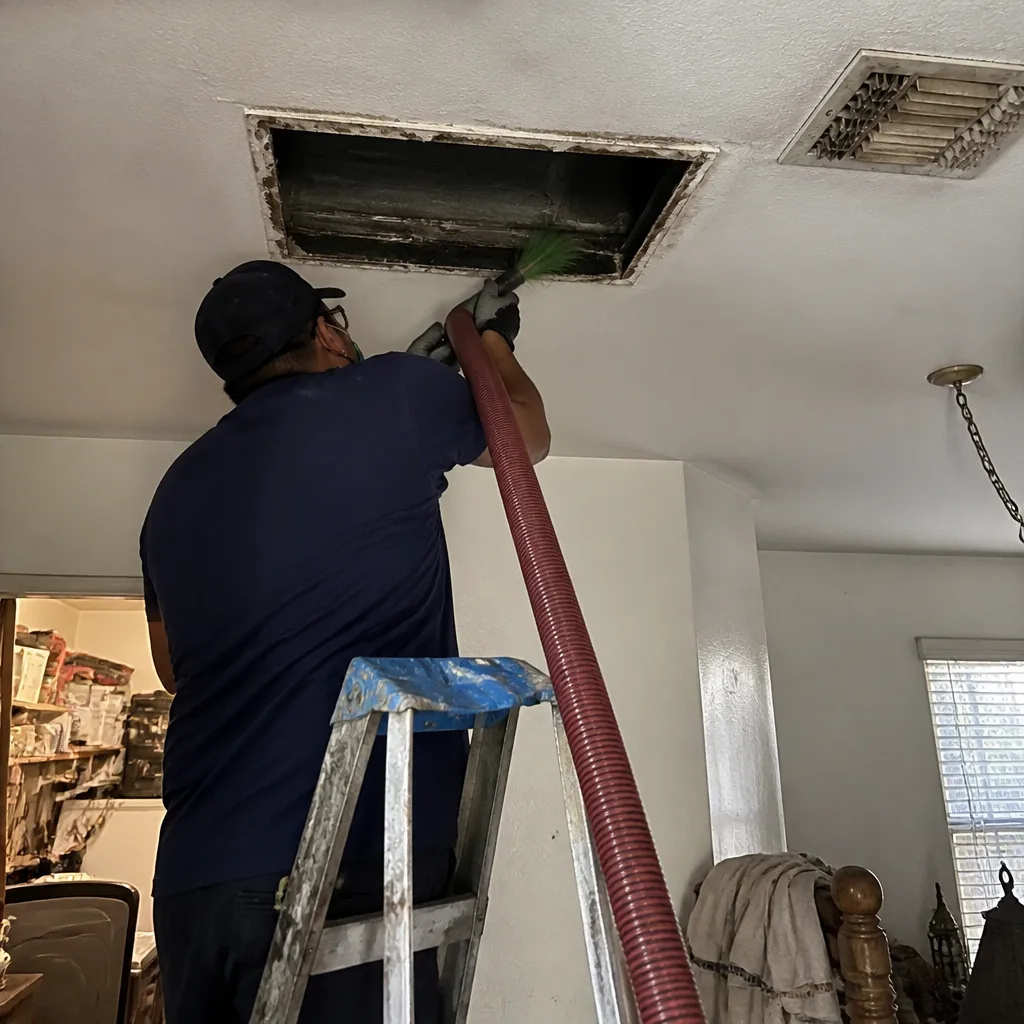 Before
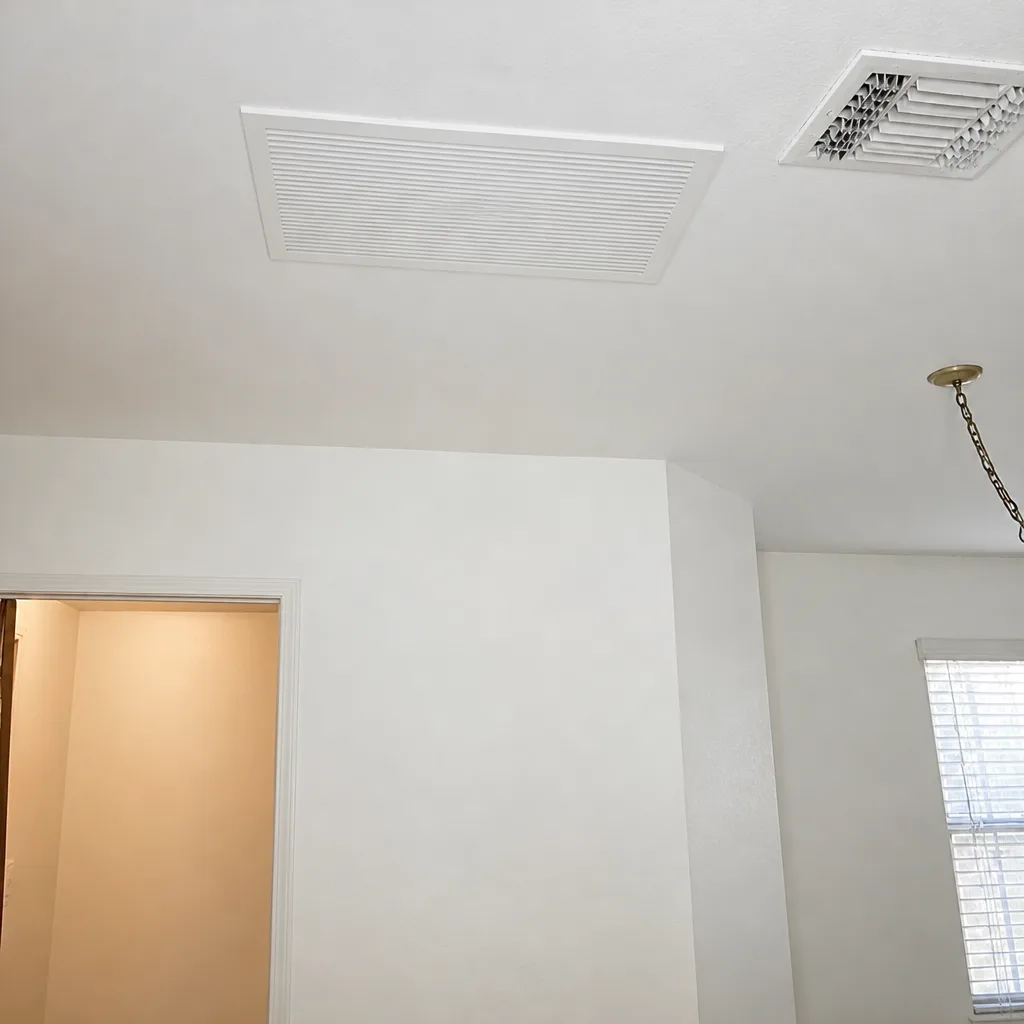 After
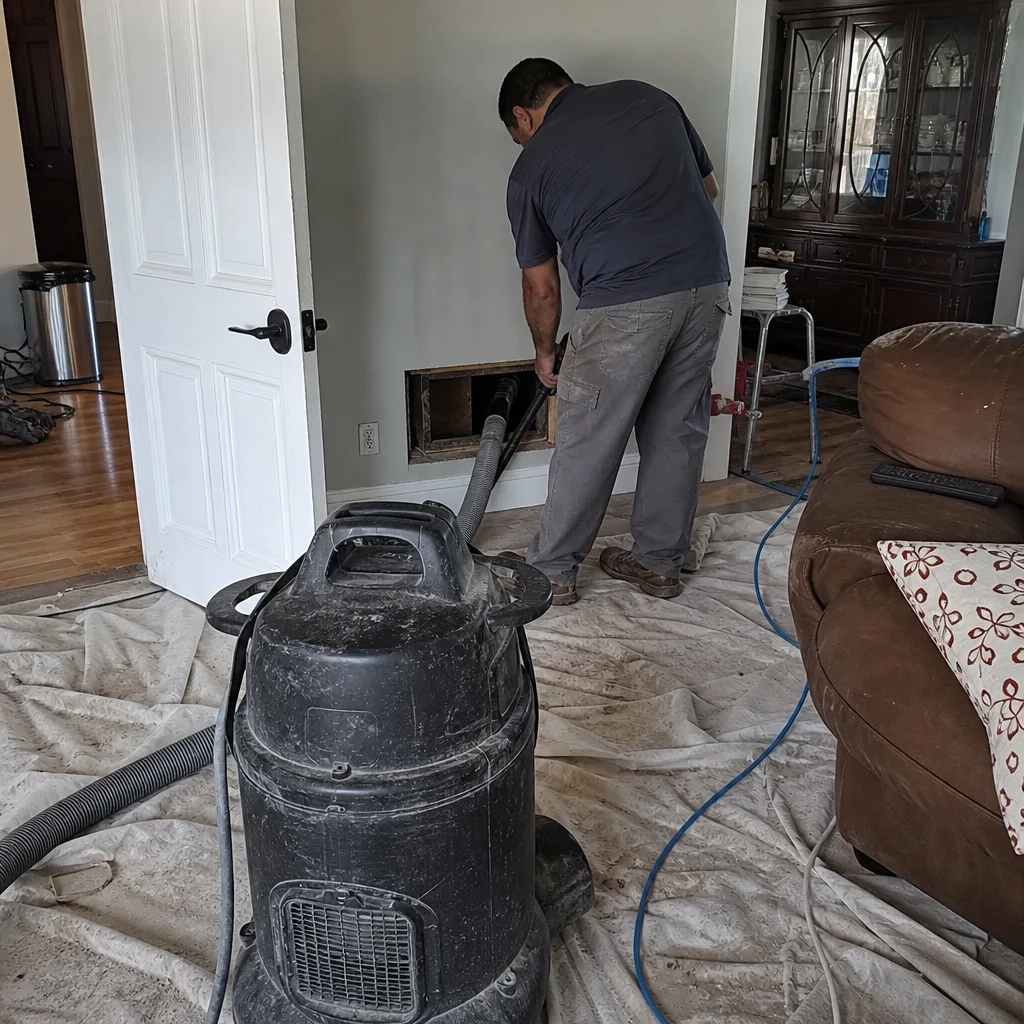 Before
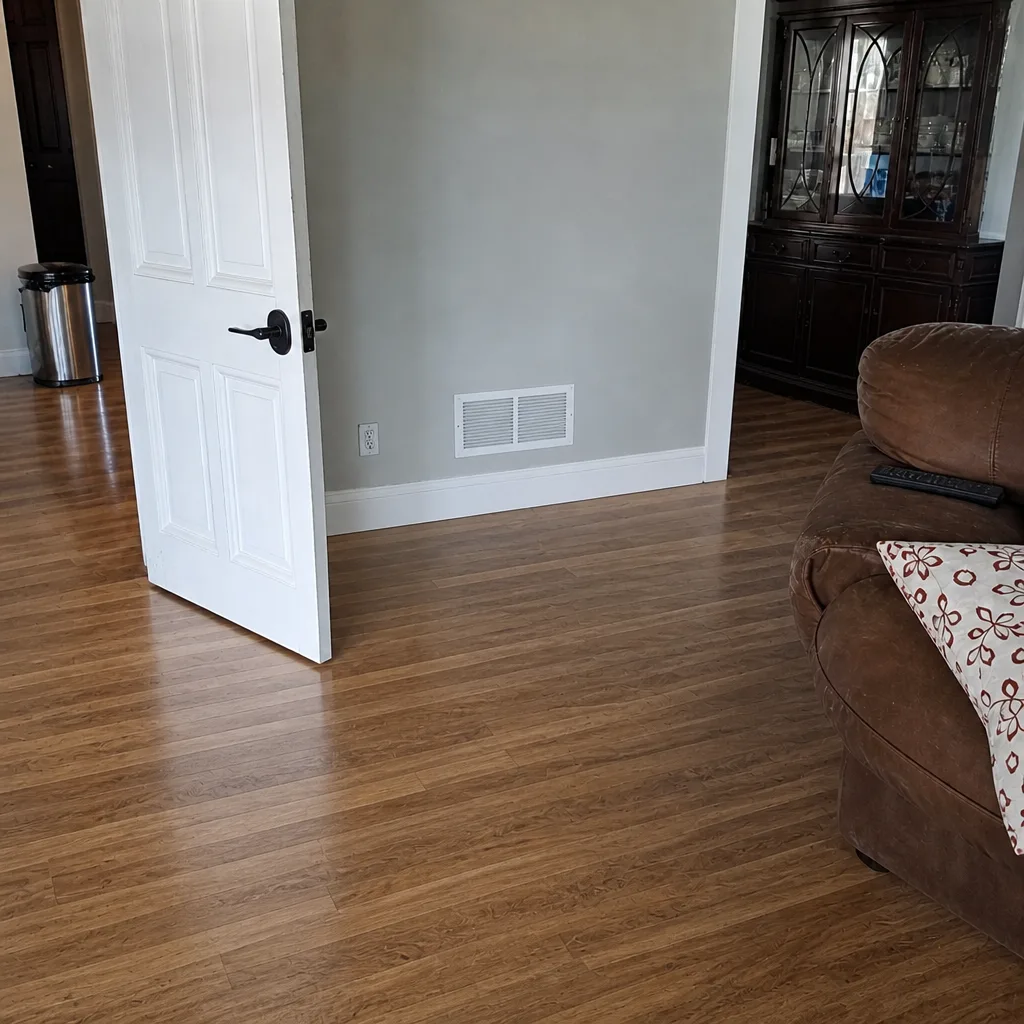 After
When to Call a Professional
A cleaning job makes sense a few specific times. After renovation, when drywall dust is everywhere in the system. When you’ve moved into an older home with ductwork of unknown history. When a household member has allergies or respiratory concerns and the dust in the house doesn’t seem to clear. When airflow is uneven or a room never cools right. When the dryer takes two cycles to dry a load. If you’ve never had the system opened and the house has been in use for years, a first cleaning is overdue more often than not.
Duct Cleaning San Angelo offers free estimates in San Angelo. Call (844) 761-5306. We answer 24/7. Fast dispatch from 7am to 7pm, Sunday through Friday. One flat price per system agreed before work starts, before-and-after photos of your own ducts, and a satisfaction guarantee behind the job. Licensed and insured.
Frequently Asked Questions
A whole-system clean in San Angelo typically runs somewhere in the low-to-mid hundreds of dollars for a standard residential system, and larger or more complicated systems run higher. The decisive factor is what’s included: a flat price per system, extraction, containment, and a photograph record of the work, or a teaser price that escalates on site. Call (844) 761-5306 for an exact quote. Estimates are free.
Rotobrush and Nikro are the two that come up most in residential duct cleaning. Rotobrush is the rotary brush and extraction platform that agitates duct walls and pulls debris out in the same pass. Nikro builds HEPA-rated vacuum equipment used in remediation work. Abatement Technologies is the third name worth knowing: air scrubbers used to contain dust during the job. A company that can speak to all three is set up for work that a shop vac can’t do.
Because the job behind the quote is smaller than the one you think you’re buying. A cheap quote usually means fewer registers cleaned, no proper extraction, no containment, and no photos. Sometimes it means a per-vent price that climbs once every vent gets counted. A flat price per system, agreed before work starts, is the way to compare. Call (844) 761-5306 and we’ll walk through what a proper job covers.
Ask for before-and-after photos of your own ductwork. A crew running proper extraction has no trouble producing them. Beyond that, look at airflow at the registers after the job and check whether the crew confirms it before leaving. If the photos are only of a stock image, or the crew can’t show you yours, that’s the answer. Call for a free estimate and we’ll explain exactly what the record looks like.
For most San Angelo homes, every couple of years is reasonable, with adjustment for the situation. Homes with pets, smokers, recent renovation, or a household member with respiratory concerns usually benefit from a shorter interval. Homes in newer construction with a clean system can go longer. A clear sign it’s time is visible dust at the registers or a system that’s never been opened.
Cleaning the system removes accumulated dust and debris from the duct walls, which reduces what the system can redistribute into the rooms over a cooling season. For someone sensitive to dust, that’s the direct benefit. For a full picture, the conversation often extends to the filter setup: Honeywell and Aprilaire systems can improve filtration after the ducts are clean. Call (844) 761-5306 for a free estimate and we’ll talk through your situation.
The Bottom Line
Equipment tells you a lot about what a duct cleaning company can actually deliver, and it’s the easiest thing to ask about before you book. Rotobrush for simultaneous agitation and extraction. Nikro for HEPA-rated containment-grade vacuum work. Abatement Technologies for air control during the job. Familiarity with Honeywell and Aprilaire for the filtration conversation afterward. None of that guarantees a good job on its own; it takes a trained technician who inspects, sequences, and photographs the work. But equipment is where the conversation starts, and a company that can speak clearly about its machines is a company that knows what it’s doing. We clean it, and if it’s broken, we fix it. If you’re in San Angelo and want a straight conversation about what the job involves, reach out.
Written by the team at Duct Cleaning San Angelo.